Free to read


The opening decades of the 16th century marked a profound shift from one age to another: old political and religious orders were breaking down, while new empires, states, and religious communities sought to establish their place in a changing world. Across the Atlantic, a hitherto unknown world was opening up; the Reformation was shattering the religious unity of Western Christendom; and in the East, the Ottoman Empire was emerging as a formidable power, presenting itself both as the leading force of Sunni Islam and as the heir to the Roman Empire.
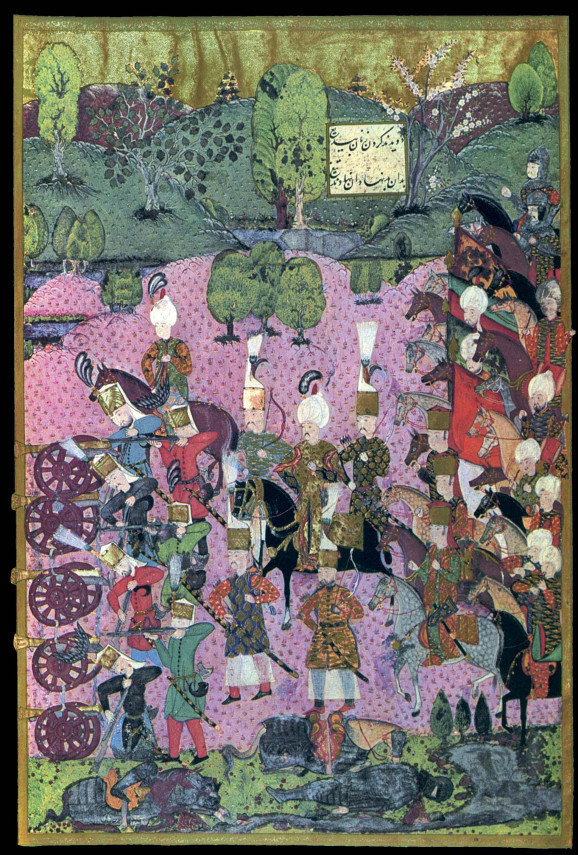
The Battle of Mohács, fought on August 29, 1526, was not merely the decisive battle of the Hungarian–Ottoman war, but part of a much broader transformation. It marked a point at which several long-term historical processes converged: the crisis of the medieval Christian commonwealth, the rivalry between the Ottoman and Habsburg visions of universal monarchy, and the collapse of the Jagiellonian system of power in Central Europe.
Mohács can therefore be seen as a “moment of transition,” for it altered the fate of more than a single country. It revealed that the world order inherited from the Middle Ages could no longer function as it once had, even as the contours of a new order were only beginning to take shape.
Medieval Europe’s sense of identity was shaped to a considerable extent by Christianity and by its struggle with the Muslim world. A chronicle written in 754 already described the victors of the Battle of Poitiers in 732, who had halted the Muslim advance, as “Europeans.” In this usage, Europe referred not simply to a geographical region, but to the world of Latin Christendom.
The Christian Commonwealth
The idea of the respublica christiana, or Christian commonwealth, took shape in its fullest form between the 11th and 13th centuries. The states of Europe were bound together by the institutions and teachings of the Roman Church, a shared Latin culture, and the traditions of Roman law. Although the continent remained politically divided, the Empire and the papacy claimed authority that transcended national boundaries. The papacy saw itself as the guardian of peace among Christian rulers and as the driving force behind joint campaigns against the Muslim world.
The defense of Christendom against Muslim power was waged both by force of arms and in the realm of ideas. Drawing on the Christian doctrine of just war, the Crusades presented the struggle against the Muslims as a religious duty. At the same time, scholars sought to refute the Qur’an and the teachings of Islam, while apocalyptic interpretations portrayed Muslim conquests either as divine punishment or as signs of the approaching end of the world.
Yet the Christian commonwealth never constituted a genuinely unified political order. Rivalry between the papacy and the Empire, followed by the growing division between the Eastern and Western Churches, undermined its unity from an early stage. The capture of Constantinople in 1204 created deep and lasting mistrust between Greek and Latin Christendom. The Byzantine Empire increasingly found itself compelled to ally with Muslim powers against its Christian adversaries.
From the 14th century onward, the western half of the Christian commonwealth also became increasingly fragmented. The Western Schism weakened the authority of the papacy, while the rise of dynastic monarchies brought the interests of individual states increasingly to the fore. Kings gradually extended their control over the churches and claimed the right to decide for themselves questions of war and peace.
The crusading ideal did not disappear, but its power to mobilize steadily declined. Popes continued to call for new crusades well into the 15th century, yet European rulers responded with less and less enthusiasm. The crusading congress convened at Mantua in 1459 ended without tangible results, while another campaign planned between 1517 and 1519 likewise came to nothing. The language of Christian unity against the Turks thus survived, but the political and institutional conditions necessary for concerted action were increasingly lacking.
The New Ottoman Power
As the unity of Christian Europe weakened, the Ottoman Empire steadily gained strength from the mid-fourteenth century onward. Ottoman expansion fundamentally altered the balance of power between the Christian and Muslim worlds. Europe, which had once taken the offensive in the Middle East and on the Iberian Peninsula, now found itself increasingly on the defensive. The capture of Constantinople in 1453 marked not only the end of the Byzantine Empire, but also the emergence of a new imperial order.
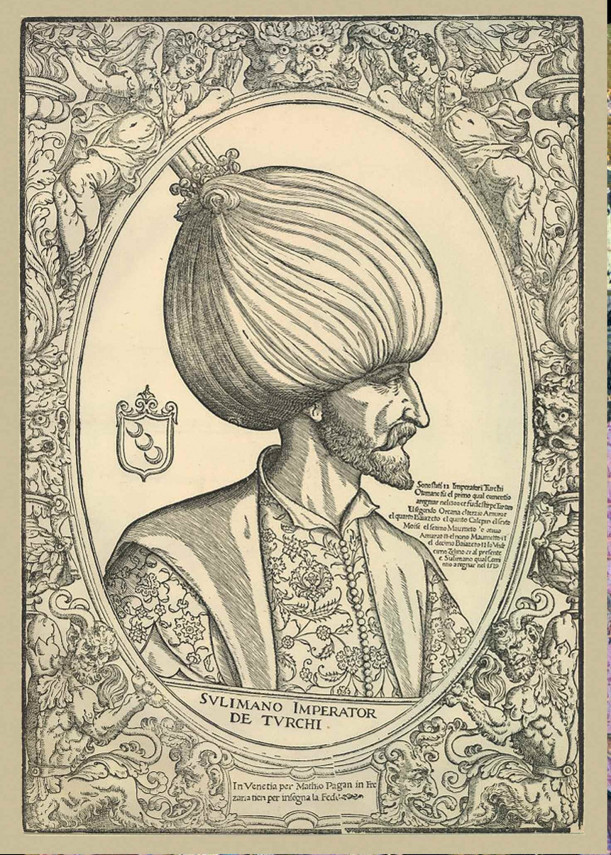
The Ottoman sultans regarded themselves as heirs to the Roman emperors. With Constantinople in their possession, they presented themselves not merely as rulers of a Muslim state, but as sovereigns of an empire with claims to universal dominion. Mehmed II and his successors combined the idea of restoring the universal Roman Empire with Islam’s own universal mission. The Ottoman ruler could thus present himself simultaneously as defender of the Muslim faith, heir to the Byzantine emperors, and architect of a new world order.
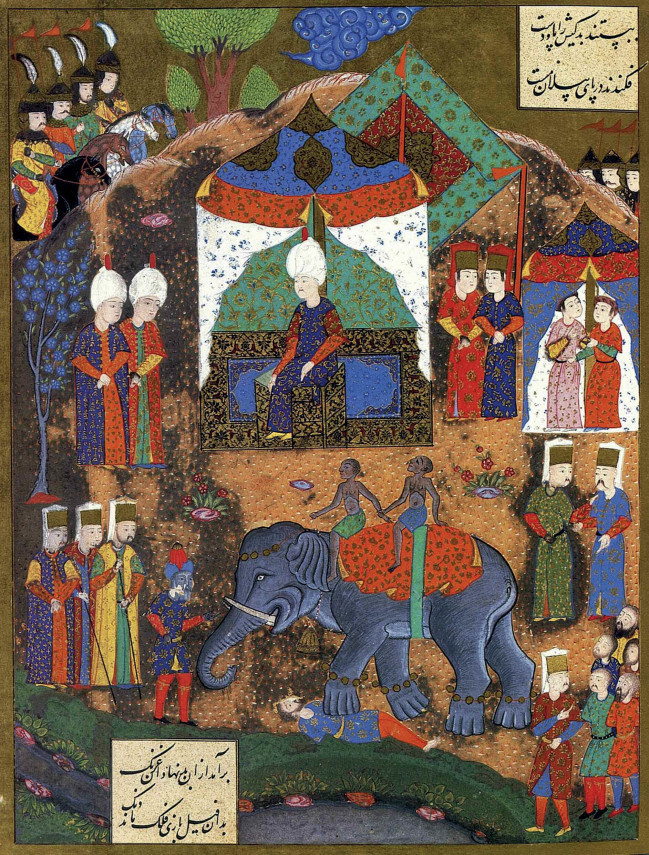
The Ottoman defeat at Nándorfehérvár in 1456, however, demonstrated that the westward route through the Kingdom of Hungary remained closed, at least for the time being. In the decades that followed, the Ottomans therefore turned their attention primarily to the east and south. In 1514, Selim I defeated the Persian Safavids at Chaldiran, before conquering Syria and Egypt in 1516–1517. The holy cities of Mecca and Medina came under Ottoman control, and the sultan emerged as the foremost ruler of the Sunni Islamic world.
These conquests brought vast human, economic, and religious resources under Ottoman control. When Suleiman ascended the throne in 1520, he inherited an empire greatly strengthened in both power and confidence. At the outset of his reign, he turned westward once again.
At the Ottoman court, the young sultan was seen as far more than a successful military commander. Imperial propaganda celebrated him as a new Alexander the Great, a world conqueror, and a renewer of the true faith. Behind such titles lay apocalyptic expectations as well: Suleiman was portrayed as a ruler destined to extend the dominion of Islam and its sacred law in the final age of history. In the eyes of contemporaries, therefore, Ottoman expansion was far more than a campaign for territorial conquest. It combined religious mission, imperial ambition, and a vision of world-historical transformation.
Two Universal Monarchies
Suleiman’s claim to universal dominion had its counterpart in the Christian world. Charles V was elected Holy Roman Emperor in 1519, but even before his election he had inherited a vast array of territories stretching from Spain through the Low Countries and Italy to the newly conquered lands of the Americas.
Central to Charles V’s political vision was the idea of monarchia universalis—a universal Christian monarchy. He presented himself as a new Charlemagne and the secular leader of Christendom, entrusted with the mission of restoring Christian unity, defending Europe against the Turks, and establishing a peaceful order in which—to use the biblical language of the age—there would be one flock and one shepherd.
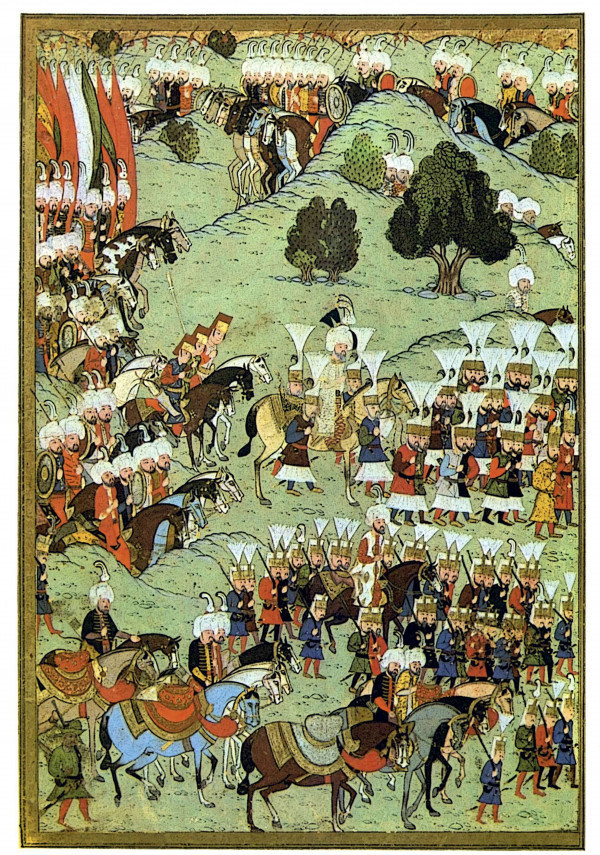
At the beginning of the 16th century, then, two imperial visions with universal ambitions confronted one another. The Ottoman sultan saw himself as both the leader of Islam and the heir to the Roman emperors, while the Habsburg ruler presented himself as the restorer of Christian empire.
The two visions were, far from identical, drawing on different religious, legal, and political traditions. Yet they shared a fundamental feature: both reached beyond the conventional ambitions of dynastic expansion. Supporters of Suleiman and Charles V alike believed that their ruler was called not merely to govern a particular realm or people, but to restore the rightful order of the world.
Yet from the outset, both universal projects faced formidable obstacles. On the Ottoman Empire’s eastern frontier, the Safavid Empire remained a powerful religious and military rival, continually drawing Ottoman forces eastward. Charles V’s empire, meanwhile, was divided by its internal diversity, prolonged wars with France, and, above all, the Reformation. The aspiration to universal dominion remained powerful on both sides, but in practice neither empire succeeded in establishing lasting supremacy over its rivals.
Hungary, the Eastern Gateway to the West
Since the beginning of the fifteenth century, the Kingdom of Hungary had stood in the path of Ottoman westward expansion. Hungary was the eastern gateway to the West, but its geographical position also made it a gateway for Ottoman armies advancing along the Danube towards Vienna.
In the age of the Hunyadis, the Hungarian state was still capable of mobilizing substantial military forces, and in 1456 it halted Mehmed II’s army at Nándorfehérvár (Belgrade). Over the following decades, however, maintaining the frontier defenses became an increasingly heavy burden. The resources of the Kingdom of Hungary could not match those of the rapidly expanding Ottoman Empire, while concerted assistance from Christian Europe remained, for the most part, little more than a promise.
In 1521, Suleiman captured Nándorfehérvár. With the fall of the fortress, the route along the Danube into the heart of Hungary lay open. The campaign of 1526 was therefore not an isolated undertaking, but a new phase in a much longer struggle. The Ottoman leadership now sought to break Hungarian resistance and remove the principal obstacle to further expansion westward.
The campaign was driven by both a sense of religious mission and the practical interests of empire. The young sultan needed to prove his abilities as a military commander, while the army and military elite expected victory, booty, and new lands. The conquest of Hungary could also open the way towards the Habsburg domains in Central Europe.
For the Ottomans, however, Hungary was not necessarily the ultimate objective. Rather, it was an old adversary, a weakened buffer state, and the most important obstacle on the road west.
Mohács as a Cosmic Struggle
Ottoman interpretations of the Battle of Mohács reveal the profound significance contemporaries attached to the victory. Behari, who took part in the campaign, portrayed the conflict as a cosmic confrontation between East and West in his verse work The Book of the Holy War and Conquest of Hungary, also known as The Book of the Last Judgement (A magyarországi hitharc és hódítás könyve). In his account, Suleiman appears as a new Alexander the Great, the Sun moving from east to west, its radiance spreading across the world. His victory heralds both the expansion of Islam and its sacred law and the beginning of the final age of history.
Kemalpaşazade, one of the foremost Ottoman religious scholars and historians of the period, interpreted the 1521 campaign against Nándorfehérvár as retribution for the Crusades of earlier centuries. In his view, the Muslims were avenging Christian attacks in Asia Minor. The campaigns against Hungary were thus placed within a centuries-long history of crusade and counter-crusade. In the Ottoman narrative, Mohács was therefore not merely a victory over a Central European kingdom, but a decisive stage in a world-historical struggle against the enemies of the faith.
The actual consequences of the battle, however, soon proved far more complex than this triumphant vision suggested. The death of the Hungarian king and the political collapse of the kingdom did not usher in Ottoman world dominion. Instead, they created a power vacuum in Central Europe that the Ottoman and Habsburg Empires would struggle for decades to fill.
The Limitations of Victory
The victory at Mohács opened new opportunities for the Ottomans, but also brought new obligations. After the death of Louis II, two rival kings were elected in Hungary: János Szapolyai and Ferdinand of Habsburg. The ensuing civil war gave Suleiman an opportunity to intervene, but it also drew the Ottoman Empire ever more deeply into the power struggles of Central Europe.
The sultan was no longer dealing simply with a hostile kingdom. He now had to determine how to prevent the Habsburgs from consolidating their position in Hungary, whom to support on the Hungarian throne, and how best to secure the route along the Danube. Victory thus brought limitations of its own. The Ottoman leadership could not simply withdraw from Hungary without leaving the region open to Habsburg expansion. Yet maintaining a permanent presence there required enormous military and financial resources.
The capture of Buda in 1541 and the subsequent occupation of central Hungary therefore did not follow a fixed plan conceived at the time of Mohács. Rather, they grew out of the power struggle that unfolded after 1526, shaped by the Hungarian civil war and the intensifying rivalry between the Habsburg and Ottoman Empires.
The victory at Mohács thus did not resolve the Ottoman Empire’s problems in Central Europe. On the contrary, it ushered in an era of prolonged, costly, and ultimately inconclusive frontier warfare. Mohács did not cause the eventual decline of Ottoman power, but the empire’s presence in Hungary exposed the limitations of Ottoman expansion. The Ottomans conquered extensive territories, but they were unable to break Habsburg power, while Islam itself failed to take deep root in Hungary.
From Holy War to the Balance of Power
The struggle, which at Mohács was still understood largely in religious and civilizational terms, soon evolved into a dynastic and geopolitical contest. For many European powers, it was not the Ottoman threat but the Habsburg Empire of Charles V that came to be seen as the principal adversary. French and Ottoman interests increasingly converged in their opposition to the Habsburgs. For the French king, Suleiman was no longer simply an enemy of Christendom, but also a valuable counterweight to Habsburg power. For Venice, meanwhile, the Ottomans were at once a threat, a trading partner, and a great power with which the republic had to negotiate in order to safeguard its own survival.
The Christian–Muslim divide did not disappear, nor did the language of religious conflict. In political practice, however, reasons of state increasingly took precedence over religious solidarity. Christian rulers cooperated with the Ottomans against their Christian rivals, while the Ottoman leadership, in turn, exploited divisions among the European powers.
The Ottoman Empire thus became an integral part of the European balance of power. It remained an outsider and a religious adversary, yet at the same time emerged as a political force that had to be reckoned with—as an ally, an enemy, or a counterweight. This transformation reflected the growing crisis of the medieval Christian commonwealth. The ideal of united Christian action survived, but European politics increasingly came to be shaped by the competing interests of individual states and dynasties.
From the Christian West to the European West
Paradoxically, the Ottoman threat strengthened both the impulse towards European unity and the forces of political diversity. The Turkish advance repeatedly revived calls for Christian solidarity, while smaller states and frontier kingdoms looked to the pope, the emperor, or other great powers for protection. The idea of Europe as a common homeland thus acquired renewed significance, in part through confrontation with the Ottomans.
Yet providing the money and military forces required for a common defense demanded negotiation and compromise. Emperors and kings could wage war only with the support of their estates, provinces, and subjects. Charles V, for example, repeatedly had to reach agreements with the German princes—including the Protestants—in return for their support against the Turks. The external threat therefore strengthened the desire for unity while simultaneously increasing the bargaining power of local and confessional forces unwilling to submit unconditionally to a universal monarchy.
From this point onward, European history was increasingly shaped by the tension between the pursuit of unity and the preservation of diversity. The Ottoman threat did not in itself create modern Europe, but it significantly influenced the process by which the medieval Christian commonwealth gave way to a Europe divided along confessional, political, and cultural lines. The “Christian West” gradually evolved into a “European West.” A sense of belonging was no longer based exclusively on a common faith, but increasingly on a shared political, legal, and cultural inheritance, as well as on an awareness of Europe’s distinctive place in the world.
The Ottoman Empire was both an adversary and a participant in this transformation. As a military threat, it strengthened Europe’s sense of collective identity; as a diplomatic actor, however, it helped reshape European politics, turning it from a contest between religious camps into an increasingly fluid system of competing state interests and shifting alliances.
The End of a Central European Possibility
Mohács also marked a major turning point in the history of Central Europe. With the death of Louis II, the Hungarian–Bohemian branch of the Jagiellonian dynasty came to an end, and the political framework that had linked Buda, Prague, and Kraków within a common dynastic sphere collapsed. This was neither a unified state nor a firm alliance. The Hungarian, Bohemian, and Polish–Lithuanian realms retained their own estates, pursued different foreign-policy interests, and operated through separate centers of political decision-making. Dynastic ties alone did not create a common army, shared finances, or any binding system of mutual assistance.
Even so, Jagiellonian rule had created a distinct Central European political space that might have offered an alternative to both Habsburg expansion from the west and Ottoman expansion from the southeast. Mohács, however, brought even that prospect to an end. The Hungarian and Bohemian crowns passed to Ferdinand of Habsburg, while Poland and Lithuania followed a different political path. From then on, the heart of Central Europe became the arena of a prolonged struggle between the Habsburg and Ottoman Empires.
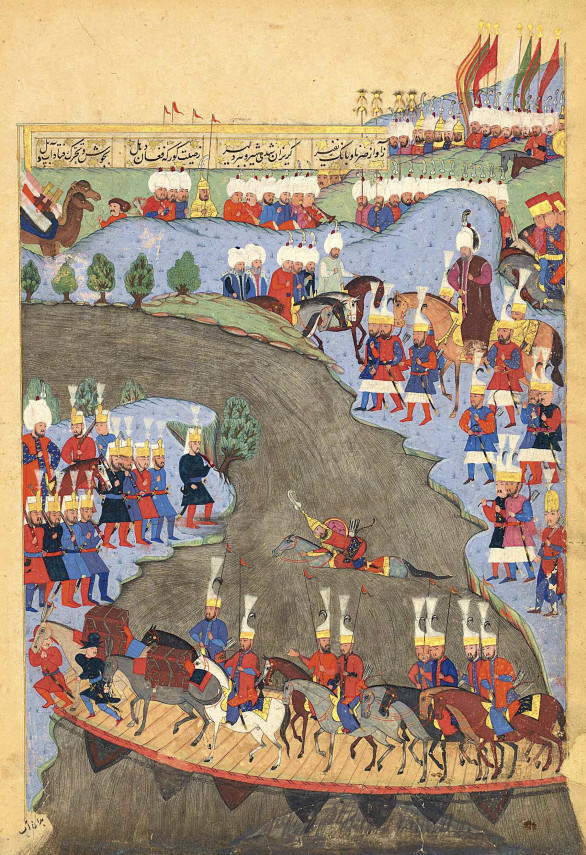
For Hungary, the consequences were especially severe. After the death of the king, the double election, and the ensuing civil war, the country was divided between two great powers. With the loss of Buda, the medieval Hungarian state lost its independent political center, while the Habsburg–Ottoman frontier moved into the heart of the Carpathian Basin.
Hungarian statehood, however, did not disappear. Within the Habsburg Monarchy, the estates of the Kingdom of Hungary preserved the country’s separate legal status and, despite its division, maintained the idea of the unity of historic Hungary. Mohács therefore represented both collapse and the beginning of a new political order shaped by the need to adapt.
The Battle of Mohács did not in itself create early modern Europe, nor did a single battle determine the centuries-long fate of the continent, the Ottoman Empire, or Hungary. Its significance nevertheless extended far beyond the battlefield.
At Mohács, several long-term historical processes converged. It became increasingly clear that the medieval Christian commonwealth was unable to act collectively. The universal imperial visions of the Ottoman and Habsburg Empires came into direct conflict with one another. The Jagiellonian system in Central Europe collapsed, and Hungary became a frontier zone between two empires.
The Ottoman victory did not bring Suleiman universal dominion, just as Charles V failed to restore the unity of Christian Europe. Behind the failure of these two universal imperial projects, a different world was already taking shape: a Europe of sovereign states, confessional communities, dynastic rivalries, and shifting alliances.
Mohács was therefore more than the defeat of the medieval Kingdom of Hungary. It became a historical watershed at which the disintegration of the medieval order coincided with the emergence of a new early modern power structure. It was, indeed, a moment of great transition.
(translated by Márta Pellérdi)