Free to read


His life was a master class, a true original. It was a tough start, resisting those first temptations this side of twenty, then for a decade and more accepting the eternal price of perfection—complete self-denial, ever seeking the highest peaks, even when at the pinnacle of glory. Rising above the petty squabbles, grievances, and jealousies—and the ingratitude of the very world that nurtured him—he continued to deliver as a coach the same legendary standard set by Laci Papp, the boxer; to stand at the top of the podium as a mentor as well—indeed, his life was a universal parable.
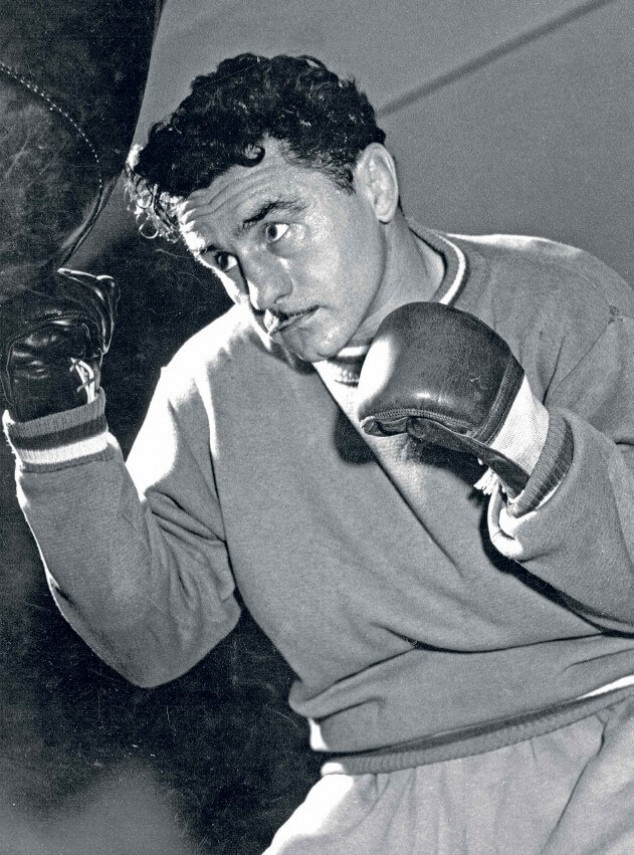
The sad news found me on the other side of the world, in the sunny warmth of the City of Angels—Laci was dead. It was 2003. Leafing through the Los Angeles Times, I came across his photo and the accompanying tribute: the first athlete in the modern era to win gold at three consecutive Olympics (London, Helsinki, and Melbourne). It was an odd feeling to see his photo right after flipping through the pages flooded with images of Arnold Schwarzenegger, California’s new governor. We knew that Laci was gravely ill, but somehow the knowledge that he was still with us—even though he had long since withdrawn into the quiet circle of his family—brought us comfort, believing he could still deliver that legendary left at any moment. He was still the hard-fisted Hungarian, the brave tradesman’s apprentice who put even the devil to flight—such was his immense strength.
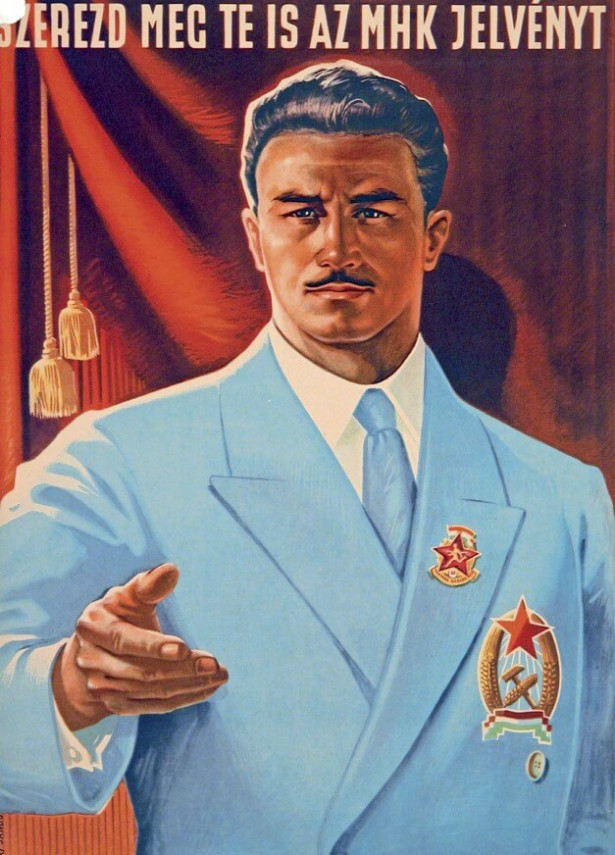
We needed a hero like him, one who stepped into the ring at that historic moment and dispatched yesterday’s champions one after another. We needed a hero like him, ever returning in triumph, manifesting the yearnings nestled deep in the bosom of the nation. Through him, we were the victors, standing with our arms raised high, wreathed in glory. He ventured down the brightly lit path of immortality, toppling the champions of the past to the accompaniment of the roaring crowds. Anyone who fails to see the philosophical in this will search in vain for its equivalent in Kant or Plato. Anyone who fails to see the poetic in this will remain oblivious to the verses of Attila József or Milán Füst. Those who fail to appreciate this will appreciate nothing.
Laci and Adler
As I gazed at his photograph, seeing him peer from behind his boxing gloves in the unfamiliar pages of the Los Angeles Times, it was as if I could see him as he once appeared in the boxing ring—or as he used to call it, the “meat locker.” After scoring a KO, he would flash the crowd a mischievous wink, a trademark gesture that drew thousands to the arena. That wink will remain his signature move forever, just as his famous saying—“I used his jaw as a punching bag”—will also endure. He embodied a true inimitable North Budapest (Angyalföld) style, a born and bred Hungarian—through and through.
One anecdote perfectly captures his larger-than-life personality. Prior to the 1952 Helsinki Olympics, Hungarian Communist leader Mátyás Rákosi visited the Hungarian team at their training camp in Tata. He was accompanied by several 1948 London Olympic champions, including Ilona Elek, Aladár Gerevich, and László Papp, along with the Hungarian team leaders. Rákosi was sporting a woven straw hat, which he loved to wear when being photographed. When they reached the entrance to the gym, Laci leaned forward and tapped Rákosi on the shoulder, asking, “That’s a nice hat you’ve got there—where did you get it?” Everyone around froze in terror, but Rákosi simply glanced back and answered Laci with a question of his own: “How old are you, young man?” “Twenty-six,” replied Laci. “Well, you’ve got a bright future ahead of you.” Then, turning to the head of the Hungarian sports office, the communist leader instructed, “Comrade Hegyi, see to it that he gets a hat just like this one.”
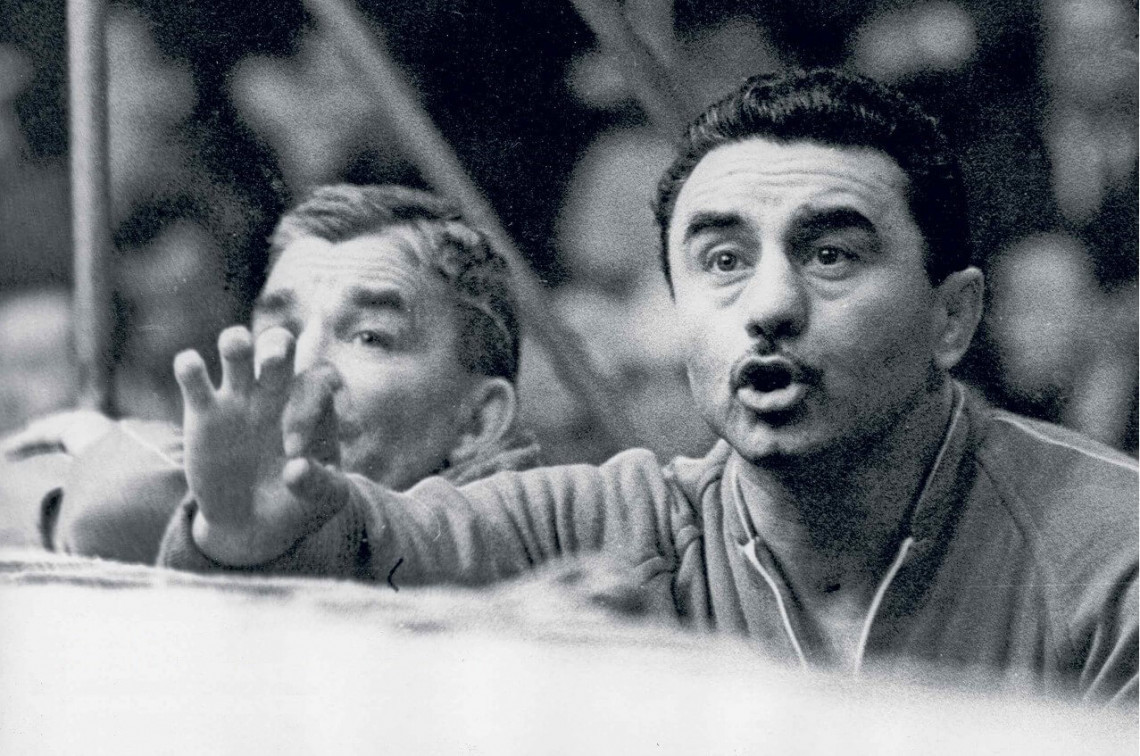
Rákosi was not mistaken—Laci did have a bright future ahead of him, although we’ll never fully know how much it cost him. Equally unknown is how much his faithful companion and shadow, Zsiga Adler, contributed to his success. A steady anchor, he guided Laci from the ringside with his sharp instructions—“Laci, your form’s off,” or “That’s the way!”—every word could be etched in stone. Despite the paternal-mentor relationship between the older Adler and the younger Laci, they made an unbeatable team. Whenever presented to the public in the National Sports Hall as leaders of Hungary’s national boxing team, the crowd would erupt in thunderous applause at the mention of their names.
Even on what was perhaps the last time in that arena, Adler—as always—stood and waved, while Laci turned full circle and greeted the crowd. The fans never forgot.
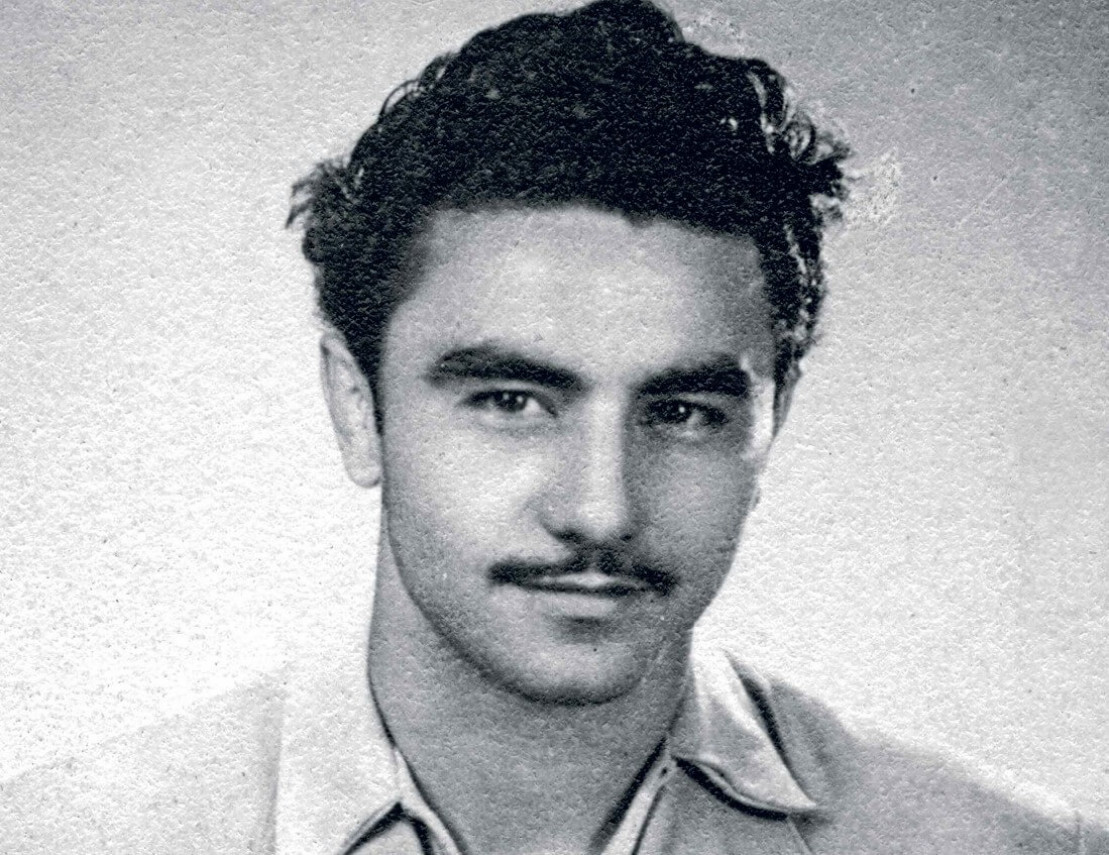
But getting back to the Los Angeles Times, the day after news of Laci’s death broke, László Tábori, the world-renowned 1950s long-distance runner, recounted in his Los Angeles shoe store an incident that happened in 1956. As they were about to board their French plane for the Melbourne Olympics, someone suddenly burst into a sprint across the tarmac—it was Laci. When they finally boarded the aircraft, they were astonished to see Laci lying on the floor at the back of the cabin, drenched in sweat: the three-time Olympic boxing champion had a dreadful fear of flying.
A Szabadság Hill memory. We had gathered here after midnight, hovering around the screen like flies over a picnic table, the sole place where the Muhammad Ali–Frazier match could be seen. Around us were some of the iconic names of Hungarian boxing: György Gedó, András Botos, Laci Orbán, and János Kajdi. Frazier had beaten Ali in their previous bout. But when the two boxers entered the ring, Adler suddenly declared, “Ali will win.” “How d’you know that?” asked Laci Orbán, who was no slouch in the ring himself. “I can see it,” Adler replied, with his trademark brevity. And Ali indeed won. That was one of Adler’s secrets—those eyes of his: his keen observations and inherent knack for the sport. He knew precisely what Laci had to do and when to do it, and the great László Papp executed Adler’s directives to the letter. Adler’s ringside orchestration made all the difference.
Here’s another story from the early ‘70s, when the national boxing team’s training camp was still located on Szabadság Hill. Laci would drive up from his place on Óra Street, while Adler would catch a bus from the city and make his way on foot from Normafa, overlooking the city. At one point, a massive tent had been set up to house the training ring. Adler walked through the gate just as a boxer was practicing a combination. From the sound of the punches alone, he immediately barked out to the unseen boxer, “No, no, that’s not how you do it!” Let there be no mistake about this: without Adler, Laci would never have become a three-time Olympic champion nor a professional European champion. Theirs was a fortunate partnership: Laci was lucky to have Adler, and Adler was lucky to have Laci.
György Kálmán, the celebrated Hungarian actor and one of Laci’s biggest fans, once described him this way: “Papp achieved greatness in a fiercely competitive era, driven by that strange, singular quality of his: a rare capacity to maintain an air of the unexpected. He had a signature weapon—a devastating left hook that he developed on his own. His opponents knew exactly what was coming, but they could never predict the moment it would land. He was fast on his feet yet level-headed; you could see that in the intricacy of his footwork. A fighter who can control his steps with such precision is in absolute command of his mental faculties. He was also strong—and that’s the number one thing in boxing. Talent can only take a boxer so far—after that, it’s grit and character. If that’s the ultimate yardstick—and Laci always measured himself against his own standard—then so be it. Possessing that kind of character was a rare gift, and with it Laci stood shoulder-to-shoulder with the greatest athletes of all time.”
The chosen one
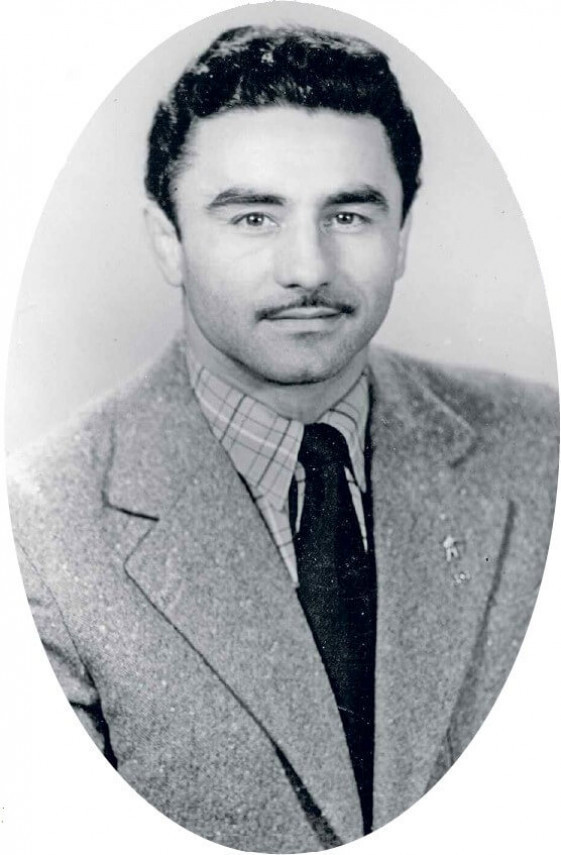
Adopting a defensive stance was alien to him. Instead, his lightning-fast reflexes and sheer speed of execution allowed him to dominate his opponents. He could read the ring with incredible quickness and execute his counters just as fast. While most boxers wield more power in their rear hand, his lead right packed a heavier punch. And there was one other thing that made him stand out—his work ethic. He was obsessively prepared for every fight.
According to his doctors, Laci’s greatest physical asset—one that played a defining role in his success—was his unique anatomy: he carried a heavyweight’s frame from the waist up but possessed a lightweight’s lower body, anchored on short, bandy legs. In fact, that was one of his nicknames—Bandy (Görbe). This unusual combination gave him unprecedented punching power for his weight class.
He also had his weaknesses, of course. He was an inherently decent soul, and that was his greatest flaw. He never divided the world into Cains and Abels. “To him, everyone was an Abel,” his wife recalled. He gave the impression of an immensely down-to-earth, friendly, and good-natured man always willing to help. These words might sound overly sentimental now, but he was truly a man devoid of any malice. I believe he grew embittered over time—for various reasons—yet he remained the same honest and upright man he always was.
He wasn’t one to pummel a defenseless opponent in the ring after scoring a knockdown. Perhaps it wasn’t in his nature—he never possessed a cruel streak as a boxer. Even as a pro, he could easily be persuaded to spare a young or aging opponent from a brutal beating. He preferred instead to either land a single knockout blow or, on the flip side, issue a subtle warning shot to get his point across.
Laci wasn’t one to hand out compliments. György Gedó had already won the final bout at the 1972 Munich Olympics and was merely awaiting the gold medal announcement, yet that didn’t prevent Laci from continuing to lecture him on what he had done wrong from the ringside. What Gedó said later gives pause for thought, too: “There I was—me inside the ring and him outside—and I could feel the sheer weight of his two hundred-plus amateur and twenty-nine pro fights weighing on me.” Let’s face the sad truth: we’ll never see another boxer the likes of him. He came up from the streets and brought back a mountain of gold for us.
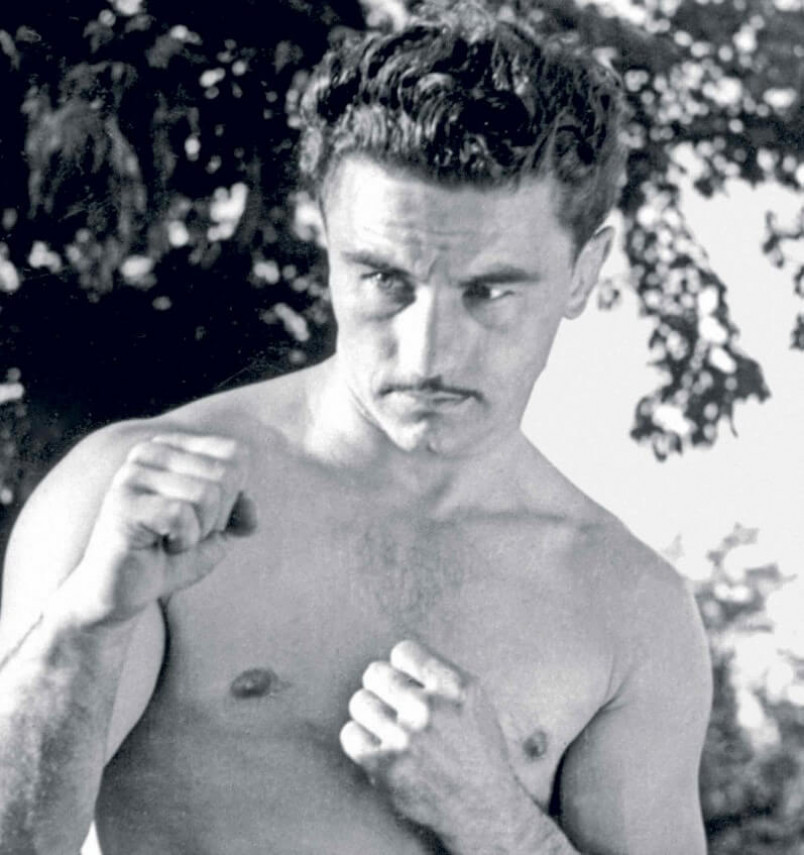
What he achieved can never be duplicated. Such an athlete appears maybe once in a lifetime. He crashed onto the scene like a tsunami. We watched him slam against the insurmountable cliffs, loving, fearing, and admiring in him all that we could have been yet could never be again. His life was his legacy—unfathomable, inexplicable, incomparable—a memory for some, and a legend for others. He filled a vacant ring, ruled it, and left it as he found it. One thing for sure—he was unbeatable. He was like a shooting star whose source and course remained uncharted.
The Olympic golds
During the 1948 London Games the Hungarian boxer squared off against Britain’s Johnny Wright in the final bout. “For the first time, I truly felt the payoff for all my hard work,” Papp later recalled. “The knockouts, of course, fired me up, and I knew it was now or never.” His opponent viewed it differently: “I watched Papp box in the semi-finals, and I thought either he’s very skilled or very smart. Now I know better—he’s both. He deliberately held back to make me think I had a chance. I had high hopes, but I must say that the man I met in the finals was someone completely different. He was tremendously tough, tremendously tough...”
Papp kicked off the 1952 Helsinki Games against the American boxer Ellsworth “Spider” Webb, dispatching him with a second-round knockout. The following few lines perfectly capture our champion’s gritty, street-smart Budapest style:
“So, I finally got to see what this American guy was all about. When I was inside the ring—you know the ring, right? That square thing made of three rows of ropes, though I call it the meat locker—Zsiga Adler, my trainer, the kindest soul alive, tells me: ‘Now, will you take a look at that over there.’ I looked over and thought I was going to have a heart attack. Here comes this big bloke with a head bigger than a breadfruit. The chap clambered through the middle ropes and shot me a furious glare. For the first time in my life I actually got riled up in the ring. You know how it is when some hard hat whacks his own thumb with a hammer and it swells up like a ripe tomato ready to burst. I immediately imagined the pounding I was going to get, and it’s no mean feat crawling out of that hole. And then came the first bell, signaling the start of the round. I step forward to respectfully touch gloves, and this crooked-mouthed character... walks right up, and boom, he throws a punch at me, and I just barely manage to pull my head back in time. My blood was boiling, I was so furious, and they have the nerve to say these are good lads! Well, I threw the kitchen sink at him after that and was even landing blows on his shins at one point. […] By the second round I had settled down, pressed forward with better form, and landed a heavy blow to his midsection. I don’t know if you know what it’s like to get hit in the stomach, but it’s an awful feeling. You get the wind knocked right out of you, and your eyes pop out of your skull like a fiddler crab. It’s absolutely horrible! And just like that, he dropped his guard, and I caught him flush on the chin with a left and a right. I was so exhausted it wasn’t even funny, but I couldn't help but crack up. The fellow was as black as soot, but the whites of his eyes were bulging like billiard balls. And with that, they counted the fellow out.”
Experts agree that the American José Torres, whom Laci met in the final, was the toughest opponent he faced at the 1956 Melbourne Games. The American had easily dominated his first three opponents but was clearly wary of Laci, frequently retreating into a tight defensive shell. Nevertheless, he threw accurate, well-timed, and powerful punches from a distance while fully holding his own in the inside exchanges.
“Things didn’t go as well for me as they did against the Pole [Pietrzykowski],” Laci admitted later. “My speed wasn’t there, and I hesitated too much.
I couldn't judge the distance properly, even though that’s incredibly important. That’s why he managed to land a couple of blows on me. I got him back with a right hook that left him reeling, but the ref didn’t issue a count. Torres admitted later it left him dazed. […] I was in total control for the third round. […] I’ve never been cheered before the way I’d been in Melbourne.”
Torres later turned pro and became world champion. After winning his third gold medal, grateful Hungarian officials allowed Papp to try his luck as a pro. It had its risks—for Laci, that is—for he was at the top of his game; he was getting into it when most fighters were already hanging up their gloves, especially in this part of the world. And the pro ranks were far tougher than the amateur field he had dominated so thoroughly. But what came next for Laci defied all imagination and expectation, having a true sports significance far greater than his three gold medals. As a pro, Laci didn’t suffer a single defeat and easily won the European championship. Tragically, an irrational, incompetent, and—to put it mildly—frankly biased political decree put an end to Laci’s career and his unprecedented series of victories. He was not allowed to fight for the world title when he was in the absolute prime of his life. And with that, the nation’s entire involvement with professional boxing came to an end.
The final golden age
There was to be one final golden age of Hungarian boxing in the late 60s and early 70s when the two legendary figures—Papp and Adler—represented Hungary as coaches. It was as if a new day had dawned; up on Szabadság Hill once again, training was underway under a massive tent, just like the old days. The atmosphere was electric as the two masters held the boys completely spellbound.
Then, at the 1969 European Championships in Bucharest, victory emerged out of total obscurity: two gold medals for Hungary, brought home by György Gedó and László Orbán—both still practically juniors. The team had achieved stellar success without the usual stalwarts Tibor Badari and János Kajdi.
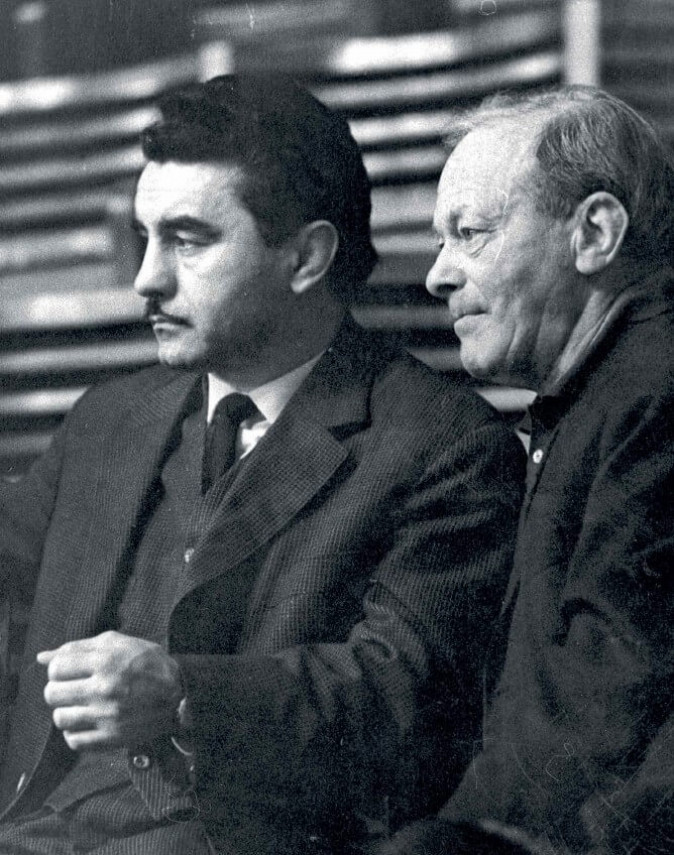
László “Laci” Papp and Zsigmond “Zsiga” Adler in 1969
When Badari and Kajdi rejoined the team, it set the stage for the unforgettable success at the 1971 European Amateur Boxing Championships in Madrid, which saw gold-medal performances by Badari, Kajdi, and Gedó and additional podium finishes by András Botos and Laci Orbán. This had followed similar success at the 1st European Junior Championships in 1970, where the gold medals came thick and fast. The 1972 Munich Games yielded plenty of heartbreak but also immense joy. The Olympic Games didn’t disprove the claim that Hungarian boxers were the best in Europe, but it certainly tested it. The results fell short of expectations, but the team held its own: a gold (Gedó) and two silvers (Kajdi and László Orbán) were nothing to scoff at, especially in the absence of European Champion Badari, who had been suspended once again.
Then something happened that no one thought possible—the friendship between these two legendary men fell apart. When filming the 1981 biopic The Valley of Blows, or Laci Papp Can’t Be Beat, the eighty-year-old Adler was noticeably absent. Their thirty-year friendship had soured after the 1974 World Amateur Boxing Championships in Cuba, and Adler refused to appear in the film. Their relationship—despite all the back-and-forth statements and public announcements—never recovered.
Time, unfortunately, chips away at even the strongest friendships until a point comes when the invisible bonds holding them together are severed forever and they fade into history. Such happened to László Papp and Zsigmond Adler. There is no point in looking for someone to blame; they are long since gone (Adler died in 1982). Instead, we should build upon the past as a source of strength, reflecting an unforgettable history.
Laci was a man of faith. He went to church even during difficult times, but he never spoke about the inner strength that he drew from divine providence. He harbored secrets, which he took with him to his grave. Despite his success in the ring, he was well aware that all of life’s real battles had to be won outside the ropes—decided through preparation, an acceptance of the results, and an honest evaluation of the lessons learned—both long before the first bell and well after the final round. This is the defining legacy of Laci Papp’s life and his athletic career.
(translated by John Puckett and Andrea Thürmer)