Free to read


The laws and traditions of the Kingdom of Hungary stipulated that should a legitimate king be prevented from performing his duties, whether due to absence or minorty reign, a regent is to take on his responsibilities. This first occurred in 1446 when János Hunyadi governed on behalf of the infant King Ladislaus V (Ladislaus the Posthumous); a precedent that established a tradition for centuries to come. Upon the death of Ladislaus V, fourteen-year-old Matthias likewise ascended the Hungarian throne as a minor—with his uncle, Mihály Szilágyi, appointed as regent on his behalf. Matthias (1458), however, tolerated his uncle’s guardianship for a mere 212 days. The traditional line of regents (or governors) in Hungary include Lajos Gritti (1530-1534), János Amprigen (1673-1679), Lajos Kossuth (as governor-president in 1849), Archduke Joseph of Habsburg (1919), and more recently, Miklós Horthy (1920-1944).
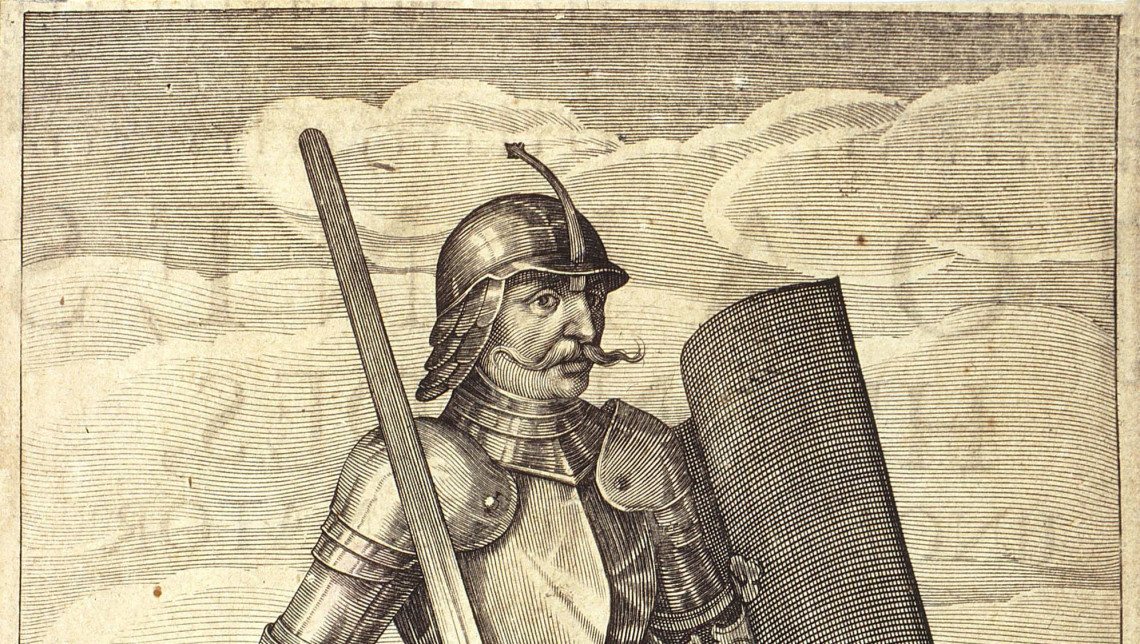
János Hunyadi, Regent of Hungary
On November 10, 1444, precisely ten days after his 20th birthday, King Vladislaus I of Hungary and Poland (Władysław III on the Polish throne but known as Ulászló I in Hungary) fell at the Battle of Varna. Poland endured a two-and-a-half year interregum following the death of the Jagiellonian monarch which ended in 1447 with the accession of Vladislaus’s younger brother, Casimir IV. In the Kingdom of Hungary, however, the situation was different. The country’s legitimate ruler, Ladislaus V of the House of Habsburg, heir apparent of the late King Albert II of Germany, had already been crowned King of Hungary on May 15, 1440, by Dénes Szécsi, Archbishop of Esztergom, at the tender age of two and a half months.
Why was a regent needed?
Ladislaus the Posthumous, as he was called, was born in Februrary 1440 following the death of his father, Albert II of Habsburg. He lived in Wiener Neustadt at the estate of and as ward of his second cousin, Frederick III, King of the Romans. Ladislaus’s young age made him clearly unfit to govern the lands of Hungary which, at the time, included the Kingdom of Bohemia and the Duchy of Austria. Inasmuch as the coronation of Ladislaus V had been annulled in a solemn order by the Diet of Hungary dated June 29, 1440, the question arose as to whether Ladislaus V would ever be recognized as King of Hungary at all, or if the throne, considered vacant, would require searching for a new ruler.
Athough there were rumors circulating that certain barons, notably Count Palatine Lőrinc Hédervári, wanted to elect another king, in May 1445, Ladislaus was acknowledged as their king at the Diet in Pest on the condition that Frederick III relinquish the child along with the Holy Crown. There is evidence that a re-coronation of the young king was being insisted upon but that negotiations with Frederick to this effect were unsuccessful. Hunyadi did not take part in these negotiations. Rather, it was Hunyadi’s fellow voivode, Miklós Újlaki, who reached a compromise with Frederick, presumably with Hunyadi’s knowledge and approval. It was in this compromise that the King of the Romans was assured that Ladislaus V would be recognized as King of Hungary, and in return, Frederick pledged not to interfere in the governance of Hungary on behalf of his ward.
It is not known when the idea of electing a regent first arose. It is notable, though, that Hunyadi had already not only begun addressing himself as the vicar and captain-general of Hungary as early as the beginning of 1446 but, also, as the captain-general of Hungary and Slavonia shortly before the Diet of June 1446. His election as regent was the logical culmination of a brief but intense period during which Hunyadi, who had been virtually unknown until then, became Hungary’s most influential politician.
This period was not free from conflict. In early 1446, Hunyadi clashed with Újlaki over the exercise of power, but by the time of the June Diet, it had been largely decided that Hunyadi would lead the country during the king's minority reign; one that was expected to last for years. His election, or rather, his proclamation as regent merely sealed the influence he had been cultivating for years; an influence that was firmly founded on his reputation as a charismatic military leader.
The regent’s powers
In 1455, reflecting upon events that had taken place nine years earlier, Hunyadi recalled that “the bishops and barons, as well as the nobility” authorized his administration of all the country’s affairs and business, but above all, called on him to defend the country’s borders against the Ottomans and other infidels who were “swift to shed Christian blood.” In another document, the Office of Regent transferred upon its bearer the burden of “preserving all inhabitants of the realm, intact and unimpaired, in their lawful rights, liberties, and exemptions.”
The former regent’s recollections did indeed correspond with reality. Although the Diet of June 1446 decree did not explicitly say why a regent was needed, the resolutions adopted after the election did reveal the duties Hunyadi was expected to perform. Accordingly, the office of regent could exercise royal authority, but with restrictions that Hunyadi himself had requested and which had already been agreed upon and adopted at the diet that elected him. Among these limitations, it was stated that he could not grant estates larger than those of 32 serf holdings (larger villages nor in separate parcels); he could not declare treason without the consensus of the citizens, Council or the Diet; and, he could only grant offices to high-ranking ecclesiastical benefices with the consent of the counsellors assigned to him. During octaval tribunals, for example, it was required that, in addition to the count prelate and judge royal, Hunyadi was to be accompanied by two prelates, two additional barons, and six noble assessors. On other occasions, he was permitted to adjudicate the complaints of the inhabitants of the realm in the company of one prelate, one baron, and two nobles.
A subsequent diet, held in March of the following year, further defined the regent’s powers. The two most important decrees authorized Hunyadi, on the one hand, to collect the royal revenues and, on the other, required that a diet be held every year at Pentecost, at which—in principle—Hunyadi and all barons holding high office were to resign their offices. These measures were clearly intended to curb the powers of the Regent—or, as we would put it today, to ensure “constitutional checks and balances.” Even the king would have sought the council's opinion and consent on important matters, but, in these cases, the power of the crowned monarch could not be formally restricted. In the case of the regent, however, the situation was different. The regent did not exercise his authority by the grace of God but solely by the authorization of the estates. For this reason, it was stipulated as early as June 1446 that grants made by the regent would require the ratification of the King.
The regency, or governorship, was an extraordinary and necessary temporary legal arrangement that was intended to ensure internal peace and the defense of the country until the king’s legal accession to the throne. Hunyadi was authorized to manage all the affairs of the country, but, in most cases, could not make decisions on his own. Conversely, the manner in which he exercised the authority vested in him—within the established framework—depended on Hunyadi himself - as there were no precedents to draw upon in 1446. It is likely that neither those who elected him, nor Hunyadi himself, knew how the regency or governorship would actually manifest in practice.
The fluid nature of the regent’s authority was reflected in the titles that Hunyadi, himself, used. Following his election, he initially used, in various forms, the title “Governor General in the name and person of the illustrious prince [Ladislaus], son of the late King Albert—elected King of Hungary, Dalmatia, and Croatia”— and, for a time, added “of the Voivodeship of Transylvania.” From 1447 onwards, reference to the king and the descriptor generalis ("General") gradually disappeared from his official title, until it was eventually standardized as simply Governor of the Kingdom of Hungary (regni Hungariae gubernator). Although his official title was governor, he effectively served as the kingdom’s regent.
The latter title became so widespread that, in their correspondence, Hungarian cities and communities, simply referred to Hunyadi as “Governor” (der Gubernator) right up until his death – even extending this title to his son László who they referred to as the "young Governor" (der junge Gubernator). Interestingly, the title of Voivode of Transylvania persisted among contemporaries, even though Hunyadi did not hold the Office of Voivode after 1446. An instance of this, for example, was in 1451 when the citizens of Pozsony sent their envoy to “our gracious lord governor, Voivode John” (unsern genedigisten herren gubernator Ianusch wayda). The prestige associated with the Office of Voivode is demonstrated by the fact that Miklós Újlaki was known to everyone as Voivode Miklós almost until the end of his life—and most certainly up until his reign of Bosnia.
The Office of the Regent
Based on the hundreds of charters that have survived from Hunyadi’s time as regent, we can envision how the regent's or “governor’s” office functioned. His gubernatorial documents, like those of monarchs, can be divided into three major categories: letters of grant, letters of command (mandates), and documents related to the administration of justice (e.g., orders to investigate).
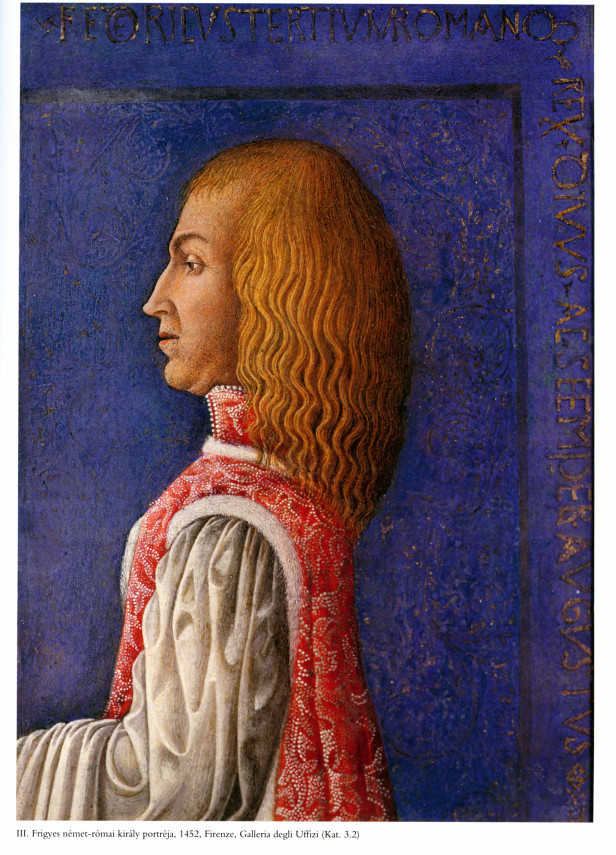
In respect to administrative matters, different types of charters were issued using different seals that often “circulated” independently of one another; for instance, the king’s signet ring, privy seal, and judicial seal could simultaneously be in the custody of three different individuals in three different locations. During Hunyadi’s regency—although his signet ring rarely appears alongside his seal of office—we have no knowledge of such a division of functions; matters were always handled wherever Hunyadi happened to be. In his charters of grant, the regent regularly, though not always, referred to the counsel of the prelates and barons, as would a monarch. He, likewise, acted in agreement with the prelates and barons regarding the filling of high ecclesiastical offices, occasionally explicitly citing the relevant provision of the 1446 decree.
Most often, he administered grants, and other official business, “by virtue of his governorship" (de auctoritate gubernacionis nostre). Such a clause was essentially unnecessary in royal charters since the origin and validity of royal authority were universally clear. There existed another level of royal authority, however, wherein the monarch acted specifically by virtue of the fullness of his power and his special grace, such as in the case when granting a pardon or bestowing the right of high justice, a term used to indicate the right to administer capital punishment. Hunyadi likewise dispensed of similar acts of grace as regent, and on such occasions, adopted the phrasing of royal charters.
It was “by virtue of the full extent of his governing authority,” that he granted the right of high justice – in the same way he granted the office of Lord Lieutenant (ispán) or authorized a retrial. In 1447, on the occasion of granting a market charter, he did not mention the full extent of his authority, but he did refer to the unanimous will of the councilors who stood beside him. Interestingly, in a charter issued in 1447, he rewarded his Torda salt chamber administrators, those in charge of the country’s salt monopoly, for their loyal service. On the one hand, by virtue of his authority, he exempted them and their houses in Torda from the payment of all local and national taxes. On the other hand, using the “fullest extent of his governorship,” he authorized the town of Torda to deduct eight gold florins from the royal tax it was obliged to pay on the feasts of Saint George and Saint Martin–as compensation for the tax-exempt status granted to the houses of the recipients.
In this latter case, by reducing the tax of a royal town, Hunyadi acted to the detriment of the royal authority which was evidently the reason for the unusual wording. However, even this was not always sufficient. In 1448, when Hunyadi exempted Vasvár chapter peasants from their obligation to pay the thirtieth and other taxes due to the devastation they suffered from the war, he erred on the side of caution: the chapter’s provost appealed to the magnates of the realm who, by virtue of their own collective authority (nostre universitatis auctoritate) confirmed the regent’s decree.
The Vasvár incident clearly demonstrates that doubts concerning his authority were never totally eliminated. Moreover, whether he wanted to or not, Hunyadi was likewise compelled to share these doubts. This is made clear from the provisions in his charters in which he is explicit in stating the possible limitations of his authority as regent. This always occurred in those situations where, like that of the grant in Torda, it was not clear whether the royal rights extended to his jursidictional authority.
In 1447, when he granted the royal mining town of Telkibánya to the Rozgonyi brothers, he added to his grant: “insofar as we have the right to do so.” He used similar wording two years later when he confirmed a decree issued by the late Queen Elizabeth for the benefit the citizens of Pozsony. In yet another incident, in 1452, he donated a confiscated estate by virtue of his authority as governor and in the king’s name, but added “provided we may do so lawfully and in accordance with the customs of the country.”
In many respects, the fact that Hunyadi, acting as regent, attached the condition that his grants should not contravene customary law reflects the ambiguous distribution of power within the kingdom. The most interesting situation which arose was when Hunyadi, while invoking his innate authority (and generosity) as regent, was when composing his charter. Though such phrasing was common in royal letters of grant, it seemed rather peculiar in a regent’s charter, so much so, that very few examples of this can be found.
What distinguished gubernatorial authority from royal authority was that, first, it was not absolute, and, second, and by its very nature, it operated on a collegial basis. As early as the Diet of May 1445, a judicial office was established that specifically issued its charters in the name of “all the prelates, barons, magnates, and nobles of the Kingdom of Hungary” under a seal depicting the double cross symbolizing Hungary. Its function was primarily judicial in nature, meaning that it exercised the king’s judicial authority; an authority which was shared with the regent, the palatine, and the judge royal. At times, particularly during sessions of the diet, the collegiate also made important political decisions in cooperation with the regent. In such cases, of course, this did not simply denote a court office, but rather the very high prelates, barons, and notables who, together with the governor, participated in making the given decision.
In December 1450 a diet was convened in the name of “all the prelates, barons, dignitaries, and nobles of the Kingdom of Hungary.” The invitation, issued in Esztergom, and to be held at the beginning of the following year, bore the note “ by order of the cardinal and Archbishop of Esztergom” indicating that it was Archbishop Dénes Szécsi who gave the order, despite Regent Hunyadi, having, most certainly, been in the city at the time. The decision to hold the diet, however, was made jointly with other prelates and barons. In 1447, “all prelates, barons, dignitaries, and nobles of the Kingdom of Hungary” confirmed the privileges of Selmecbánya. On this occasion, the document was issued “by order of the Regent and the appointed councilors”. Two years later, with the consent and at the behest of Regent Hunyadi, the same individuals authorized Judge Royal László Pálóci himself, to appoint the provost of Lelesz until the commencement of the king’s reign. The record once again included the phrase “by order of the Regent and the other appointed councilors,” serving as proof that, indeed, the Regent did not act alone and that the resolutions of the Diet of June 1446 regarding the limitation of gubernatorial power were being upheld.
In respect to treaties, the process was quite similar. Were there a king, it would be the King who would personally conclude peace treaties, ceasefires, or alliances, with magnates merely ratifing them by affixing their own seals to the parchment or, in some cases, issuing a separate charter. The regent did not have such power. His authority was demonstrated by the fact that when magnates were listed by name, Hunyadi’s name was always found on the top of the list, even before those of prelates. Not only did he never act alone, his involvement was not even strictly necessary. In June, 1477, when the Hungarian delegation led by Archbishop Dénes Szécsi concluded a truce with King Frederick III, they did so “with the full authority of the illustrious Kingdom of Hungary”, not on behalf nor on the instructions of Regent Hunyadi – however, it was Count Frigyes Cillei who had brokered the agreement specifically at the regent’s request.
Rivals and Enemies
The Diet of March 1447 authorized Hunyadi to collect royal revenues to finance the country’s defense. The most important of these revenues came from the royal salt monopoly. A document likely compiled in 1453 credited Hunyadi's organizational efforts with increasing the treasury’s annual income from salt sales to an estimated 100,000 gold forints. Further significant revenues were derived from the 3.3% border customs duties known as the tricesima (thirtieth), from minting, as well as from the tax known as the chambers profit (lucrum camerae).
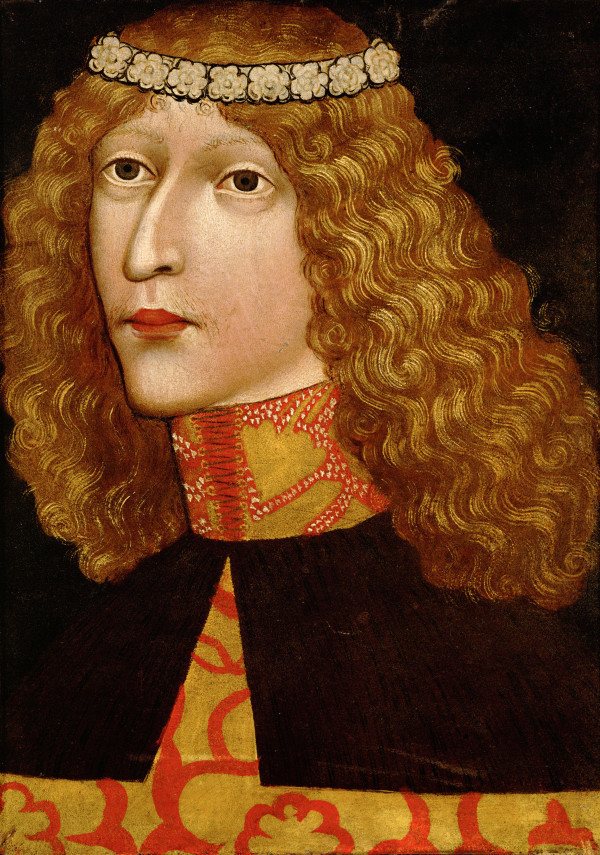
Whereas the most important salt mines and salt chambers were located in territories controlled by Hunyadi, the border customs duties and, above all, part of the mint revenues were controlled by others. Foremost among them was Jan Jiskra, who, since 1440-41, established his territory and influence in Northern Hungary as “King László's captain-general in Hungary" – with Queen Elizabeth having taken him into her service. His influence gradually extended to Kassa, other neighboring free royal towns, and even to mining towns.
After 1446, Hunyadi and Jiskra were theoretically on the same side: the former governed Hungary in the king’s name, the latter, meanwhile, exercised the authority of captain-general granted to him by Queen Elizabeth and in the king’s name. Though their relationship was never frictionless, it would be inaccurate to characterize it as constantly hostile either. Public opinion in the country expected the integration of the territories under Jiskra’s control, for which there were two possible solutions: to pay off the captain-general and his mercenaries, or to drive them out of the country by armed force. As there were no funds for the former alternative, successive agreements stipulated that Jiskra could remain in the fortresses and towns under his control until the necessary funds could be raised.
From 1449 onwards, the futility of the situation resulted in repeated armed clashes. A significant contributing factor was that neither Jiskra nor Hunyadi could maintain order among their followers who maintained substantial mercenary forces under arms. It was Jiskra who consistently emerged victorious in these conflicts. This was primarily because Hunyadi did not want to tie his forces down in the north in an extended war that would require him to attack his opponents’ fortresses one by one. At one point, Hunyadi attempted to resolve the situation by offering his own sister in marriage to Jiskra. Allegedly, the wedding was cancelled because Jiskra feared that Hunyadi would kill him and his followers during the ceremony. Perhaps not accurate in every detail, the episode vividly illustrates the profound mistrust between the two commanders that rendered any lasting agreement impossible until Hunyadi’s death.
Exploiting the turmoil following King Vladislav’s (Władysław III of Poland’s) death at Varna, Counts Frederick and Ulrich Cillei took Slavonia under their control. Although Hunyadi led a campaign against the Cilleis in the spring of 1446, indeed, ravaging some of their estates in Styria, he was not able turn the tables on this front either. The Counts of Cillei (Celje) were close relatives of Ladislaus V, the rightful monarch, and on this basis, Hunyadi ultimately determined that a reconciliation would be more advantageous. Around the turn of 1446-47, he concluded a peace treaty with the two counts, acknowledging their influence in Slavonia. Since that point, no recorded conflict took place between the two families for years. In fact, the Hunyadi sons, László and Mátyás (Matthias) had been betrothed to Count Ulrik’s only daughter (Erzsébet) on multiple occasions. These planned marriages, though, would have served to normalize relations between the Hunyadi family and the Serbian despot, Đurađ Branković –Erzsébet Cillei being Branković’s granddaughter.
While there were no land disputes or serious political disagreements between the Counts of Cillei and Hunyadi prior to 1455, the relationship between the Serbian Despot and the regent— which had begun promisingly—was increasingly tainted by fierce conflicts. During the 1443–44 Long Campaign against the Ottomans, the two men fought side by side throughout the battles. In 1444, however, after the Sultan had evacuated the fortresses in Serbia in accordance with the Peace of Várad, Branković’s refusal to join the new campaign resulted in the tragedy at Varna. In exchange for the restoration of Serbia, Hunyadi seized Branković’s vast estates in Hungary, a condition the despot found unacceptable.
Taking advantage of the governor’s precarious situation following his defeat at the Battle of Kosovo (Rigómező), Branković forced Hunyadi to cede certain estates to him. In response, Hunyadi, along with the countries nobles, confiscated the despot’s property and sentenced him to death on the charge of collaboration with the Ottomans in 1448. Their relationship, was ultimately resolved when the war prepartions of the new Sultan, Mehmed II, made it clear that Hunyadi and Branković would, indeed, need each other. In July 1455, Erzsébet Cillei, who had been raised in the Greek Orthodox faith, converted to Catholicism and, either immediately or shortly thereafter, married László Hunyadi (Matthias Corvinus) in the city of Győr.
Hungarian historians have tended, somewhat unfairly, to cast the relationship between János Hunyadi and Frederick III, King of the Romans and later Holy Roman Emperor, in an even darker light than Hunyadi's relationship with the Cilleis. Prior to 1459, Frederick neither did nor could lay claim to the Hungarian throne. He did, however, not only keep the young Ladislaus V and the Holy Crown in his possession but proceeded to capture a number of Hungarian fortresses along the western border in 1445, including that of Kőszeg, claiming that they served as bases for raids into the neighboring Austrian and Styrian territories.
Upon his election as governor, Hunyadi launched his first armed campaign against Frederick. Though aiming for the release of Ladislaus V, the return of the Holy Crown, and the recapture of the conquered fortresses, Hunyadi’s campaign not only failed to achieve these goals, it caused a serious political crisis in Hungary—partly due to the agreement with the Cilleis (Counts of Celje). After Hunyadi and Újlaki had concluded separate agreements with Frederick at the turn of 1445–46, the governor refrained from any further negotiations with Frederick—both before and after the unsuccessful incursion into Styria—despite the fact that, as the country’s leader, no agreement could have been possible without him.
In November 1450, Hunyadi had reached another separate agreement with Frederick, one that was clearly detrimental to the interests of Ladislaus V, in that it kept him in Frederick’s custody for an additional eight years. In the summer of 1452, Hunyadi (as regent) did not participate in the Rebellion of Austrian Estates, a campaign comprised of Austrian, Czech, Moravian, and Hungarian estates; one resulting in the release of Ladislaus V. We could safely say that Hunyadi found in Frederick the ultimate ally. The alliance, of course, was not one based on personal friendship, but on political identity. Just as the king of the Romans was unwilling to let Austria slip from his grasp, Hunyadi, likewise, had no desire to relinquish his power over the Kingdom of Hungary. There were no significant changes made to these circumstances—not even after Hunyadi’s forced resignation from the governorship.
The balance of Hunyadi's regency
Despite failing to restore unity in the country, it is undeniable that, in comparison to the period of civil war, peace reigned in the majority of the country during Hunyadi’s six and a half years of governorship. The judiciary was functioning again. There were no internal conflicts apart from the one in the territory of Jiskra. And although he relied on his own tried-and-true supporters and relatives in the management of daily government affairs – like appointing his brothers-in-law, János Székely of Szentgyörgy, the ban of Slavonia and Croatia, and (from his wife’s line) János Geréb, as deputy governor of Transylvania – Hunyadi’s charters indicate no trace of “partisan” bias.
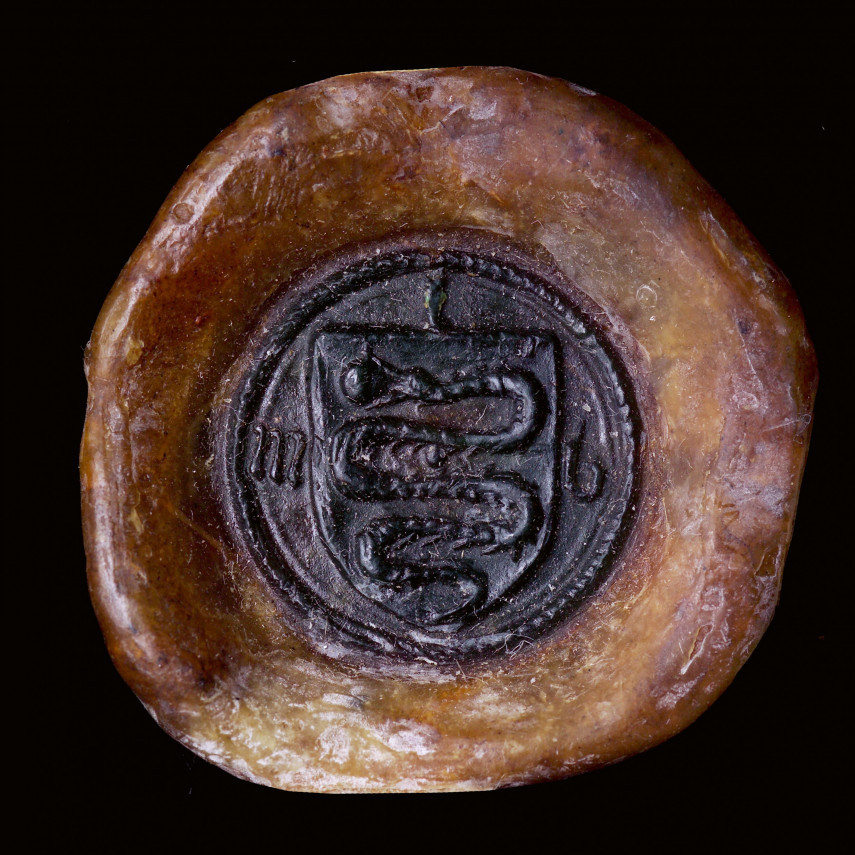
The seal of László Garai, Palatine of Hungary (1447-58) and Ban of Macsó (1431-1441 and 1445-1447). The coat of arms within the field of the seal is that of the Garai family: a crowned serpent facing dexter (to the viewer’s left), coiled five times, and with a crown placed upon its head.
By all indications, it was with Hunyadi’s support that László Garai became Palatine of the country in 1447. It is also certain that János Rozgonyi Jr., who had previously been considered a partisan of Queen Elizabeth, could not have become Voivode of Transylvania without the regent’s approval. His “administrative generosity” was accessible, within the aforementioned limits, to anyone who had rendered services to the country regardless of which side they had previously taken during the civil war. In this sense, Hunyadi did indeed preserve the “rights, liberties, and exemptions,” of the citizens of the realm, as was expected of him.
Following disastrous defeat at the second battle of Kosovo (második rigómezei csata) in October 1448, there was calm on the Ottoman front, leading to a ratified formal truce in 1451. It can be assumed that neither Hunyadi nor public opinion could expect more than this. In the words of János Zrednai, Bishop of Várad, the regency served to calm “the very storm that had recently left the heart and soul of this people even more internally conflicted.”
It is precisely because of the limitations placed on the regent’s power that this period of “calm” could be neither complete or final. Hunyadi remained the country’s de facto leader despite being forced to resign as regent in January 1453. This was due to not only his manifest desire for power, but was also because of the dramatically altered international situation. By taking advantage of the king’s minority status, Frederick III seized power in Austria and George of Podjebrád in Bohemia—neither intending to relinquish the young heir.
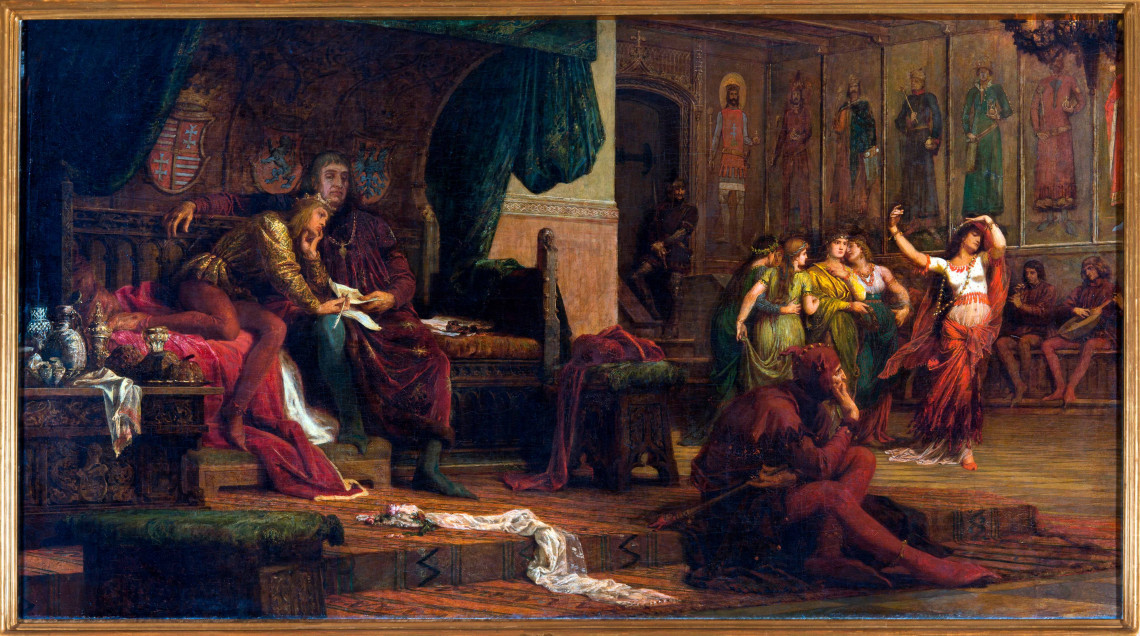
Hunyadi's power in Hungary remained essentially unchanged after 1453. As captain general and administrator of the royal revenues, he continued to conduct the affairs of the kingdom much as he had done while serving as regent. His position was considerably strengthened by the Ottoman conquest of Constantinople in May 1453 and the wave of fear that subsequently spread across Europe. There was, however, one important difference. Whereas Hunyadi's authority as regent had been collectively recognized and supported by the kingdom's political elite, albeit subject to clear constitutional limitations, his powers as captain general—and his increasingly obvious determination to keep the king at a distance from the authority that was rightfully his—won the disapproval of an ever-dwindling number of supporters.
This state of affairs, once again, led to the country’s fatal division; one that could no longer be resolved through political means. Count Ulrich Cillei was the first to fall victim to it, then the "young governor," László Hunyadi, and finally, King Ladislaus V himself. The king’s short and troubled life never afforded him a single day on which he could truly feel himself to be a king ruling by the grace of God.
(translated by Andrea Thürmer and John Puckett)