Free to read


One date has become forever associated with the name of Sopron. There is one day whose memory will live forever in the hearts of Sopron’s citizens. That day was December 14, 1921. On that particular Wednesday, in a Hungary dismembered by the Trianon peace dictate, only one town and the eight surrounding villages—Ágfalva, Balf, Bánfalva, Fertőboz, Fertőrákos, Harka, Kópháza, and Nagycenk—were able to exercise the right of self-determination. They could decide their own fate: whether they wished to belong to Austria or remain part of Hungary.
On December 8, 1921, an Entente peacekeeping contingent arrived in Sopron, together with the Inter-Allied Commission of Generals, to oversee the referendum that would decide the fate of the town and its immediate surroundings in accordance with the terms of the Venice Agreement. The referendum regulations, issued on November 23, stipulated that voting would take place first in Sopron and then in the eight surrounding villages, with the results combined to determine the final outcome. Men and women who had reached the age of twenty by January 1, 1921, were eligible to vote if they had been born in the referendum area, held municipal domicile there, or had established permanent residence there before January 1, 1919. Those who had resided permanently in the area since January 1, 1921, were also entitled to vote.
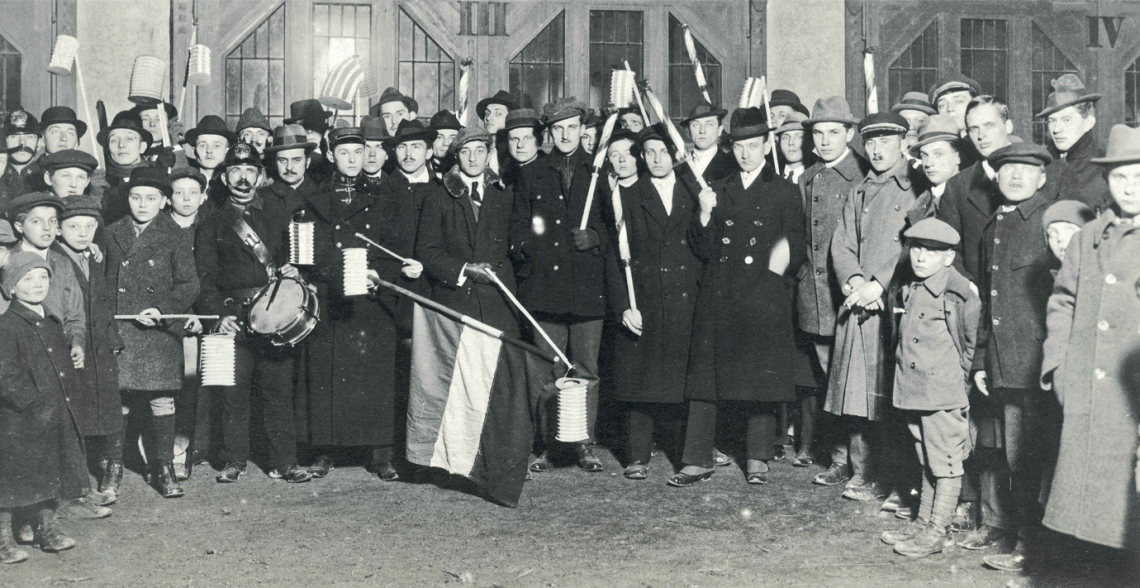
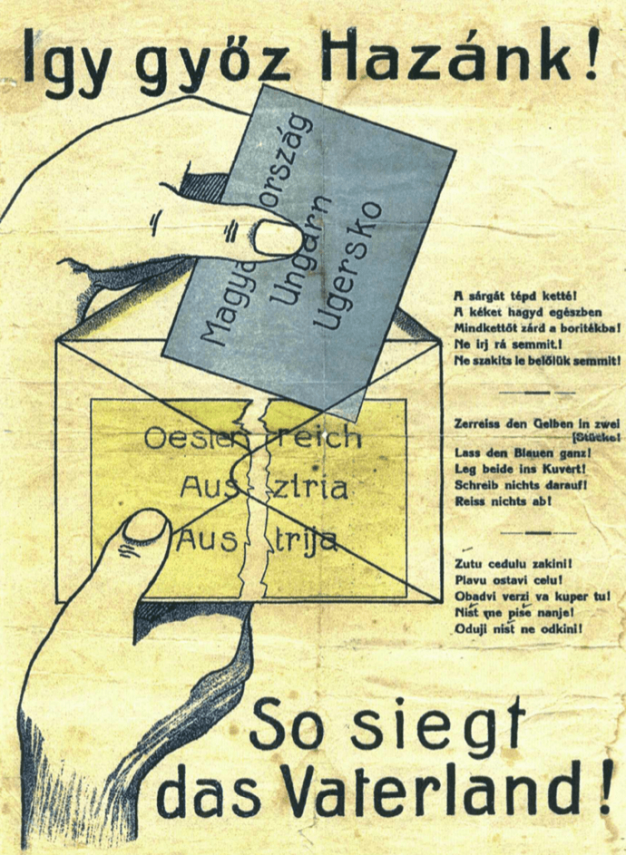
The Ödenburger Heimatdienst, a propaganda organization supported by pro-Austrian local residents, had been active in Sopron since October 20, seeking to influence eligible voters through dozens of leaflets, postcards, and other printed materials. The vigorous Austrian campaign soon prompted the Hungarian side to respond, and leaflets in Hungarian, German, and Croatian competed for the support of the local population. Students from the Selmec Academy, led by Károly Suhayda, conducted patrols in the town’s farming districts. Heated exchanges between Austrian and Hungarian campaigners were commonplace, sometimes escalating into bloody clashes.
Between December 5 and 7, the Austrian referendum commissions received the electoral rolls, after which previously omitted names were added and those included without proper entitlement were removed. Some 400 students from the Selmecbánya Academy were struck from the rolls en masse. In response, they volunteered to serve as international peacekeepers in return for a daily allowance. They were issued armbands bearing the initials A. F. I.—representing England, France, and Italy—which they jokingly reinterpreted as “Austria, fuss innen!” (“Austria, get out of here!”).
The Hungarian garrison withdrew from Sopron on December 12, and that same day Italian Colonel Ivaldi declared that the review of objections to the electoral rolls was closed. Austrian regular and irregular forces planned to enter the referendum area if the result proved unfavorable to them. Lieutenant Colonel Béla Karcsay, commander of the town’s civil guard, took measures to protect Sopron by deploying a border-defense battalion that included students who had participated in the earlier uprising. Within the town itself, order was maintained jointly by Entente forces, the Sopron municipal police, and two hundred local citizens.
The Polling Stations
1 | The Ursuline Sisters’ Bauer House (Orsolyiták Bauer-féle háza), at the corner of Széchenyi Square and Várkerület.
2 | The Commercial School (Kereskedelmi Iskola) on what was then Kis Street
3 | The Boys’ Civic School (Polgári Fiúiskola) on Halász Street
4 | The Industrial Apprentice School (Iparos Tanonciskola) on Fövényverem
5 | The Convent of the Sisters of Mercy (Irgalmas Nővérek rendháza) on Fürdő Street
6 | The State Police building (Államrendőrség épülete) on Ősz Street
7 | The Lutheran Teacher Training College (Evangélikus Tanítóképző)
8 | The Girls’ Higher School (Felső Leányiskola) on Deák Square
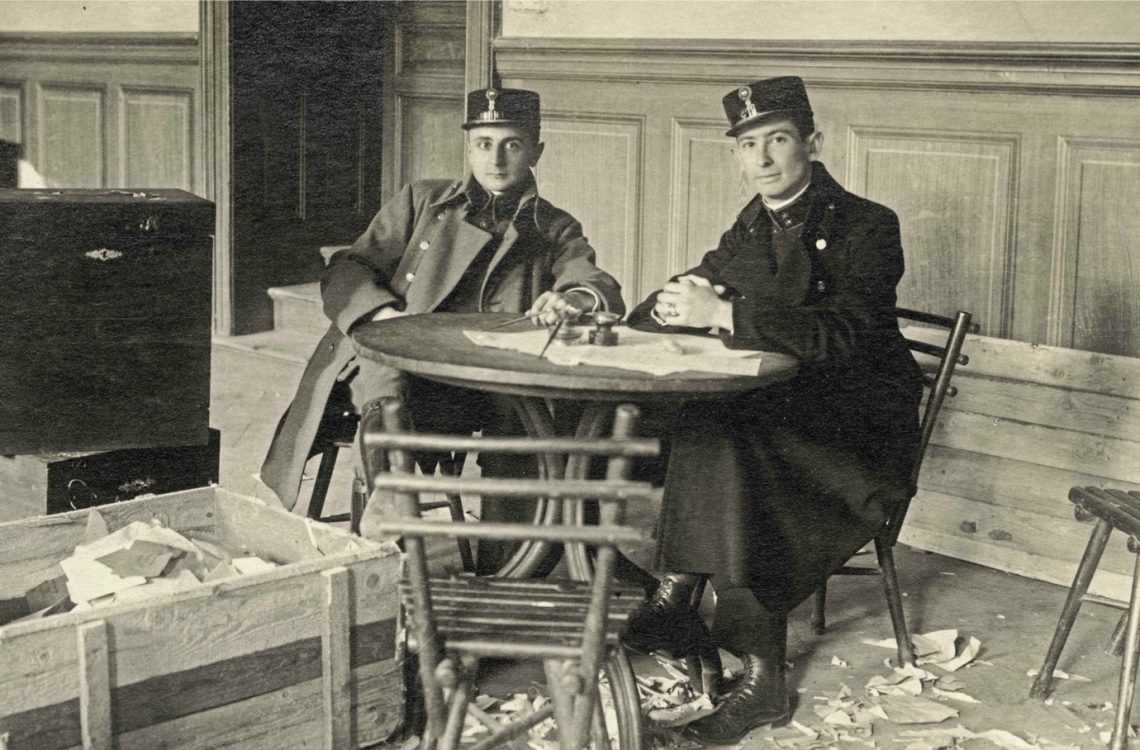
Italian General Carlo Antonio Ferrario assured Austrian Chancellor Schober in a letter that the Entente officers would review all the electoral rolls and consider any objections raised. The Austrian side then sought to postpone the referendum until December 18, a proposal also supported by the Council of Ambassadors in Paris. The Inter-Allied Commission of Generals, however, exercised its authority and decided otherwise: voting would take place in Sopron on December 14, in Brennbergbánya on December 15, and in the surrounding villages on December 16.
On the evening of December 13, the Austrian government withdrew its delegates from both the Central Referendum Commission and the eight polling commissions, claiming, without justification, that the impartial conduct of the referendum could no longer be guaranteed. In a letter to the Austrian chancellor, General Ferrario responded: “Defeat is certain if one retreats for fear of losing the battle!”
On the day of the referendum—Wednesday, December 14—the people of Sopron were up before dawn. Dressed in their Sunday best, they attended church services before making their way to the polls. Voting took place between 8 a.m. and 6 p.m. At the polling stations, voters presented certificates dated November 25, bearing the signature of the municipal council and the French circular stamp of the Commission of Generals. Each voter was then given two ballot papers—a blue one for Hungary and an orange one for Austria—together with an envelope, before entering the polling booth. Those voting for Hungary left the blue ballot intact, tore the orange one in two, and placed both in the envelope. The sealed envelope was then handed to the Entente officer assigned to the commission, who placed it in the ballot box in full view of those present. Once voting had ended, the ballot boxes were secured with strips of gauze and sealed in several places with the stamp of the Entente mission.
Voting was by secret ballot. The final results were announced on December 17 at the Zrínyi Ilona Officers’ Daughters’ Educational Institute, while Sopron’s newspapers proclaimed in special editions that “by a majority of 7,107 votes, we have remained Hungarian.” A total of 15,304 people voted for Hungary and 8,227 for Austria, while 502 ballots were declared invalid.
Although 54.5 percent of voters in the surrounding villages chose Austria, Hungary secured majorities in Nagycenk, the home of István Széchenyi, in the Croatian-inhabited village of Kópháza, and in the Catholic German village of Fertőboz. Sopron itself voted decisively to remain part of Hungary, with 72.8 percent supporting the Hungarian side. Dr. Jenő Házi, head of the Sopron City Archives, later pointed out that it was the votes of the town’s German-speaking farmer-citizens—the so-called hűségesek (“the loyal ones”)—that had saved Sopron for Hungary. At the time of the referendum, 52 percent of the town’s population was German-speaking and 48 percent Hungarian-speaking.
By Christmas Eve, large posters were already proclaiming that Sopron would return under the Crown of St. Stephen. The official handover of the town took place on January 1, 1922, on the then still cobbled Várkerület. The triumvirate of Entente generals took the salute of the departing French, Italian, and British troops. They were followed by units of the Hungarian National Army, whose arrival was greeted with tremendous enthusiasm by the people of Sopron. Finally, delegations from the surrounding villages marched past.
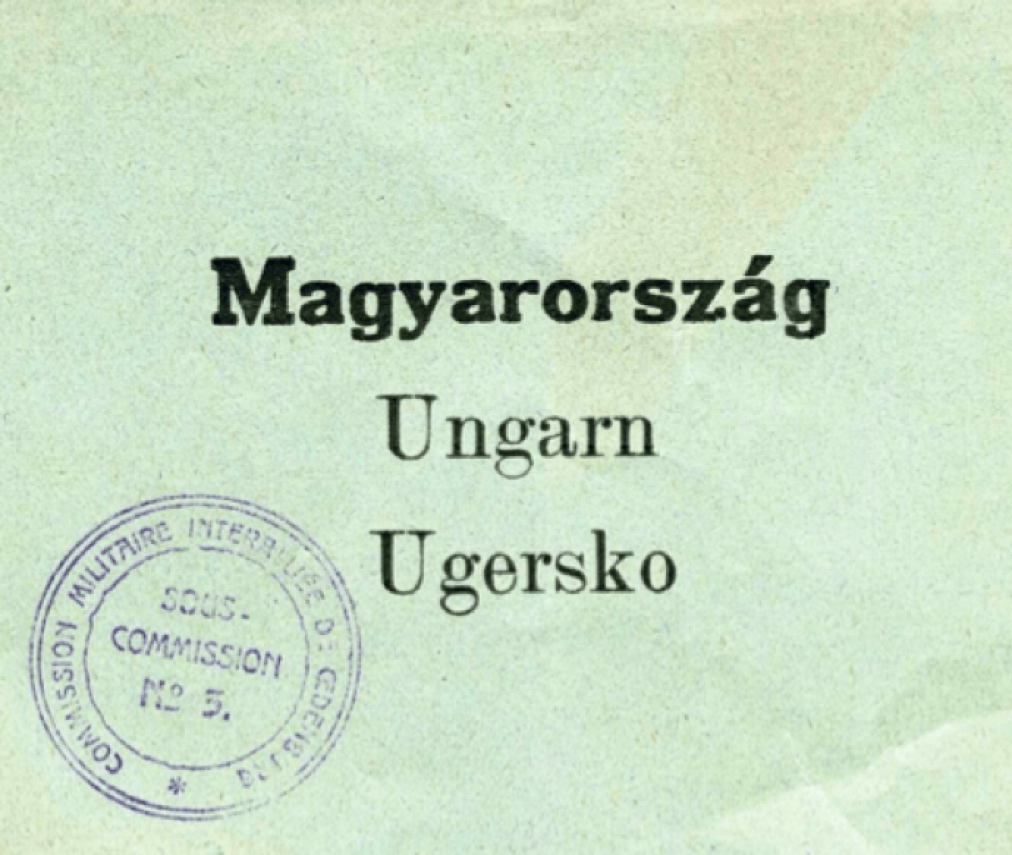
A validated ballot with official stamp
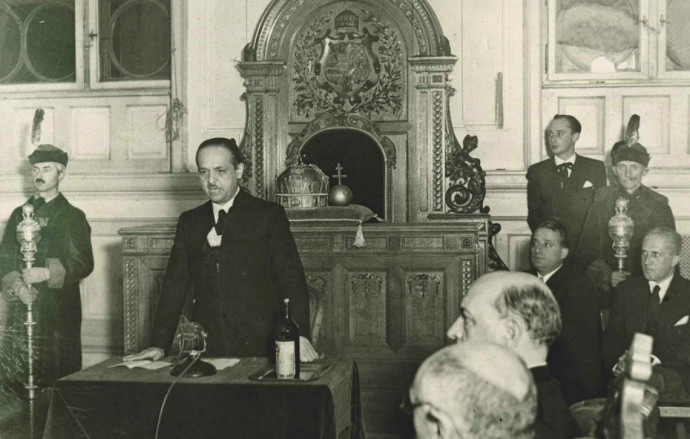
In recognition of its unwavering loyalty to the Hungarian homeland, the National Assembly bestowed on Sopron, a city with municipal rights, the honorary title CIVITAS FIDELISSIMA, which was also added to the city’s Baroque coat of arms in the form of a decorative ribbon. From then on, Sopron was known as the “Most Loyal City”—a loyalty expressed in perseverance, in the will to survive, and in respect for historical traditions. The triumphant Sopron referendum had a significance that extended far beyond the town itself. It showed those who had dictated the peace settlement how they could and should have proceeded elsewhere in drawing the borders of Hungary and other European states in a just and equitable manner.
(translated by Márta Pellérdi)