Free to read


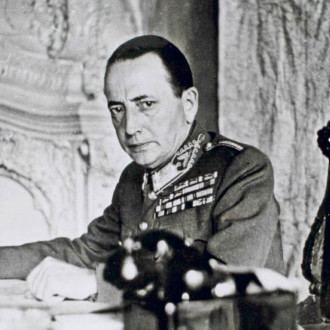
The years between 1940 and 1944 saw the re-establishment of a “little Hungarian world” in Transylvania. According to contemporary public opinion – both in Hungary and Transylvania – this recovery of some of Hungary’s lost territories was less the result of European power politics or international machinations and more the reassertion of the natural historical order. Nevertheless, behind the euphoric crowds celebrating the border changes, the joyful crowds greeting the entry of Hungarian troops, and the images of cities decorated with flags, tension remained caused by the shifting borders and the unresolved issues regarding the coexistence of national communities. Yet, it was during this brief period that modernization began – from education to infrastructure to economic development. In the process, the region witnessed improved living conditions and advances in opportunities for many such as had not been seen in the previous twenty-two years of Romanian rule. These four years, fraught with controversy and tragedy, remain a cherished chapter in the Hungarian history of Transylvania. It was also both a promise and a hope that affected, to some extent, the lives of every family among the Hungarian minority.
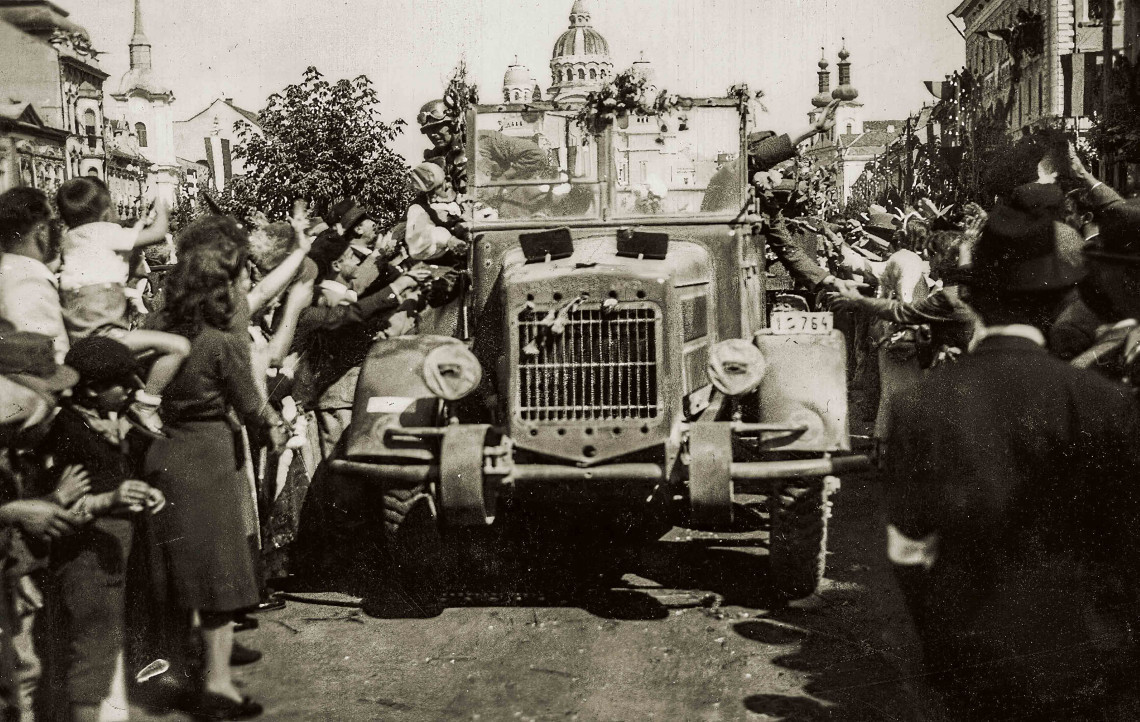
Entry of the Royal Hungarian Army in Marosvásárhely, September 10, 1940 (Azopan Photo Archive)
Under the terms of the Ribbentrop-Molotov Pact, the Soviet Union issued an ultimatum to Romania in late June 1940 demanding that Romania cede the territories of Bessarabia and Northern Bukovina – an area of roughly 50,000 square kilometres – within 48 hours. The Hungarian Foreign Ministry immediately informed Berlin that it also intended to discuss territorial matters with Romania; the Hungarian Army was thereupon mobilized and dispatched to the country’s eastern border. A Hungarian-Romanian war seemed on the verge of breaking out at a most unfavorable moment for German foreign policy, compelling Hitler to order both countries to sit down and conduct bilateral negotiations.
Territorial issues
The bilateral negotiations, which began on August 16, 1940, in Turnu Severin (Szörényvár), broke down on the 24th after heated exchanges. The positions the two sides had taken on territorial issues were simply irreconcilable. Learning that the Hungarian Army had been placed on heightened alert, Romania signaled to Berlin that it would accept arbitration, and neither Hungary’s military nor political leaders saw any reason to object. Representatives of both countries were summoned to Vienna on August 29, with both sides confirming they would accept the decision. The following afternoon, Ribbentrop announced the German-Italian arbitration decision, the so-called Second Vienna Award, at the Belvedere Palace in Vienna. The arbitration saw 43,104 square kilometres – including a significant part of Transylvania – returned to Hungary. The Romanian foreign minister, Mihail Manoilescu, reportedly fainted when he saw the redrawn borders.
The arbitrators marked the new borderline with a red pencil on a very large 1:500,000 scale map. It could be said that Hitler drew the line with too wide a brush, for whereas it was easy to determine which cities and larger villages fell on which side of the new border line, the boundary between villages and smaller settlements was not so clearly delineated. The details were to be hammered out in direct negotiations, but these so-called “liquidation talks” were unsuccessful. Thus, no agreement was reached on these remaining important issues.
Consequently, between 1940 and 1944, there was no clearly demarcated border between Hungary and Romania. Both sides tried to transpose the boundary line onto smaller-scale maps, but the respective armies and border guards failed to reach agreement on which scale maps to use. This led to a number of border incidents that resulted in dozens of lives lost. The two sides tried to remedy the problem by imposing first a five- and then a ten-kilometer exclusion zone from which both countries were to withdraw their military units and even their border guards in order to avoid armed incidents. A mixed German-Italian military commission was established to ensure compliance with this agreement.
Hungarian joy
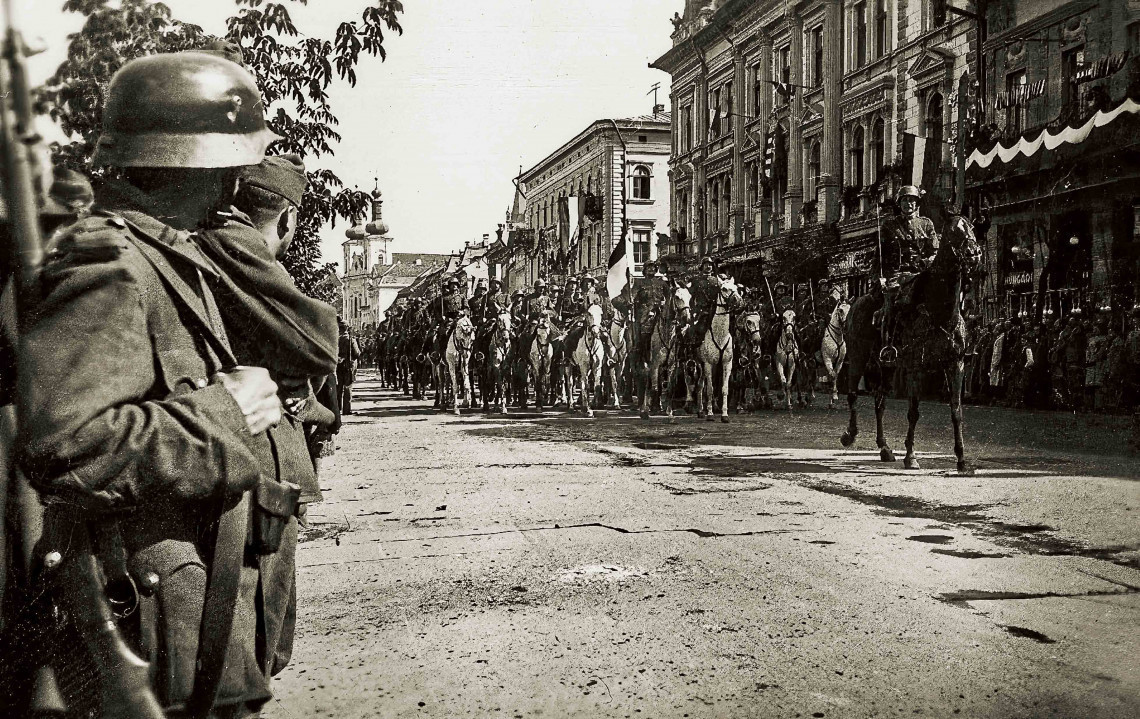
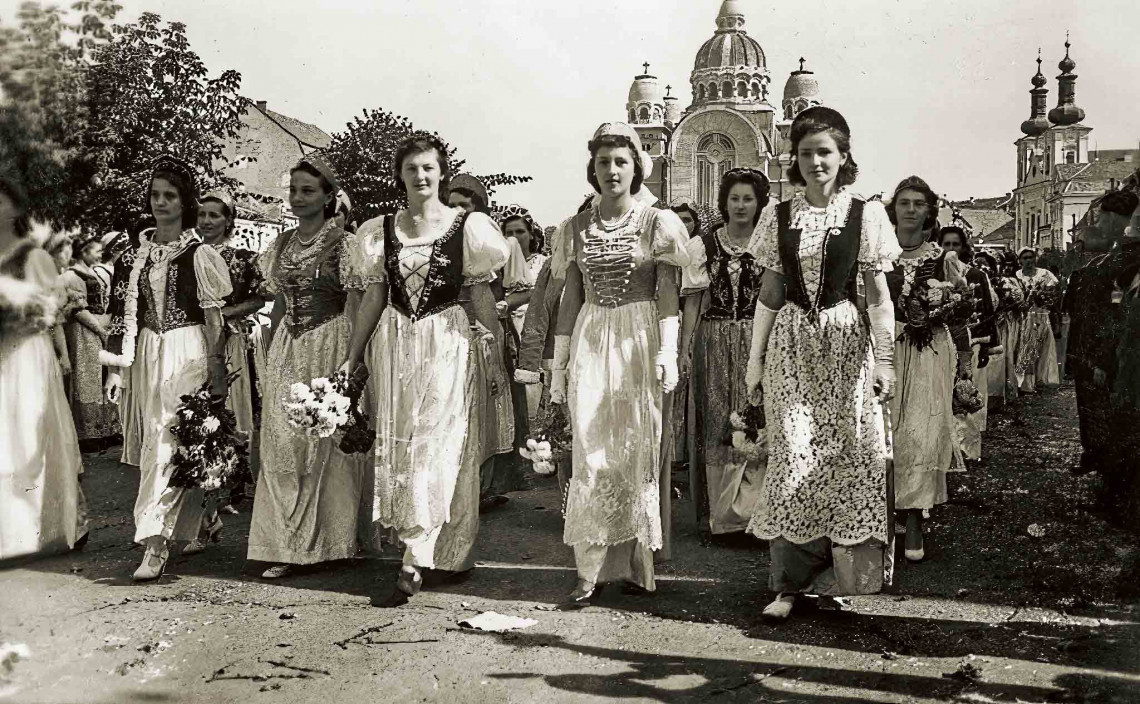
The local Hungarian population greeted the Hungarian troops, who entered the country on September 5, with indescribable enthusiasm; people dressed in their holiday best and awaited the army’s arrival with a sea of flowers and triumphal arches. In Székely Land, women cooked goulash in large pots and baked chimney cakes, throwing them onto trucks and carts for the soldiers. Inhabitants of smaller settlements walked to the nearest town or lined up along the main road to see the spectacle. Wherever the troops halted for the night became a scene of endless music and revelry, lasting until dawn.
The joy was unrestrained, even despite the pouring rain – just as it had been when the troops entered Kolozsvár on the 11th. The local inhabitants experienced the moment as one of liberation, putting an end the turbulent and uncertain days preceding the army’s arrival. Everyone hoped it would bring about a positive improvement in their lives.
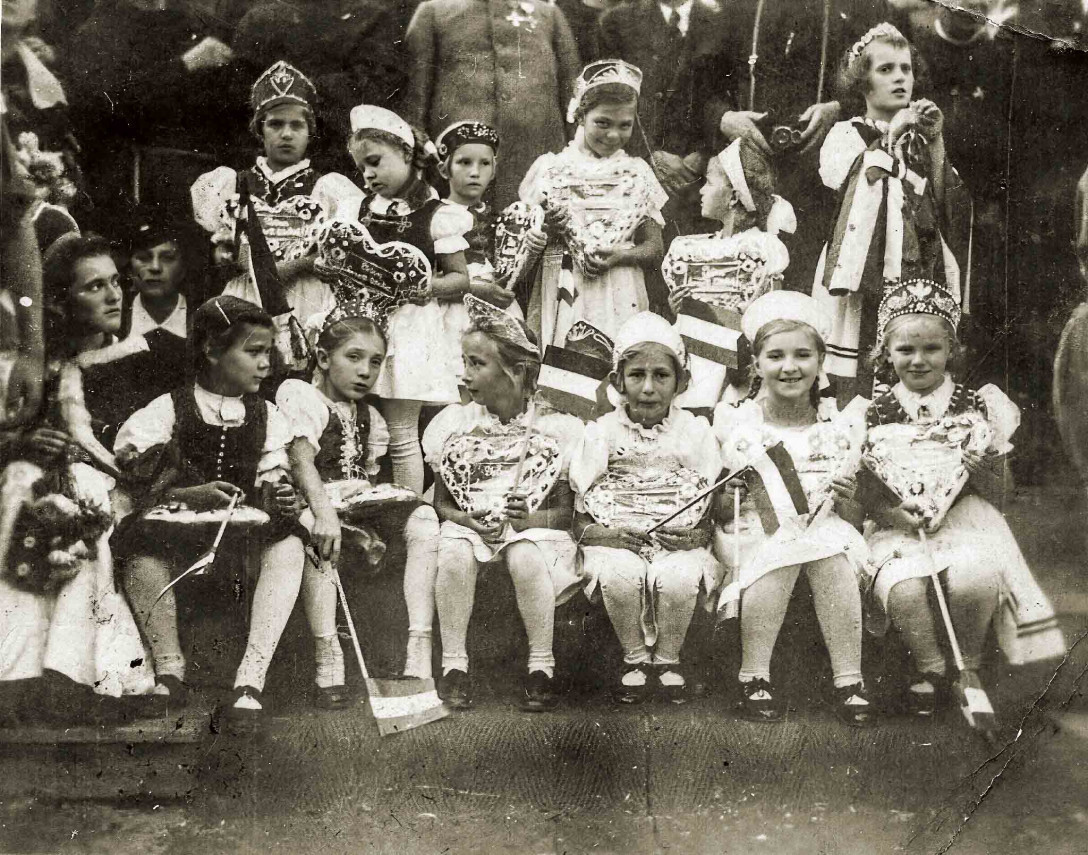
On September 13, Hungarian troops reached the easternmost settlement in the recovered territories – the village of Sósmező in Háromszék County. Some of the larger communities, such as Marosvásárhely and Kolozsvár, saw further celebrations and spectacular displays take place after September 15, attended by the head of state and the government. Reporters covering the arrival of the Hungarian forces vied with each other in depicting the rampant euphoria, with the year-end issue of the Erdélyi Helikon (Transylvanian Helikon) enlisting poets and writers to immortalize the joyful scenes. The Hungarian writer and architect Károly Kós, recounting his reaction to the arrival of Hungarian troops in Kolozsvár, wrote:
“Flags and banners were everywhere, and sea-green branches and flowers adorned balconies, open windows, and people’s hands alike. The entire market square was one swaying, bustling, smiling, and joyful sea of people. The early autumn sun cast its cheerful rays upon us. And then suddenly they arrived – those for whom I, everyone, the entire city, and the whole of Transylvania had been waiting. […] I gazed upon them, everyone gazed upon them – they were graced with flowers, touched, and embraced as they passed by. Everyone was screaming and shouting. The air trembled from the overwhelming wave of sound that expressed all the pain of millions of people suppressed for twenty-two years and all the joy awaiting fulfillment over these same twenty-two years. […] I was standing there too – one among a hundred thousand Hungarian brothers and sisters. And I was shouting alongside them, rejoicing with them, tears flowing from my eyes, as they did from the eyes of a hundred thousand of my compatriots. Nor was I ashamed, as neither was anyone else, and the gentle warmth of the autumn sun shone on our tear-stained faces, as if the merciful hand of God were blessing and caressing them. […] And on they came, the entire day – on foot and by cart, on horseback and in armored cars, on guns and on motorcycles. They came from all sides and poured incessantly into and through the city; our eyes were dazzled, our throats grew hoarse, and our hearts ached. Finally the day came to an end – the day that marked the end of our twenty-two-year-long sojourn; we had arrived at the station that fate itself dictated we must reach. Our one-day fête, the greatest celebration a person could experience, was over. Our sole recompense for twenty-two years – years during which our heads had turned gray, our faces racked by deep lines, and our backs become a little bent.”
Hungarian military administration
Once the entry of the army had been concluded, the Hungarian government established a military administration in Northern Transylvania to manage the transition to Hungarian rule – as happened with the previously recovered territories. Between September 5 and November 26, 1940, the government ruled by decree, against which there was no possibility of appeal. During this time, day-to-day administration was in the hands of military officials.
The military administration had a dual structure: the relevant ministries in Budapest delegated one official each to assist the local military commanders, with the latter required to consult with them prior to making decisions. However, training and socialization predisposed the officers against accepting advice and instructions from their civilian counterparts, and the relationship was marred by constant conflict.
The Gray Book, which established guidelines for the military administration, especially cautioned against the mistreatment of minorities. Soldiers were expected to show, without exception, a correct and unfaltering humanity towards Romanians, as befits a Hungarian soldier. It was forbidden in the Hungarian-language press to slander or denigrate the Transylvania Romanians as a people, and it was forbidden to use the term “Vlach.”
Pál Teleki’s policy
Prime Minister Pál Teleki’s ideas largely influenced nationality policy and economic and infrastructural developments. The prime minister harmonized the views of the Transylvanian and Hungarian political elites at closed-door meetings held in Kolozsvár in September and October 1940. Teleki regarded the supply concerns and social situation in Székely Land as the most urgent tasks, with equal regard given over to development policy and education matters.
Implementation of government policy required a restructuring of the local administrative system, as there was a lack of qualified officials at the local level. This was partly due to the ethnic-based personnel policy of the previous Romanian administrations and partly due to some of the former officials not swearing allegiance to Romania after the regime change at the end of 1918 and having departed for Hungary. Some of the former Hungarian civil servants who remained behind, however, found themselves unable to adapt to the changes that had taken place in Hungarian administration in the interim. The arrival of officials from Trianon Hungary, meanwhile, caused significant tensions within the Hungarian community. The image of the arrogant and patronizing official sent from the capital, oblivious to local conditions, and suffering from rank and title envy grew in the Transylvanian public and is still an unfailing accompaniment to reports on the Hungarian years in Northern Transylvania. The then government commissioner, Count Béla Bethlen, recalled this phenomenon as follows:
“The years between 1920 and 1940 saw only a small number of Hungarians obtaining university degrees here. Thus, a good number of officials had to be sent here from Trianon Hungary; although they had diplomas and more or less practical experience, they lacked the necessary language skills and local knowledge. […] They would greet us with the phrase ‘My humble respects,’ which was unusual and unfamiliar to us. Respect me with love and esteem if I deserve it for my work, conduct, and goodwill, but under no circumstances should I be treated with humble respect.”
The most pointed conflicts unfolded in Székely Land, where many harbored the hope that the injustices they had suffered under Romanian rule would be redressed through government intercession. It was partly for this reason that the Teleki government sought to appoint Transylvanian political figures to leading positions, while the deputy positions in the public administration were often held by outsiders appointed from Hungary. Teleki sought to resolve the problem of coordinating local and national political representation by creating an independent Hungarian Transylvanian party. Since elections were in abeyance due to the war, Regent Horthy invited 50 representatives from the recovered territories to the Hungarian Parliament. Although the invitation extended to ethnic minorities, the Bucharest government instructed the Romanian political elite remaining in Northern Transylvania to remain politically disengaged. Thus, the 12 seats reserved for Romanians were never filled.
When selecting representatives, preference was given to those who had already proven themselves during the 22 years the Hungarians had been in a minority position. As a result, those summoned included former political figures from the Magyar Party of Romania [Országos Magyar Párt] and the Hungarian People’s Community in Romania [Romániai Magyar Népközösség]. The Transylvanian Hungarian writer Tamási Áron and his associates, however, adhering to the spirit of the Vásárhelyi Meeting of Transylvanian youth, held in Marosvásárhely between October 2 and 4, 1937, proposed the creation of a broader Transylvanian alliance in line with their popular democratic beliefs, while those around György Bethlen sought to revive the Magyar Party of Romania, which Bethlen had once led. Teleki ultimately did not support either initiative; instead, 36 of the Hungarian representatives were invited to join the Transylvanian Party [Erdélyi Párt], which was formed on December 14, 1940, under the leadership of Béla Teleki. Led by the Transylvanian lawyer and publicist Gábor Pál, five representatives remained non-aligned, while the others joined the ruling party or various right- or left-wing opposition parties. These developments made the Transylvanian Party the second-largest faction in the Hungarian Parliament, although it largely followed the course of the ruling party.
The modernization program
During these four years, the Hungarian government spent approximately 1.5 to 2 billion pengő on the administration and development of the eastern part of the country. This amount was equivalent to roughly one year of the national budget between 1940 and 1944. Part of this reflected a large-scale modernization program announced by the Budapest government for Transylvania, which included hundreds of millions of pengős in infrastructure development along with large-scale improvements in industry and agriculture. A significant portion of these funds was directed towards Székely Land (much to the displeasure of other regions), as its development had been particularly neglected by the Romanian government during the interwar period.
The Transylvanian branch of the Ministry of Agriculture tried to foster the development of trained cadres for the planned developments with a network of economic inspectors. In addition to completing various courses and performing administrative tasks, the inspectors – who were partly of local origin – were also responsible for continuous self-training. The Transylvanian Economic Council [Erdélyrészi Gazdasági Tanács, EGT] provided theoretical guidance, while the Transylvanian Hungarian Economic Association (Erdélyi Magyar Gazdasági Egyesület, EMGE) provided practical assistance in the modernization of agriculture with specialized courses, grants, and studies. In 1941, the most serious issues were assessed:
“The main problem is that farmers do not have access to suitable, high-quality seeds […] we can only offer the worst assessment about meadow and pasture management […] fruit growing is extensive but without plowing or fertilizing and in the absence of protective spraying. The introduction of proper soil cultivation would require deeper soil tillage, correct manure application, the increased use of artificial fertilizers, professional manure management, and the construction of manure storage facilities. It will be necessary to introduce the contract production of industrial crops on arable land. In terms of cultivation technology, intensive farming – which is very expensive for private establishments and harmful for the national economy – should be abandoned and a shift made towards crop rotation methods. Under no circumstances should it be permissible that 13.3% of arable land on average is allowed to lie fallow, as it is now.”
The rural-focused National People’s and Family Protection Fund [Országos Nép- és Családvédelmi Alap, ONCSA], as well as the county welfare cooperatives – which provided practical assistance – also invested significant funds in Northern Transylvania. These were mostly implemented as small-scale subsidies (seed and animal husbandry promotions, marriage loans, or minor grants). The country’s largest ONCSA plant was built in Szatmárnémeti, where roughly 112 houses were manufactured between 1941 and 1944. Some 96 similar buildings were completed in Nagyvárad, and ONCSA houses could also be found in Dés, Nagybánya, Kolozsvár, Marosvásárhely, Sepsiszentgyörgy, and Kézdivásárhely. These one-room dwellings, equipped with pantry, kitchen, and utility rooms, significantly improved the lives of their residents, who often had many children. Even decades later, those who lived here – or who had left from there – remembered that not only had their living conditions completely transformed, but that their lifestyle and way of thinking had also changed. The material benefits of the support measures – including high-quality seeds and breeding measures, small-scale machinery, and improved roads – along with the life-enhancing effects of modern knowledge in farming, healthcare, and household management, continued to be felt in the everyday lives of the region’s inhabitants for many years to come. In intellectual, cultural, and even demographic terms, all this provided a source of support for the Hungarian community in Transylvania whose effects continued to be felt for many decades and whose traces can still be seen today.
High-visibility investments
In addition to the above, however, there were more “high-visibility” investments. The construction of the Déda–Szeretfalva railway line was intended to reduce transport difficulties. The construction of the 48-kilometer-long railway line proved to be an engineering challenge due to the extremely difficult terrain, but after a year and a half of intense labor, the distance between Budapest and Sepsiszentgyörgy had been reduced from the previous 22.5 hours to 17 hours. The Árpád railbus, a diesel-powered railcar considered a major technical development of the time, covered the distance from Budapest to Kolozsvár in under five hours. This achievement is still considered remarkable even by today’s standards, but it was not the sole achievement, as several narrow-gauge railway lines and public roads were also built. Thus, in terms of infrastructure development, the wartime years saw the Hungarian government leave behind a significant and lasting legacy in Northern Transylvania.
Historical and cultural preservation
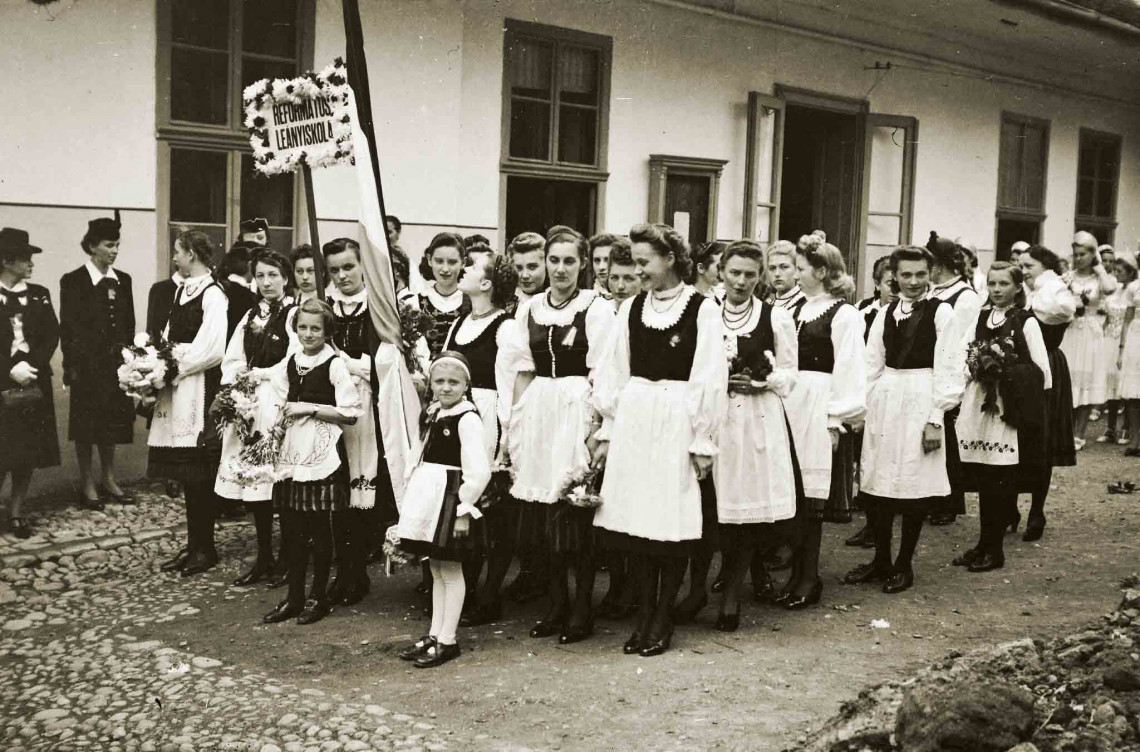
These four years also saw the restoration of the Matthias Corvinus House in Kolozsvár and the Lónyay Castle in Aranyosmeggyes, renovation work done on St. Michael's Church in Kolozsvár and the castle church in Marosvásárhely, and the refurbishment of the Bánffy Palace in Kolozsvár. There were also significant changes in the field of education. The Hungarian language was reintroduced as the language of instruction in most secondary schools and high schools as well as in lower-level denominational and state educational institutions. The Hungarian university that had fled to Szeged after World War I returned to Kolozsvár. The government provided opportunities for further education through a scholarship program, and the mass influx of young people of peasant backgrounds into secondary schools became a hallmark of the era. Numerous forms of training – informative and educational lecture series and courses – were offered in extracurricular education, with topics tailored to the needs of everyday life in the farming, housekeeping, handicrafts, and healthcare fields.
The restoration of territory saw lively tourist traffic begin in Northern Transylvania. The Hungarian National Tourist Office [Országos Magyar Idegenforgalmi Hivatal, OMIH], which oversaw tourism development, supported spa and hotel development as well as rest home construction and reconstruction programs in Székely Land. The Uz Bence chalet in Hargitafürdő and the city hotel in Csíkszereda were built under the auspices of the Transylvanian Carpathia Society [Erdélyi Kárpát Egyesület]. In early 1941, a committee of experts assessed the baths; after visiting Szováta, Tusnád, Borszék, and Lake Gyilkos, they concluded that the hospitality reception at the four spas was better than at the Lake Balaton spas, even if the large hotels, standard near Balaton, were absent. Sport facilities were established in smaller towns, partly through private initiative and partly with government support. The conditions for practicing winter sports in particular improved over the first half of the 1940s, with ski runs and ice rinks built in Borszék, at Lake Gyilkos, in Marosfő, Tusnádfürdő, and on the slopes of Mount Nagysomlyó.
The Jewish tragedy
The Jews of Northern Transylvania had a generally positive reaction to the change of power following the Second Vienna Award, partly due to their dominant Hungarian identity and partly due to Romania’s anti-Semitic laws. At the same time, however, the provisions of the Hungarian Jewish laws came into effect. The real tragic events of this community, which was subject to the wrath of the army, the administration, and later the local population as well, began in the period following the German occupation. On May 18, 1944, the first transport from the Máramossziget ghetto was sent to Auschwitz. The clearing of the Nagyvárad ghetto began on May 22, followed by those in Kolozsvár and Marosvásárhely on May 25, and in Szászrégen a few days later.
The Hungarian civilian administration in Northern Transylvania was diligent in carrying out the instructions sent from Budapest. In less than three weeks, 131,639 members of the 150,000-strong Jewish community were deported under German command and German pressure but with the swift, precise, and ruthless work of the Hungarian authorities. To the credit of the Hungarian administration, some of its representatives refused participation in the ensuing events: István Soós, mayor of Nagyvárad; Endre Hlatky of Bihar; János Jósika of Szilágy; and László Mikó, chief magistrate of Maros-Torda, resigned after the German occupation. The sermon given by Bishop Áron Márton of Gyulafehérvár at St. Michael’s Parish in Kolozsvár is worth mentioning as one of the rare public utterances. To prevent any misunderstanding among the authorities in the wake of his sermon, he sent a letter to both the local and national administrations on May 22. It stated the following, inter alia:
“Yesterday, I learned that the Jews and the Christians who had been rounded up at the Jewish address the previous day would be deported. One cannot listen to what is said about the treatment and future fate of such deportees without the most profound shock and consternation. My duties call me back to my workplace in Romania, but I consider it my human, Christian, and Hungarian duty to ask the relevant authorities, with love and in the name of God, to prevent these inhuman acts before I leave or, if they are unable to do so, not to participate in actions aimed at the destruction of thousands of people.”
Of course, there were some who tried to help the Jews, even though the smallest act of assistance at this time could result in disproportionately severe punishment. Andor Járosi, a Lutheran pastor in Kolozsvár, not only obtained baptismal papers for Jewish residents but also hid Jews in his own apartment, including the daughter of the writer Imre Kádár. Károly Kratochvil, the former commander of the Austro-Hungarian Székely Division, fought resolutely for the release of former Jewish soldiers from his unit. Unfortunately, such cases were rare.
Double occupation
The German occupation of Hungary extended to Transylvania only after some delay; nevertheless, it radically changed everyday life as it had been known hitherto. In addition to the anti-Jewish measures, military conscription increased, and in June 1944 the US Air Force bombed Kolozsvár and Nagyvárad.
After the Romanians switched sides on August 23, 1944, Transylvania became a theater of war. Soviet forces thence poured through the passes of Southern Transylvania, threatening to encircle those still defending the mountain passageways. Thus, on September 6, the German command decided to evacuate Székely Land. In September 1944, Hungarian troops defeated the Romanian 4th Army with a rapid advance but were forced to halt by the tanks of the Soviet 2nd Ukrainian Front, and a long and bloody defensive battle ensued in the Torda region. Meanwhile, the Hungarian 3rd Army enjoyed brief success with an attack near Arad but was quickly forced back due to a lack of German support and with the arrival of Soviet forces.
On October 25, 1944, the Soviet 133rd Rifle Division and the Romanian 9th Infantry Division marched into Szatmárnémeti and Nagykároly, thereby bringing the northern Transylvanian territories, which had been recovered on August 30, 1940, back under Romanian rule.
***
The Second Vienna Award and the “little Hungarian world” that emerged from it were one of the defining moments in the history of the Transylvanian Hungarians in the twentieth century, especially for those who were connected some way to the recovered territories. This history, in turn, has been passed down to later generations through collective memory. The events of those four years serve as a time capsule of sorts, one locked away for a long time – especially for the generation that lived through it and their descendants – which is worthwhile to gaze back upon in difficult times, even after years of forced silence.
(translated by John Puckett and Andrea Thürmer)