Free to read


“The word hussar has become synonymous with valor and heroism, not only in our homeland but throughout Europe and the whole world. The fame of the hussar has travelled farther than that of our country and our nation,” wrote Bertalan Szemere in February 1849, a few months before he became Prime Minister of Hungary. The hussars, a distinctively Hungarian light-cavalry tradition, left their mark on military history for nearly 500 years from the late 14th to the mid-20th century. During this long period, they came to occupy a special place in Hungarian national consciousness and became an integral part of Hungarian culture and folklore. They ultimately emerged as an internationally recognized symbol of Hungarian courage and military prowess. Little wonder that an eighteenth-century French saying declared that “every Hungarian is half a hussar.”
The light cavalry known as the hussars emerged around the turn of the 14th and 15th centuries, during the wars waged against the advancing Ottoman Empire, along the southern frontiers of the Kingdom of Hungary and in the neighboring Balkan regions. As the Ottomans pushed northwards, Hungary’s traditional light cavalry—rooted in much older military practices but increasingly displaced by Western influences—had to adapt to the tactics of this formidable new enemy.
South Slav warriors living along the Hungarian borderlands, who were among the first to experience the Ottoman threat directly, played an important part in this successful adaptation. Fifteenth-century Hungarian sources often referred to the kingdom’s light cavalry as Rác, or Serbian, reflecting the strong presence of Serbs and other South Slavs in the hussar units. By the age of the Hunyadis, the hussars had already become an important element of the Hungarian army.
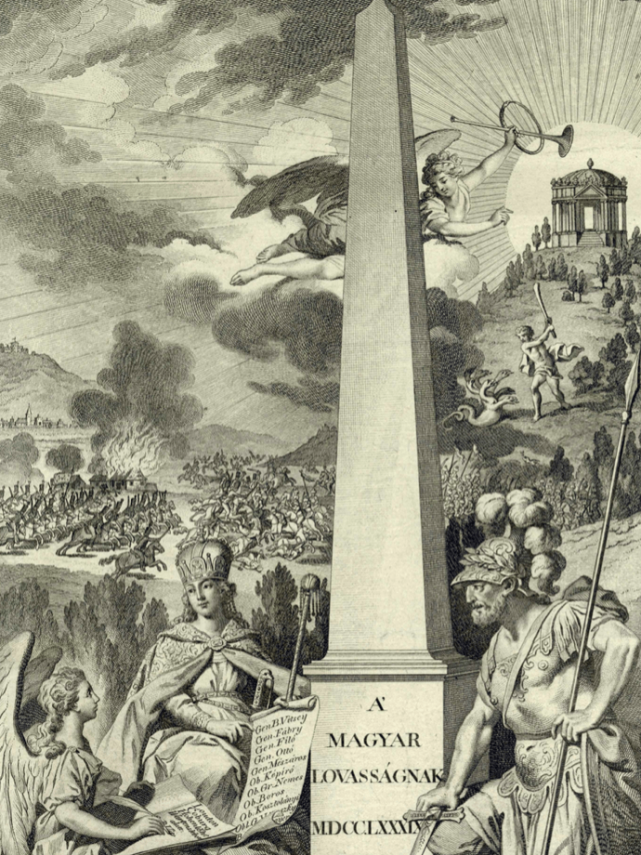
The true hussar
The various forms of light cavalry that had existed in the early period gradually acquired a distinctly Hungarian character during the long wars with the Ottomans along the frontier. Over the next two centuries, the hussars played a major role in the defense of Christian Europe. From the 16th century onwards, Hungarian light horsemen, distinguished by their distinctive tactics and colorful uniforms, also began to appear on the battlefields of Western Europe, as the Habsburg dynasty—now also in possession of the Crown of St Stephen—waged wars across the continent.
It was within the Habsburg military that the classic form of the hussar fully developed. With their tight-fitting trousers, braided and buttoned dolmány and mente, and the kalpag—later replaced by the characteristic shako—hussars acquired the distinctive appearance for which they became famous. Armed with sabre, pistol, and carbine, they combined striking attire with a highly mobile style of warfare. Following the establishment of a permanent imperial army in the late 17th century, the first regular hussar regiments were formed.
By the first half of the 18th century, the hussars had found their way into many of Europe’s armies, thanks to their versatility and outstanding performance on the battlefield. Something resembling a hussar “franchise” emerged: new units were raised that adopted the hussar name, weapons, uniform, and tactics. At least initially, however, “quality control”—was largely entrusted to Hungarian-born instructors and, in many cases, Hungarian soldiers to ensure that these new formations matched, or at least approached, the standards of the original Hungarian hussars. For a time, there was no shortage of either, not least because of the successive waves of emigration that followed Hungary’s ill-fated struggles for freedom.
From the first half of the 18th century to the mid-19th century, virtually no European army was complete without hussars. They became an integral part of the formidable forces of some of Europe’s great powers, including the Prussian army, the Imperial Russian army, and the French royal army, and later even Napoleon Bonaparte’s Grande Armée. According to a frequently cited, though not reliably documented, figure, hussar units of varying size were eventually established in the armed forces of as many as 34 European countries. During the 19th century, hussar formations also appeared farther afield, in several countries of Central and South America, including Argentina, Bolivia, Chile, Mexico, Peru, and Venezuela.
At the time, Hungary was home to many different peoples and nationalities. The hussar regiments raised in the Kingdom of Hungary therefore drew their multilingual ranks from a remarkably diverse population. Their composition was, one might say, as colorful and varied as the splendid hussar uniform itself at the height of its development. In this sense, the hussars also embodied the shared historical destiny of the peoples of East-Central Europe. Alongside the ethnic Hungarians who formed the majority, their ranks included Germans, Slovaks, Croats, Romanians, Ruthenians, and Serbs. The officer corps was even more international, reflecting the extraordinary popularity and prestige of the hussars. Alongside Austrians, Italians, Czechs, Poles, and Germans from the Holy Roman Empire served men from such distant countries as England, Ireland, France, and Spain.
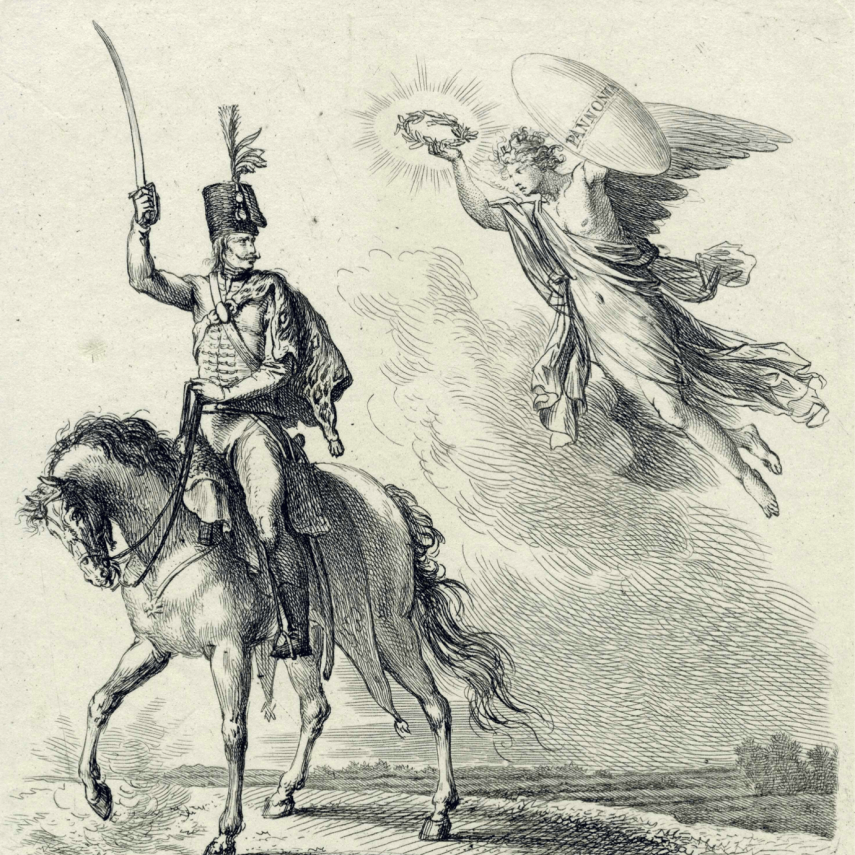
Despite this diversity, the hussars formed a cohesive body and remained unmistakably Hungarian in character and spirit. Count István Széchenyi gave memorable expression to this idea in 1857 when writing of József Simonyi, one of the most valiant hussars of all time: “Only a Hungarian can be a true hussar, and foremost among them stood Simonyi.” The celebrated novelist Baron Miklós Jósika, who had served first as a dragoon and later as an infantry officer during the final years of the Napoleonic Wars, echoed this view: “I have seen many kinds of hussars, but I have come to the conclusion that only a Hungarian is a true hussar—or, more precisely, someone from Hungary, including Transylvania.” The nineteenth-century German writer and army officer Julius von Wickede expressed a similar sentiment through one of his characters, Pál Szabó, a grizzled hussar sergeant serving in General Radetzky’s army in Italy: “No other prince, king, or even emperor in the world has hussars like ours. The others are merely imitation moustachioed horsemen; the true hussars come only from our God-blessed Hungarian soil. That, my comrades, is the truth.”
At the same time, the hussars’ inclusive character, rooted in the tradition of St Stephen, made them a powerful force for integration and a vehicle for linguistic and cultural exchange. Many hussars of foreign origin became Hungarian during their service, or at least learned the language and adopted Hungarian customs. One striking example was Johann von Frimont of Lorraine. After joining the Imperial-Royal Army, he served for 22 years in various hussar regiments, rising to General of Cavalry and ultimately President of the Aulic War Council. Yet his remarkable career did not turn him into an Austrian: as Count János Frimont de Palota, he became Hungarian, acquired an estate in Hungary, and married there.
Glorious feats of arms
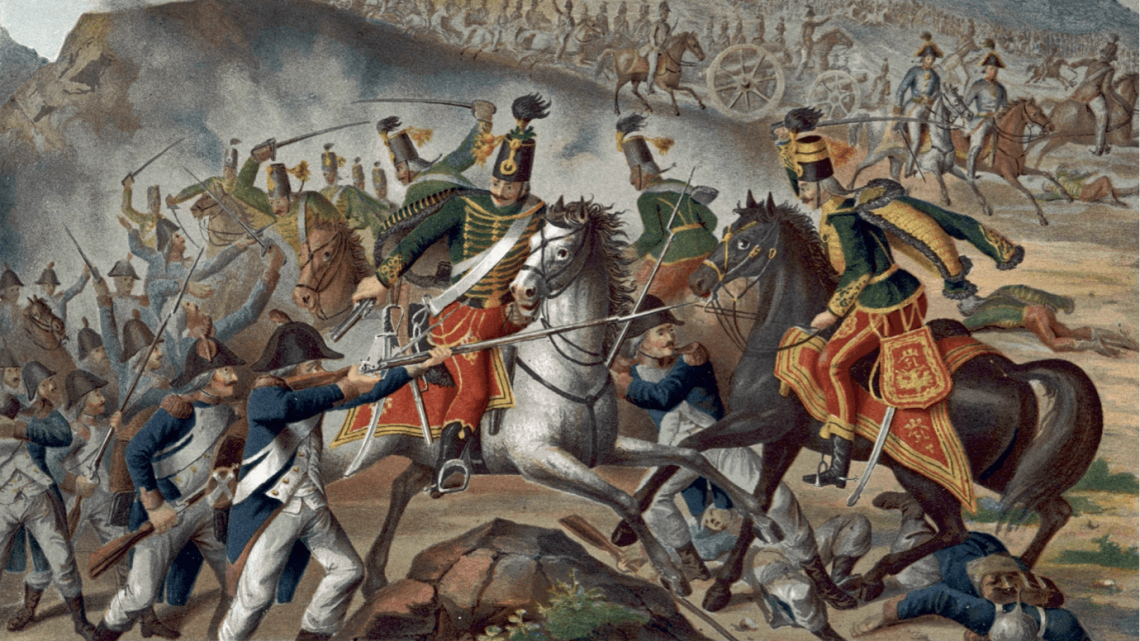
Hussar warfare reached its height between the 18th and mid-19th centuries. The prevailing forms of warfare—first the so-called methodical warfare that tended to avoid decisive engagements between the main armies, and later the greater speed and mobility of the French Revolutionary and Napoleonic Wars—were particularly well suited to raiding and petite guerre. This “small war” encompassed operations by small detachments away from major battles, including reconnaissance, raids and surprise attacks, protecting troops on the march, screening military movements, outpost and courier duty, and disrupting enemy supply lines. The Hungarian hussars, renowned for fighting with ingenuity and initiative rather than according to rigid formulas, were masters of this form of warfare.
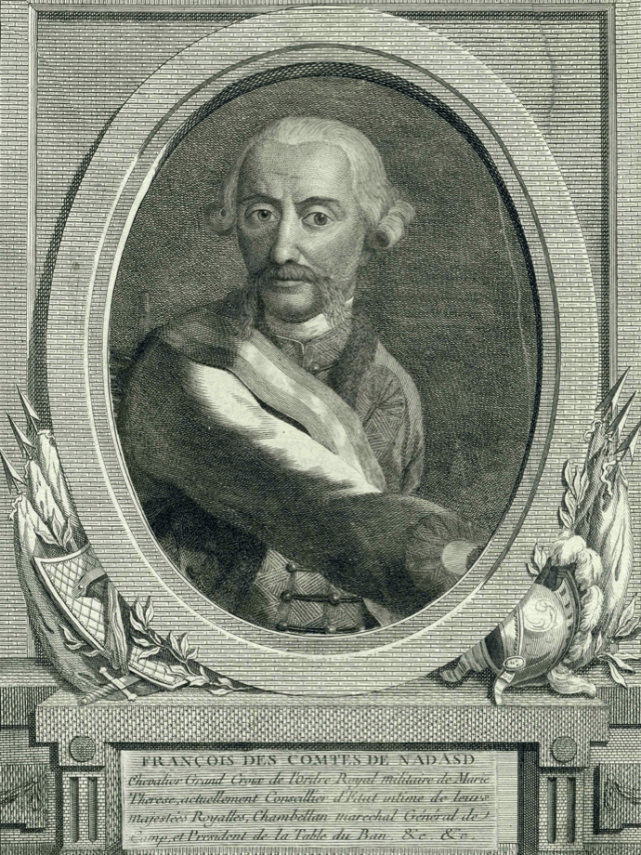
The golden age of Hungary’s national cavalry was marked by heroes who became legends in their own lifetimes. Foremost among them were Count Ferenc Nádasdy of Nádasd and Fogarasföld and Count András Hadik of Futak, two great Hungarian hussar generals of the dynastic wars of the 18th century whose exploits earned them a place in military history. At the Battle of Kolin on June 18, 1757, Nádasdy led some 100 cavalry squadrons, half of them hussars, in a charge that swept aside the cavalry of the Prussian king Frederick the Great and contributed decisively to victory. The triumph prompted Maria Theresa to establish the military decoration that bore her name. The Military Order of Maria Theresa became the Habsburg Monarchy’s highest military distinction, and Hungarian hussars were disproportionately represented among its recipients. Nádasdy was among the first, as was Hadik, who had fought under his command at Kolin—although his most famous exploit was still to come.
Hadik’s legendary feat was his brilliantly planned and executed raid on Berlin. On October 16, 1757, after penetrating deep into enemy territory, he occupied the Prussian capital for a day and exacted a substantial contribution from the city. It was perhaps the most celebrated hussar exploit of all time. Frederick never forgave the Hungarian general and remained bitterly hostile towards him for the rest of his life. Maria Theresa, by contrast, came to regard Hadik as one of her favorite hussars.
The Habsburg Monarchy’s final war against the Ottoman Empire (1787–1791), and above all its nearly quarter-century struggle against Revolutionary and Napoleonic France (1792–1815), offered further opportunities for Hungarian hussars to demonstrate their courage and skill. These conflicts coincided with the emergence and rapid growth of the printed press in Hungary, whose regular reports from the battlefields brought leading military figures unprecedented fame and popularity. It is therefore hardly surprising that the flourishing Hungarian-language literature of the period also celebrated the exploits of the hussars. Increasingly, writers commemorated not only commanders and senior officers but also the heroic deeds of ordinary soldiers.
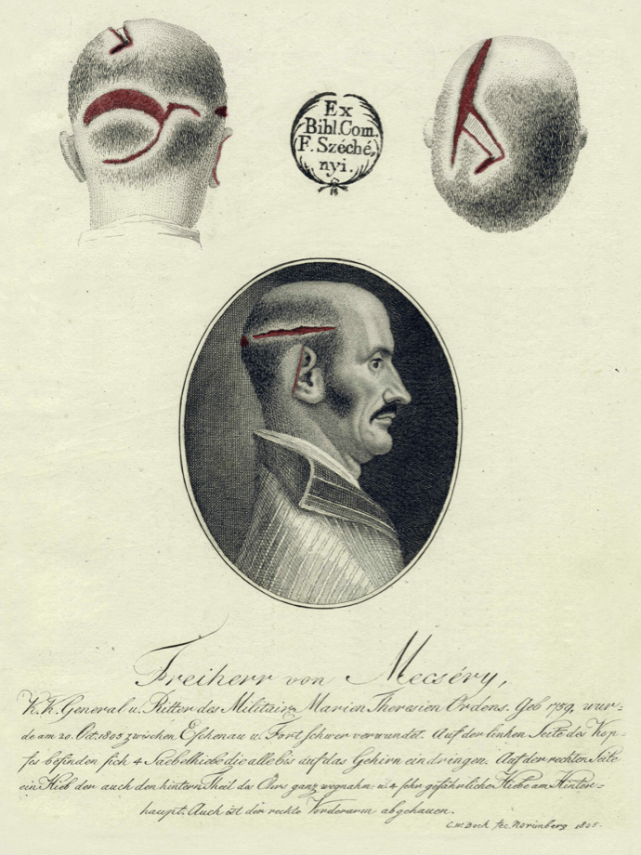
Among the most celebrated hussar officers were Pál Dévay, Gábor Geringer, Gábor Hertelendy, Dániel Mecséry, József Meskó, Károly Ott, Ferenc Stephaics, Péter Vécsey and, above all, József Simonyi, popularly known as Colonel Simonyi. Their place in the national imagination is reflected in the epithets bestowed upon them: Mecséry was remembered as “the hardest-headed Hungarian hussar,” and Simonyi as “the bravest.”
The Hungarian Revolution and War of Independence of 1848–49 marked the last truly glorious chapter in the history of the hussars and firmly established them as enduring figures of Hungarian national mythology. The hussars of 1848–49 hold a special place in this tradition. Unlike their predecessors, who had generally fought in the service of Habsburg rulers, they shed their blood for a very different cause: Hungarian freedom and independence, national self-determination, and the creation of a modern civic society. Six of the 13 Martyrs of Arad had served as hussars: Arisztid Dessewffy, Ernő Kiss, József Nagysándor, Ernő Poeltenberg, József Schweidel and Count Károly Vécsey. Artúr Görgei, the foremost military commander of the War of Independence, who served as both Minister of War and commander-in-chief, had himself spent several years as a hussar before 1848.
Hungarian hussars also carried their military tradition far beyond the country’s borders. Many were forced into exile following Hungary’s struggles for independence, while others left simply in search of adventure and opportunity. It is therefore hardly surprising to find them fighting in major conflicts around the world, from the American War of Independence and the American Civil War to the Boer War in South Africa. These soldiers—many seemingly ill-suited to the quiet routines of civilian life—continued to enhance the reputation of the Hungarian hussar abroad. Some even became celebrated heroes in their adopted countries, notably László Bercsényi in France and Mihály Kováts and Károly Zágonyi in the United States.
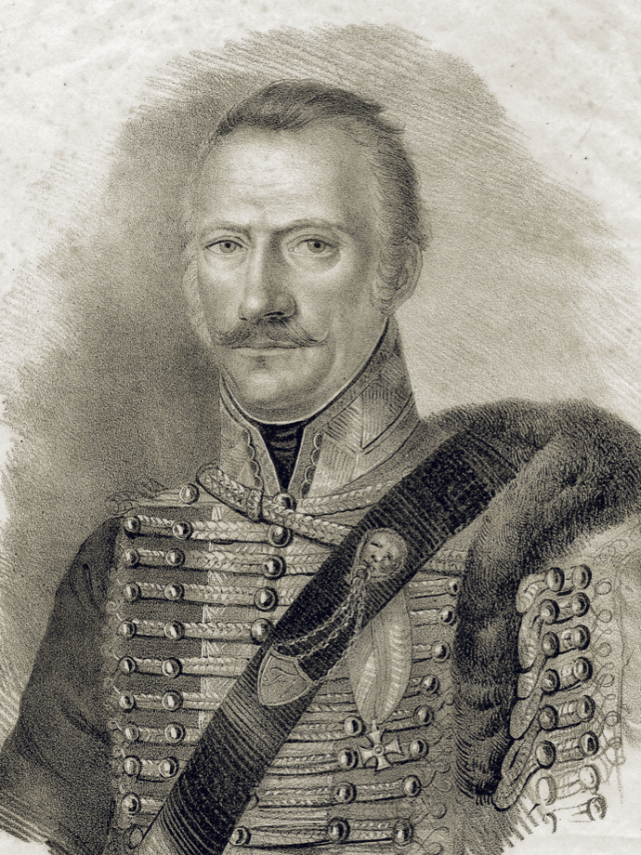
The Hussars' "Swan Song"
For all their prowess as soldiers, the rise of mass armies and advances in military technology—above all the increasing effectiveness of firearms—brought the golden age of the hussars to an end in the second half of the 19th century. Yet their courage and fighting spirit remained undiminished, and they continued to defy the passing of time with remarkable bravery. One of the finest examples came at Limanowa in Galicia during the opening months of the Great War. On December 11, 1914, amid the prolonged fighting there, several squadrons of the 9th (Nádasdy) and 13th (Jász-Kun) Hussar Regiments, under Colonel Ottmár Muhr, attacked the Russian positions and subsequently repelled 14 counterattacks. Their stand contributed significantly to halting the Russian advance, though at the cost of Muhr’s life and those of many of his hussars. Their sacrifice also earned them an enduring place among the heroes of Polish national memory.
The hussars still made a number of heroic cavalry charges during the early stages of the Great War, but many ended in heavy losses under enemy fire. Increasingly, they were forced to part with the horses that had been their inseparable companions for centuries and fight dismounted as infantry. Yet even under these radically changed conditions, they continued to fight with the courage and determination worthy of their name and traditions.
The Second World War marked the bloody final chapter in the history of the hussars. Their role and weaponry had changed, but their fighting spirit endured. Even amid the devastation of the war, they carried out a handful of daring, self-sacrificing cavalry charges that won the admiration of friend and foe alike. In these final actions, the hussars demonstrated one last time the courage, dash and daring embodied in the traditional ideal of huszárvirtus (hussar virtue).
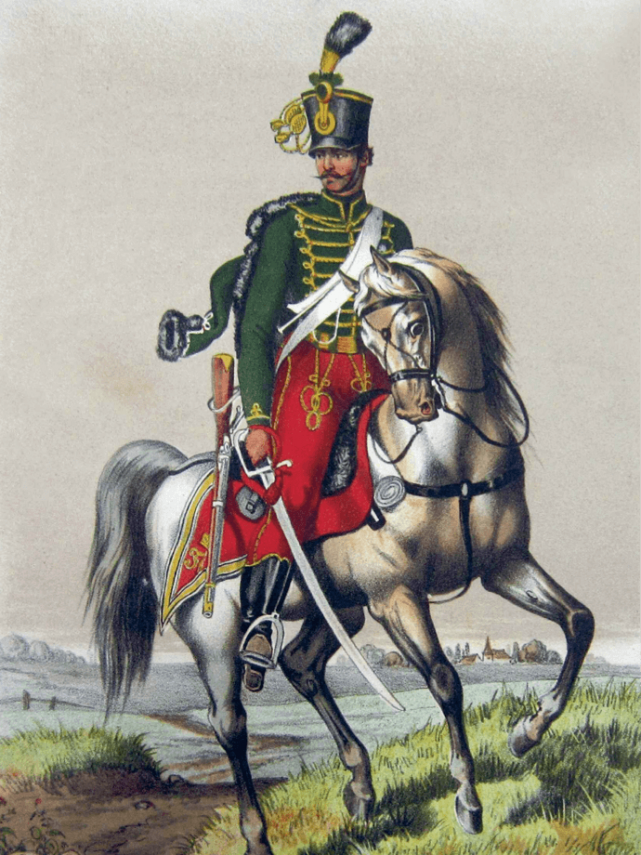
Over the course of its centuries-long evolution, the hussar tradition demonstrated a remarkable capacity to adapt. This was perhaps most strikingly illustrated after 1945, when—paradoxically, within the armed forces of a new regime determined to break with the past—hussar units were briefly re-established, albeit in a new form and along Soviet organizational lines. Thus, at the dawn of the atomic age, when their former comrades-in-arms—the cuirassiers, dragoons and chevau-légers—had long since disappeared into history, the hussars were still under arms. Their well-earned “retirement” came de facto only at the end of 1954, with the branch formally abolished in 1955. Thus ended some five centuries of active hussar service in the Hungarian armed forces.
Great Hungarians who served as hussars
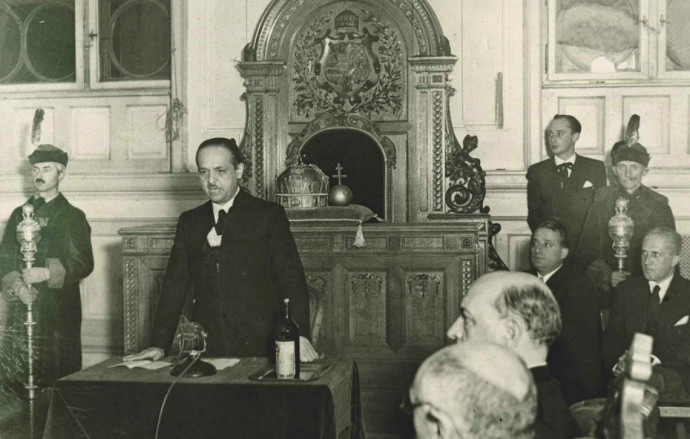
Many prominent figures in Hungarian history served as hussars at some point in their lives, and for many of them the experience left a lasting mark on their character and outlook. The best-known example is Count István Széchenyi, whose youthful service as a hussar is widely remembered. Less well known is that on the momentous day of November 3, 1825, he appeared before a session of the Lower House of the Hungarian Diet in Pozsony, proudly wearing the uniform of a captain in the 4th Hessen-Homburg Hussar Regiment. There he offered a year’s income from his estates—60,000 forints—to establish an institution dedicated to the advancement of the Hungarian language, which was eventually founded as the Hungarian Learned Society and which later became the Hungarian Academy of Sciences. According to eyewitnesses, Széchenyi declared: “Not everyone can do what I am doing. I am an unmarried man and a soldier.” His celebrated gesture was therefore still very much the patriotic and forward-looking act of a young hussar officer rather than of the statesman he would later become.
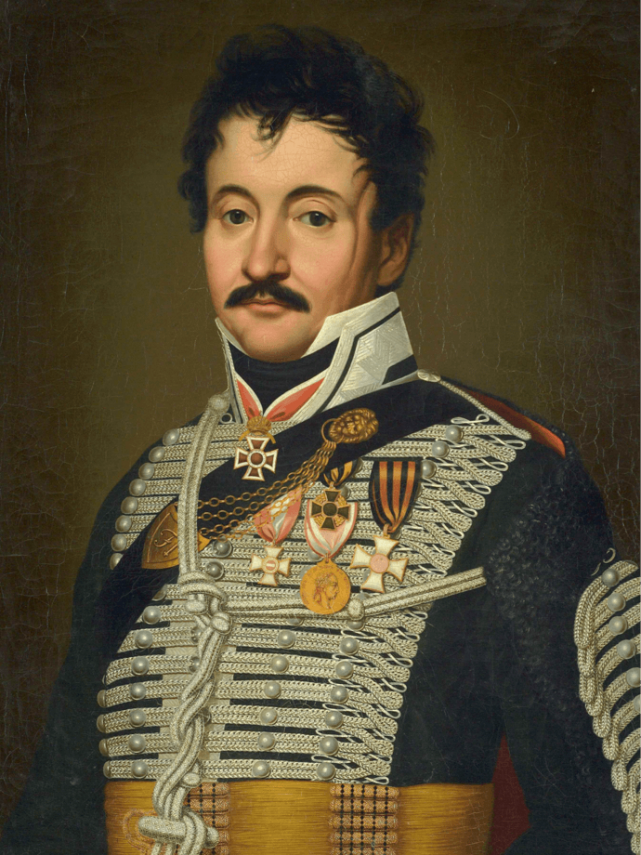
In this sense, even the Hungarian Academy of Sciences owed its foundation in no small measure to the hussars—and not just to Széchenyi. Several other former hussars were among its principal benefactors. The second-largest contribution towards establishing the Learned Society, 50,000 forints, came from Prince Fülöp Batthyány-Strattmann, who in 1809 had commanded the insurrectionary hussars of Vas County against the invading French. His younger brother, Lieutenant Colonel Count Iván Batthyány, who had served alongside Széchenyi in the 5th Hussar Regiment during the Napoleonic Wars, contributed a further 10,000 forints. The third-largest donation, 40,000 forints, came from Count György Károlyi, another of Széchenyi’s former comrades, this time in the 4th Hussar Regiment. The Academy’s foundation therefore appears to have owed something to a network of personal ties and comradeship forged through service in the hussars—a connection now almost entirely forgotten.
Less well known is the fact that Count Lajos Batthyány, prime minister of Hungary’s first independent government, had also served as a hussar in his youth, spending four years with the 9th Frimont Hussar Regiment. Nor is it surprising, then, that the same government’s Minister of War, Field Marshal-Lieutenant Lázár Mészáros, had spent several decades as a hussar officer. He began his career with the 7th Liechtenstein Hussar Regiment and later commanded the 5th Radetzky Hussar Regiment. A man of wide-ranging learning, Mészáros was also a corresponding member of the Hungarian Learned Society—an institution whose creation, as we have seen, itself owed much to the hussars. Thus, three members of Hungary’s first responsible government—Batthyány, Mészáros and Széchenyi—had extensive experience as hussars.
Several later Hungarian prime ministers also had strong ties to the hussars. Count Gyula Andrássy, the first prime minister following the Austro-Hungarian Compromise, was appointed supernumerary colonel of the Radetzky Hussar Regiment during the War of Independence. Count István Tisza, the last major Hungarian statesman of the Dualist era, had served as a volunteer with the 2nd Honvéd Hussar Regiment in his youth. After resigning as prime minister in May 1917, he returned to his former regiment as a colonel and remained on active service at the front until September 1918. His example speaks volumes about the prestige of Hungary’s national cavalry: even for a former prime minister, service as a hussar officer was anything but a step down. Seven other future prime ministers—Móric Esterházy, János Hadik, Mihály Károlyi, Gyula Károlyi, Kálmán Darányi, Béla Imrédy and Béla Miklós—also served as hussars in their youth. Altogether, ten Hungarian prime ministers had experience as hussars.
Distinguished hussars
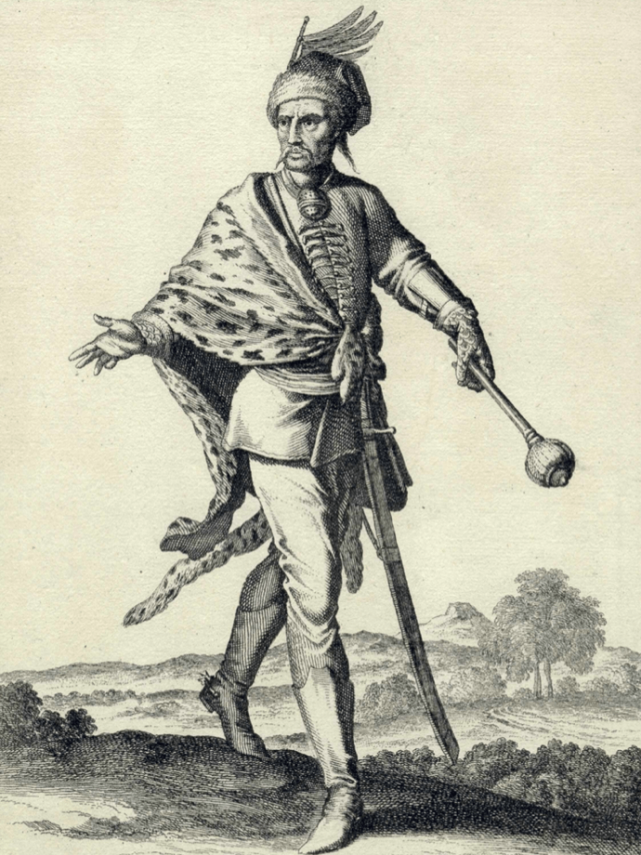
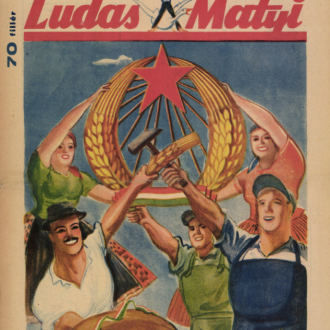
Hussars were not merely the subjects of literary works; they were often writers themselves. Yet it is little remembered today that Bálint Balassi, the first major poet to write in Hungarian, was a hussar, as were Sándor Kisfaludy and his younger brother Károly, as well as Mihály Fazekas, author of Lúdas Matyi.
The Royal Hungarian Bodyguard, founded by Maria Theresa in 1760 and closely associated with the hussar tradition, ultimately proved to be more important from a cultural than military standpoint. Alongside its ceremonial duties, one of its principal aims, particularly in its early years, was to educate young Hungarian noblemen and broaden their intellectual horizons. It was in this environment that the so-called “bodyguard writers”—among them György Bessenyei, Sándor Báróczy and Ábrahám Barcsay—emerged as important figures in Hungarian literary history.
Count György Festetics, who founded the Georgikon at Keszthely and thereby laid the foundations of higher agricultural education in Hungary, had previously served as a lieutenant colonel in the Graeven Hussar Regiment. János Lipszky, creator of the first comprehensive general map of Hungary and its associated lands, began his three-decade military career in the same regiment. Archduke Franz Ferdinand, the future heir to the throne, commanded the 9th Nádasdy Hussar Regiment stationed at Sopron for three years. Miklós Kozma, founder of Hungarian Radio, also served as a hussar in his youth, as did Endre Bajcsy-Zsilinszky, a prominent figure in the anti-fascist resistance, and Alfréd Drasche-Lázár, who later bore the painful responsibility of signing the Treaty of Trianon on Hungary’s behalf.
The hussars also produced a number of distinguished sportsmen. Colonel József Rády was a member of Hungary’s gold-medal-winning sabre team at the 1928 Olympics, while József Platthy won bronze in show jumping at the 1936 Games. Even the world of comedy had its former hussar: József Markos, better known by his stage name Alfonzó.
Alongside these historical figures, the fictional hussars immortalized in literature, music and other arts also deserve a place in the story. Characters such as Háry János and János Vitéz have themselves become enduring cultural icons. Indeed, the hussar’s exceptional place in Hungarian culture is reflected in the remarkable range of forms in which he appears. The figure of the hussar permeates both folk and high culture, from folk poetry, literature and song to operetta, and from decorated gingerbread figures to public monuments. Cinema, the defining new art form of the modern age, also turned its attention to the hussar.
The history and glory of the hussars, together with the legendary hussar spirit, did not disappear with the disbandment of the last active units. They remained an integral part of Hungarian historical consciousness and cultural heritage. Today, thanks above all to historical re-enactment groups, colorful hussar parades and displays have become a familiar feature of national celebrations. After the change of regime, the revival of civic associations led to the creation of numerous groups devoted to preserving hussar traditions, giving the hussar something of a modern renaissance.
Far from belonging solely to the past, the hussar remains a powerful symbol of Hungarian courage, heroism and patriotism—and thus a living part of Hungary’s present and, one hopes, its future.
(translated by Márta Pellérdi)