Free to read


The German-backed Szálasi coup during the German occupation of Hungary in 1944 is a fairly well-documented event. Existing research, however, focuses primarily on the moment of the coup itself and the events leading up to it from the perspective of the military situation, the international context, and the key actors and political forces involved. Much less is known about how the events of October 15, 1944 and the period that followed unfolded at the street level.
From the moment the Hungarian National Guard was established in early September, it was already understood that it was intended as an internal security force to be deployed against possible actions on the part of the pro-German Arrow Cross. But how did this play out on the ground?
An Olympic champion as minister
During the postwar trial of Dr. Iván Nagy, the press officer of the Arrow Cross Ministry of Foreign Affairs, several witnesses testified that the Ministry of Religion and Education had been preparing to defend its building by force as early as September in anticipation of a possible coup. On September 20, 1944, Szabolcs Lőrinci, head of the Ministry of Religion and Education’s executive office, convened a meeting to discuss protecting “the government’s freedom of action against potential extremist excesses.” To this end, the minister, Iván Rakovszky, ordered the creation of a 20-man security detail that “operated in strict secrecy against possible coup attempts by the Arrow Cross rabble. […] The duties of this provisional guard were subsequently assumed by the newly formed National Guard, with Iván Nagy, a first lieutenant in the reserves, appointed as its commander based on a recommendation from the head of the mobilization department.”
Iván Nagy informed a ministerial meeting that “in the event of a revolutionary uprising, they would defend the ministry against smaller groups, but he considered resistance to be futile against a concerted attack.” However, when the coup actually happened, no one used the weapons that had been handed out, due to a lack of leadership.
“The building’s air raid defense organization had been issued six submachine guns to protect the ministry in the event of a coup. Following the coup, Márton Homonnay, a former water polo champion and Arrow Cross member who was then employed in the ministry’s accounting department, arrived with several accomplices and took the weapons by force.”
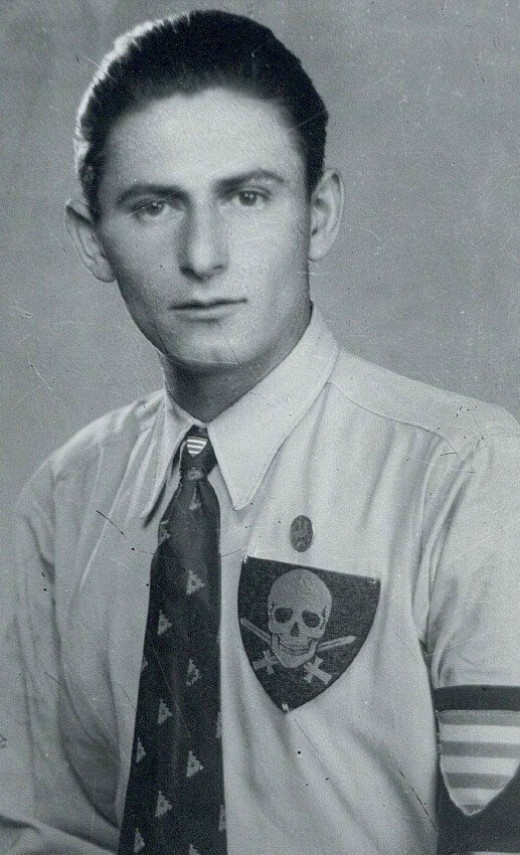
On October 15, Iván Nagy surrendered the weapons in his possession to Márton Homonnay—a member of Hungary’s 1932 and 1936 Olympic champion water polo teams. However, it was not until the next day that Nagy handed over the concealed weapons he had received from the government to the new head of the ministry’s executive office, Arrow Cross section chief István Emődi. On the morning of that same day—October 16—at around 10 am, Arrow Cross members occupied the ministry building, and at 11 am, Nagy summoned the officials inside and labeled Horthy’s attempted armistice an act of treason. Although Nagy still presented himself as a loyal and reliable supporter of the regent in the summer of 1944, he soon established a reputation as a careerist, being promoted to the post of press chief to the Ministry of Foreign Affairs under the Arrow Cross government. In the case of Iván Nagy, it remains unclear whether he was simply an opportunist drawn to power, a covert supporter of the “new guard” kept on file by the Arrow Cross, or a collaborator working with the Germans.
The Arrow Cross coup as seen by its armed supporters
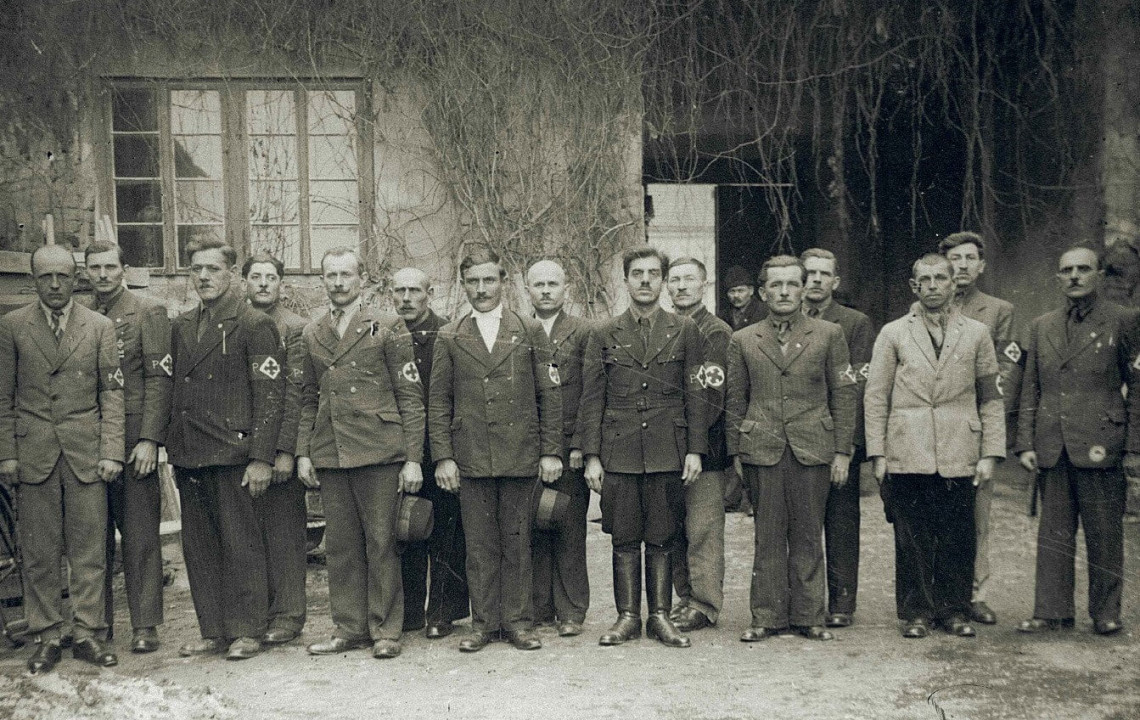
The 14th District headquarters of the Arrow Cross party was located at 11 Bácskai Street, in Budapest’s eastern Zugló district, prior to the 1944 coup. This local party branch was led by Dr. András Jakab, a physician, but shortly before the coup the “intellectual” Jakab was replaced by László Szelepcsényi, a shop foreman from the Danuvia Machine Factory. There were additional smaller district offices at the corner of Fogarasi Road and Várna Street, at 50 Ilosvay Street, and on Szugló Street. In the period leading up to the coup, the group here consisted of a well-knit cohort of old Arrow Cross members who frequently fraternized and socialized at cinemas, beaches, and football matches. Everything would quickly change following the coup, however.
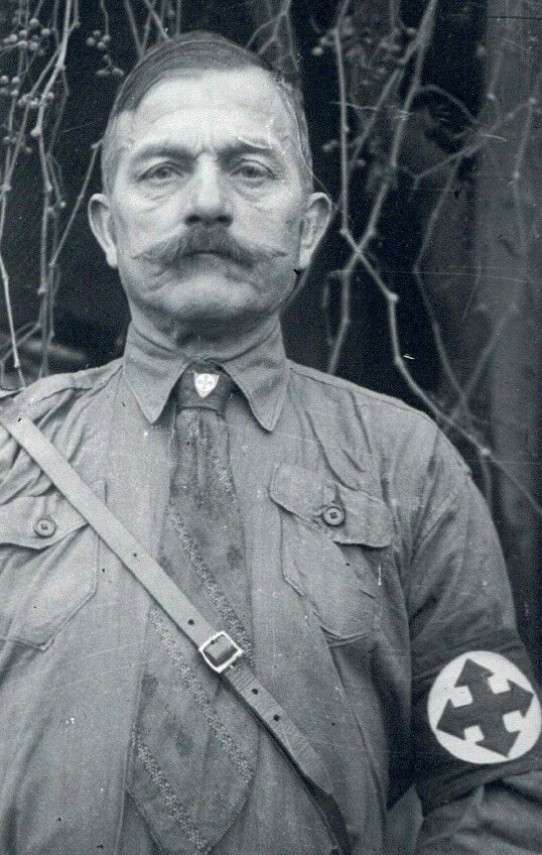
In accordance with central party directives, small local groups had already been formed in 1944, tasked with distributing leaflets and daubing slogans on walls, as well as sniffing out sabotage in factories and industrial establishments. They also enforced compliance with the Jewish curfews and the wearing of the Yellow Star and sought “the prevention of Communist activities”—as György Bükkös, a prominent Arrow Cross party guardsman, later put it. They also made rousing or inflammatory speeches. A few select party brothers even received police training so they could serve as liaisons between the Arrow Cross party and the police—“along strictly political lines, of course”—following the coup. Prospective party guardsmen received training in Japanese “self-defense and wrestling techniques” from Brother József Kuti.
In preparing for the coup, the Arrow Cross set up an operations center at 16 Pasaréti Road on the Buda side. On October 15—the day of the coup—Arrow Cross guards established a checkpoint at the entrance to Pasaréti Road, verifying everyone’s ID and only allowing those with an Arrow Cross or other far-right membership card to proceed. Armed party members from the Rákosváros district were among the roughly 8,000 men clustered at the assembly point, where everyone was given a sidearm—or other weapons—and an armband. The Rákosváros contingent numbered some 60 in total, including several women. György Bükkös, later a leading paramilitary figure in the party, remembers the events this way:
“We eagerly awaited further developments. […] It was well past 10 am when a megaphone blared, urging the waiting Arrow Cross members to be patient. And then, around 11 am, the Arrow Cross anthem began to play, and we sang along with the music on the phonograph. At last, we were able to do this without fearing being hit with a police truncheon. A voice spoke, and we listened: ‘With the approval and agreement of the German military command, Ferenc Szálasi has assumed power.’ A seemingly endless cheer surged through the crowd.”
The remainder of the day was spent on patrols, with the guardsmen passing the night at a school on Városmajor Street, also on the Buda side. A significant portion of the Arrow Cross youth gathered here as well, including those from the abovementioned Zugló district. Many of these youth subsequently joined the ranks of the Hungarist Legion and were sent to the Hárshegy Scout Park in the Buda Hills for training, although many later returned to their respective party organizations.
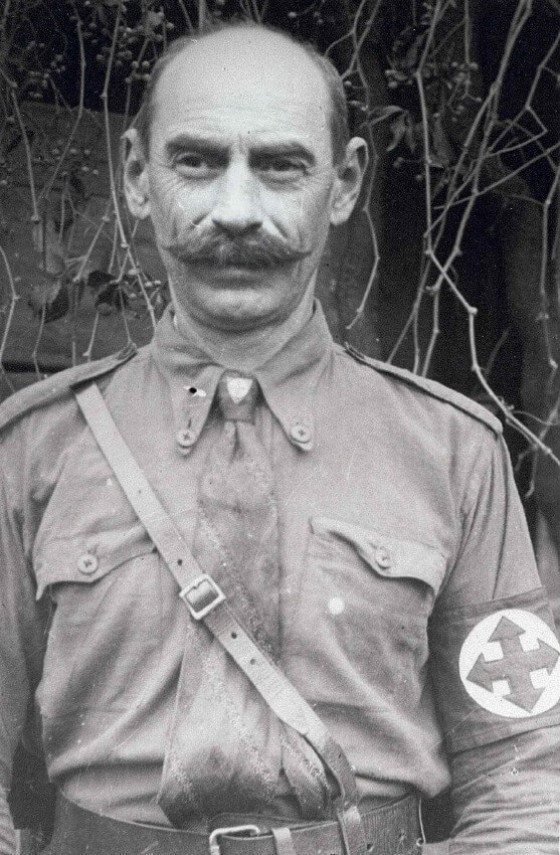
The next day, on October 16, the 14th District branch of the Arrow Cross requisitioned a new party office at 80 Thököly Road, forcibly displacing the former ruling Party of Hungarian Life (MÉP). Those MÉP members still present were summarily evicted. But the Arrow Cross members did not limit themselves to these few rooms; they moved in and occupied almost the entire building. The move from Bácskai Street was already completed by the 17th when Szelepcsényi noticed the party membership ledger had gone missing. Furious, he threatened to haul the entire group before the National Accountability Tribunal. The ledger, however, was eventually found. Szelepcsényi went so far as to recruit Arrow Cross members he recognized directly off the street to help with the move and transport of the furniture, saying that they should not just gather for pleasantries and entertainment but be willing to prove their worth during a struggle. “You’re useless shits, not Hungarists!” Szelepcsényi would bark at them. In an instant, the party’s organizational activities changed from idle daydreams among the brethren to the grimly serious practical duties. Little by little, even the composition of the personnel changed.
Arrow Cross houses
Budapest’s landscape of power underwent a change even before the siege began as Arrow Cross houses acquired prominence in every district following the coup. A full list remains incomplete even today, and one can only enumerate those buildings that subsequently gained tragic notoriety: alongside 60 Andrássy Avenue, 47 Andrássy Avenue also served as a command center. The Újpest Arrow Cross members established themselves at 77 Árpád Street, the Kispest members at 42 Fő Street, the Zugló branch at 80 Thököly Road, and the Angyalföld unit at 25 Petneházy. In the 9th District, the Arrow Cross set up their main headquarters at 41 Ferenc Boulevard, replacing their more modest premises at 14 Tompa Street—at the corner of Tompa and Angyal Streets, the site of a notorious clash between the Arrow Cross and Social Democrats in 1937.
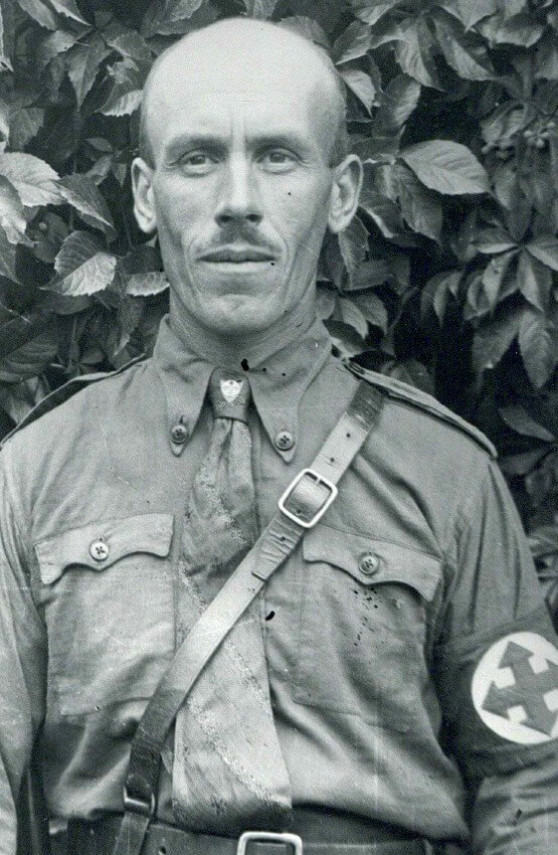
In the city center, local Arrow Cross houses were established at 2 Szent István Boulevard, 35 Pozsonyi Road, 14 Városház Street, 49 Erzsébet Boulevard (Grand Royal Hotel), and 26 Rökk Szilárd (Somogyi Béla) Street in the 8th District. In Buda, the Arrow Cross Party centers were located at 37 Városmajor Street, 1 Győri Road, 46 Kapás Street, 8 Szász Károly Street, 5 Németvölgyi Road, 40–42 Márvány Street, and 35 Horthy Miklós (Bartók Béla) Road, and in Óbuda at 102 Bécsi Road. These houses not only became centers of terror; they also became hubs for wealth redistribution—or, to put it more plainly, outright robbery, as properties taken over for party purposes—primarily in Budapest—were simply confiscated.
While the history of the above-mentioned party centers is more or less documented, very little is known about the “Arrow Cross houses” that operated at 5 and 10 Teleki László Square in Budapest’s 8th District. One thing is known with certainty: the Arrow Cross used these places as collection points for local Jews who had been rounded up on the street or dragged from their homes. According to a postwar report published in the social democrat Népszava, Arrow Cross women performed guard duties here, overseeing persecuted women.
Might makes right
Ferenc Omelka, one of the toughest of the old Arrow Cross guards, told his comrades back in 1938: “As long as we stick to the primitive law of the jungle, we’ll be in the right. We can always dig up a legal clause to fit it after the fact.”
In 1944, the hour struck. József Gera, head of party organization, stipulated in a directive dated October 18: “If the situation so requires and the leader of the party organization issues an order to the state law enforcement agencies to carry out the political will of the nation, they are obliged to do so.” Numerous examples could be drawn from Budapest from the first days of the coup, but we need only look at the downtown party district.
Among the members of the 7th District branch—later known as the “Royal House” Arrow Cross—was a hairdresser named József Bányász. He joined the Arrow Cross Party in 1938 and remained a member until the very end of the siege of Budapest in February 1945. In the autumn of 1944, however, he was serving as the leader of party unit 134, which formed part of the 7th District party organization. By his own account, on the morning of the coup, a fellow Arrow Cross brother showed up at his doorstep and handed him a pistol and hand grenades, with orders to report immediately to the party headquarters at 15 Csengery Street. For days, there had been talk among themselves about Szálasi taking power, and from that moment on, he went about armed in an Arrow Cross uniform. His “place of work” was the House of Loyalty at 60 Andrássy Avenue, though he frequently turned up at several other Arrow Cross houses as well. After leaving 15 Csengery Street, he moved on to 49 Erzsébet Boulevard, 2 Krisztina Square, and 14 Városház Street before they crossed over to the Buda side at Németvölgyi Road, where they remained right up until “the Russians arrived.”
József Bányász began his Arrow Cross activities at 5 Károly Király Road in the 7th district. One of the residents of the building recounted the events after the war as follows: ““In the house where I live, József Bányász, who resided there, was known as an old Arrow Cross member; in fact, he had been a longtime leader of an Arrow Cross unit in the 7th District.”
On the afternoon of October 15, Bányász returned to the building armed with a revolver and hand grenades, had the main gate locked up, and—although he theoretically had no authority to do so—he began rounding up and interrogating those residents designated as Jewish. One of the residents—a recipient of a First World War Golden Medal for Bravery—was given special dispensation and left in peace until late December 1944.
Bányász had already threatened several people in the building before then, and he kept up the intimidation that day. On October 17, master confectioner Sándor Farkas and his wife—who were subject to anti-Jewish laws—tried to leave the building to open their shop as they did every morning. Upon reaching the front gate, however, Farkas learned that Bányász had ordered them confined to the house. Bányász thereupon informed Farkas that he would rule on his matter later in the day and that he should report to the porter’s booth that evening to receive the decision. When Farkas went down, a muffled thud caught his attention. He hurried back to the courtyard, worried, for his wife had said she would rather kill herself so they could live in peace. But it turned out that it was the wife of the house commander—Pfahler—who had committed suicide. The Farkases fled their home on the morning of the 18th. The next day, Bányász arrived with two other Arrow Cross men, summoned the Jewish men to the courtyard, and informed them he was taking them to the Tattersall, which during the weeks of Arrow Cross rule served as the staging area for deportations from Budapest.
Such actions were neither confined to Budapest nor to those categorized as Jewish. In the northern town of Miskolc, for example, Arrow Cross thugs began going from house to house the day after the coup, conducting searches. Both leftists and anti-German civic public figures were dragged to the Arrow Cross party headquarters, the detention center at the Miskolc police station, or the internment camp set up in the Szilvásvárad Castle. Official approval for these arbitrary actions was granted after the fact.
“No serious loot—no national rebirth”
On March 28, 1945, the social democratic paper Népszava reported: “The criminal case against Kálmán Tibák, a 24-year-old auto mechanic, and József Pámer, a 23-year-old OTI [National Social Insurance Institute] official, was heard by the Piry Council of the People’s Court. On October 16, 1944, the defendants conducted an armed search of the apartment of Mrs. Richárd Margitai at 19 Czobor Street, taking her radio and five suits of clothing from the cellar.
The thunderbolt of retribution—from the diary of Arrow Cross enforcer József Csány
“It’s terrible what these ‘fine brothers’ are doing. That they loot and run rampant is bad enough, but that they shoot people dead simply because they’re ‘already’ tired of the war and have left the front to come home is outrageous, for it is not the man who arbitrarily returns home to see his family who is a traitor but rather the Hungarian officer who surrenders his entire unit to the enemy. And yet I have never seen such an officer shot dead, but only numberless poor peasant soldiers. […]
The party oversees the selling off of the shops’ inventories. Countless abuses are committed. Purchases can only be made with party approval. My wife complains that a party thug chased her away from the grocery store, saying that her husband wasn’t a member of the Arrow Cross. I will go and file a complaint at the party headquarters and tell Molnár and his crew straight to their faces that they are acting disgracefully. The response—they know this perfectly well! […]
If I could be a bolt of lightning right now, I swear on my Hungarian honor, there are many places I would strike. I went to the party headquarters and announced to District Leader Molnár that I would gladly play the part of the club and the thunderbolt no matter the consequences for me. The situation is unbearable, and I feel I have the power to change it right here and right now.” (Published by Péter Bakonyi, in Archivnet, issue 6/2021)
We must treat accounts of the postwar press—as we must the records of the People’s Courts—with the utmost caution; nevertheless, what we are dealing with here is a phenomenon for which there is also abundant data from other sources. A man from Western Hungary, who joined the Arrow Cross National Accountability Detachment from a desire to restore order, wrote the following in his diary: “What has possessed people to grab everything belonging to others?”
The Kasztner Report of the Budapest Jewish Rescue Committee recounts these days as follows: “The government became increasingly incapable of restraining the criminal forces it had unleashed. In a country fallen into chaos, where all legal order and discipline had gradually disintegrated, people were playing at revolution.”
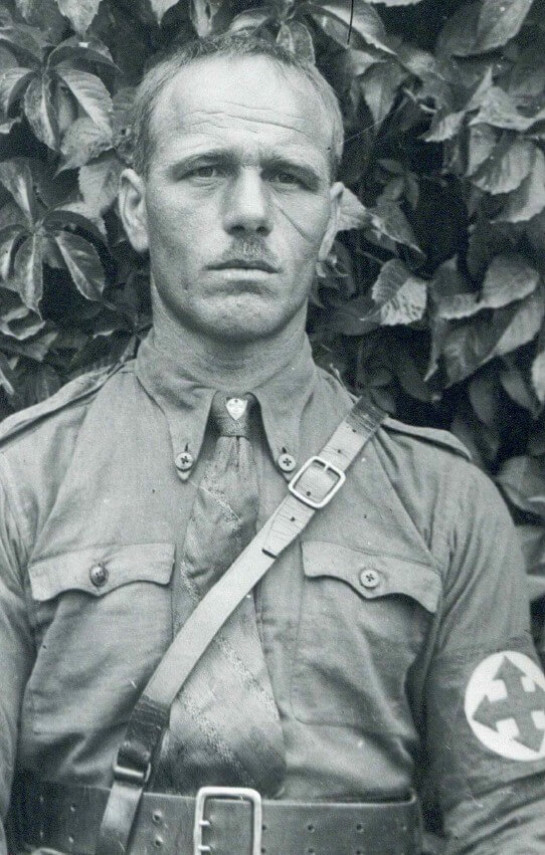
According to Wilhelm Höttl, an officer of the SS intelligence service, the Arrow Cross enforcer units in Hungary were made up of people “who, in many cases, came explicitly from the lumpenproletariat.” We can see an example of this among the Arrow Cross thugs based at the Royal Hotel.
Béla Földi was born in 1909 and was an assistant pastry chef. He completed only three years of elementary school before performing his military service. In 1942, he joined the Arrow Cross’s 7th District Branch but rarely visited the party headquarters for the first two or three days following the October 15 coup. From then on, however, he was a regular visitor to the Royal Hotel until mid-December, serving as a party enforcer. Even before the coup, Földi had received about 30 kg of fine silver from Manó Gerbhardt for safekeeping, “which he had stored in the countryside and failed to return to its rightful owner even after his release from captivity.” Around December 10, 1944, Földi, along with his fellow Arrow Cross members, broke through the gate of the building at 18 Dob Street and misappropriated various valuables from the building manager living there, Mrs. Gyula Klein, with Földi personally taking a women’s wristwatch and 300 pengős.
Mrs. József Reichenfeld, a resident of 16 Dob Street in Budapest’s 7th District, was taken away on November 28, 1944, and returned home on December 12. As she explained later: “During this time, Arrow Cross troopers looted our shop on December 1 at the behest of Béla Földi, and on December 3 they plundered our basement storage room at 14 Dob Street.”
Piroska Lőwy, the widow of Márton Goldgruber and a fellow resident of Dob Street, met Földi in December 1944 at Klauzál Square, in the 7th District, where Földi was serving as a party militiaman. A bowl had been placed in front of him, into which those rounded up had to throw their money and jewelry. “He made me take off my wedding ring and throw it into the bowl and then immediately pocketed it.”
Party militiamen perhaps still kept up appearances into the latter half of October, but after that they increasingly operated like lawless bandits. At the Zugló headquarters, for example, one Arrow Cross brother shouted to another: “Vigh, we’ve made a huge haul! We brought some guy back from downtown with 40,000 pengős in his suitcase.” It should be noted once again that Jews were not the only victims. On another occasion in the 14th District, five men were brought into the party headquarters who—according to the testimony of one Arrow Cross brother—“didn’t look Jewish, but had money and gold all the same.”
It should be noted that such actions were not limited to Budapest alone but spread uncontrollably across the few counties that remained under Arrow Cross control as time went on. Investigations had to be launched against individuals such as Imre Návay, the commander of the National Armed Service, and his deputy, Márton Homonnay—whom we met previously at the Ministry of Culture. The situation degenerated to such an extent that Norbert Orendy, commander of the National Accountability Organization, set up a special investigative unit in February 1945 to investigate abuses committed by Arrow Cross party members. Emil Kovarcz, the minister of total mobilization in the Arrow Cross government, later expressed it bluntly: “It is simply impossible to expect poor people, mostly from the working class or at least the lower classes, to inventory vast fortunes abandoned in apartments. I know full well, and I knew back then too, that this can only lead to total degradation, for anyone allowed to rummage through gold the likes of which they perhaps have never seen before in their lives will sooner or later pocket the first ring they come across, and from that moment on, they become a robber.”
Bolshevism draped in Arrow Cross green
In a speech delivered at the Weiss Manfréd Works on Csepel Island south of Budapest on November 27, 1944, István Péntek, one of the Arrow Cross party’s leading ideologues, claimed that the class struggle had come to an end for the working class with the Arrow Cross coup. However, the Arrow Cross’s own “class struggle” was only just beginning, manifesting itself in the violent acquisition of wealth. This had both an organized form, reflected in the “allocation” of smaller workshops, factories, and businesses, and another tendency that closely resembled outright looting. Behind all this lurked a confused and bloody concoction of the most primitive form of anti-Semitism, social frustration, and socialist ideals.
Dr. Gyula Mohay, the Arrow Cross lord mayor of Budapest, declared that the surplus and “excess revenue” accruing from factory earnings should be placed at the disposal of the community. László Budinszky, the Arrow Cross minister of justice, went even further, declaiming that “if necessary, we’ll encroach upon private property. The Hungarian nation shall exercise its right to mine coal, and the Hungarian nation shall reap the benefits of the heavy and iron industries.”
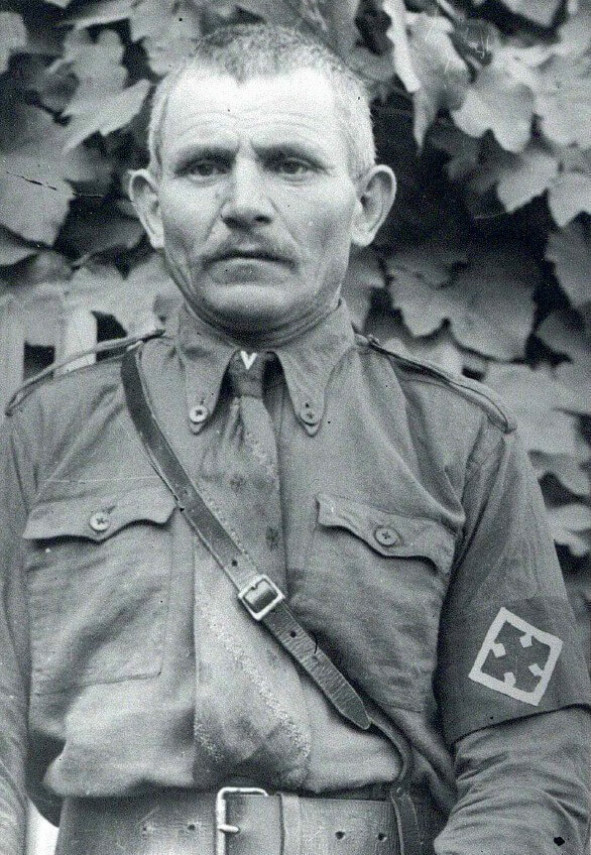
In a certain sense, however, this did happen: they did “encroach upon private property.” They just didn’t do it in accordance with their stated intention of nationalizing strategic sectors. Instead, there were countless cases of small shops and businesses handed over to new owners. The mayor of Sopron entrusted the management of the Jakobi cigar and cigar-holder factory to a party sister named Mrs. Ferenc Mayer, while the mayor of Újpest appointed Arrow Cross members to head an upholstery shop, a woodturning shop, and a carpentry workshop. The Arrow Cross authorities also succeeded in allocating a ready-to-wear clothing store and a canning factory.
In Budapest’s 14th district, the Arrow Cross “allocated” a shoe factory to Sándor Gelencsér, a master shoemaker and leader of the local Arrow Cross party organization in Zugló. The new owner’s attitude is well reflected in a remark he let slip, claiming that after the war, “he’ll take off his green shirt, put on a red armband, and become the greatest communist.” This process of “requisition-allocation” primarily affected—but not exclusively—factories that had formerly been owned by Jews.
If one were to merely take Szálasi’s seemingly benevolent statements and his bombastic, dreamlike rhetoric at face value, one might be excused for believing that his grand plans came to naught simply due to the inevitable upheavals caused by the war. In reality, however, it was nothing more than overblown hypocrisy. Behind the grandiose delusions bordering on fantasy lay the commonplace reality of highway robbery in league with the German occupiers.
(translated by John Puckett and Andrea Thürmer)