Free to read


When discussing Hungarian art in Austria-Hungary (1867–1918), a period also known as the Dualist era, we are referring to a time often described as the “happy years of peace.” Lasting nearly half a century, it was a period of relative peace and stability not only in Hungary but across much of Europe. The optimism of the age was reinforced by the political continuity provided by the long reigns of Queen Victoria in Britain and Emperor Franz Joseph in Austria-Hungary. Against this backdrop, art came to be seen as an expression of a society confident in scientific, technological, and economic progress. Clarity of representation, technical skill, and accessibility were highly valued, while artistic life was shaped by a well-established system of exhibitions, juries, prizes, and awards. At the center of this system stood the academy, the leading authority in setting artistic standards, influencing public taste, and determining professional success..
The Age of Art Academies
The academy functioned as the foremost authority on artistic practice and art-historical knowledge, defining the standards by which artistic merit was to be judged. Through its regular processes of selection and evaluation, it ensured adherence to these standards.. This system of academies persisted throughout most of the nineteenth century.
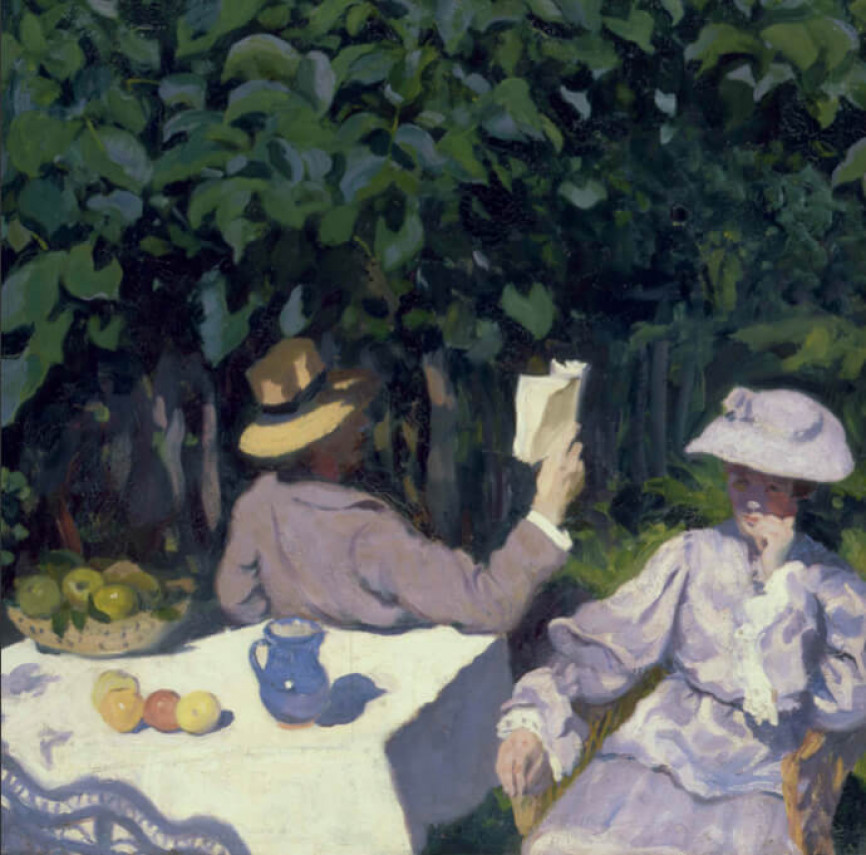
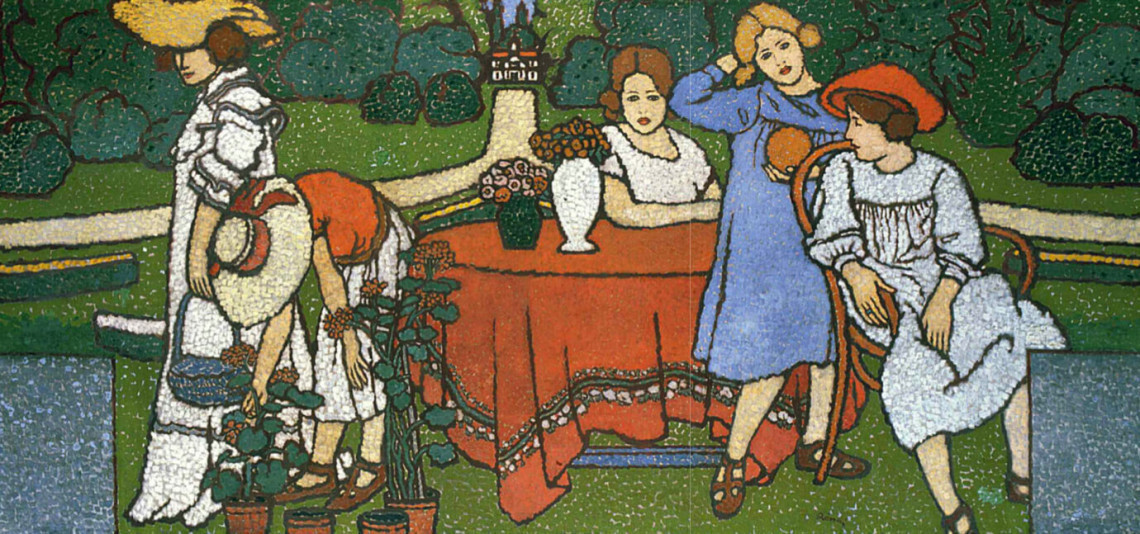
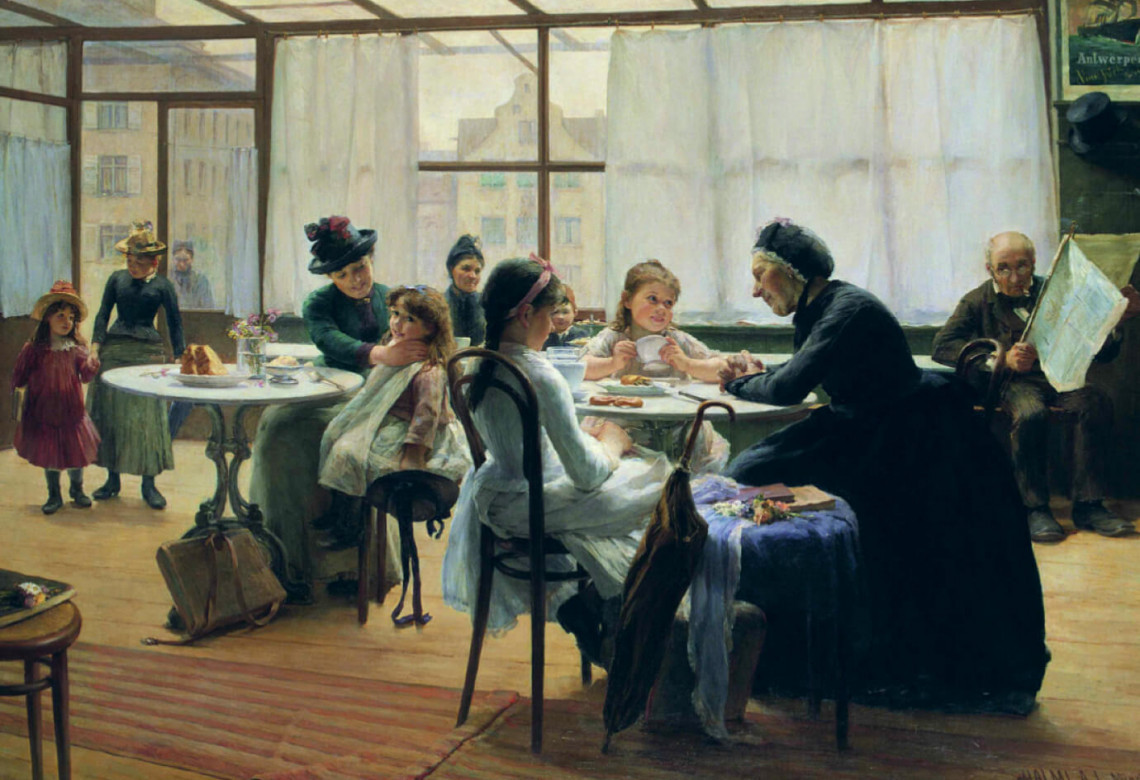
From Paris to Munich, from Vienna to St Petersburg, and from Madrid to Berlin, this academic framework shaped artistic life across Europe. Yet it was precisely this framework that came under attack from modern art, which rejected both absolute standards and the institutional authorities that claimed the power to judge artistic value. At the same time, it is important to recognize that almost every major artist of the nineteenth century spent at least some time studying at an art academy. The academy provided rigorous training; in fact, it fostered the belief that artistic skill could be systematically taught and acquired.
The Role of History Painting
At the same time, the academy mirrored the structure of society itself. Just as society was organized hierarchically, so too was the world of art. Certain genres occupied a higher position and enjoyed greater prestige—notably history painting—while others, such as genre painting and still life, were considered less significant. Nothing illustrates this more clearly than the fact that, at the beginning of their careers, most painters of the period aspired to become history painters. If circumstances led them in another direction, they often went on to achieve distinction in a different genre. The reverse, however, was rarely the case: landscape and still-life painters did not become masters of large-scale historical compositions.
In Hungary, following the Austro-Hungarian Compromise of 1867, history painting retained its special position through official state patronage. Such works were valued not merely as vivid and compelling representations of the past; they also gave visual expression to national aspirations, political ambitions, and collective ideals. Given this close connection between art and politics, it is no coincidence that, as early as 1869, the government announced a competition for history paintings that marked a departure from the earlier emphasis on martyrs, rebels, and persecuted heroes. Instead, artists were encouraged to depict figures better suited to the new political order: patrons, founders of the state, and peacemakers.
Hungarian National Gallery (Magyar Nemzeti Galéria)
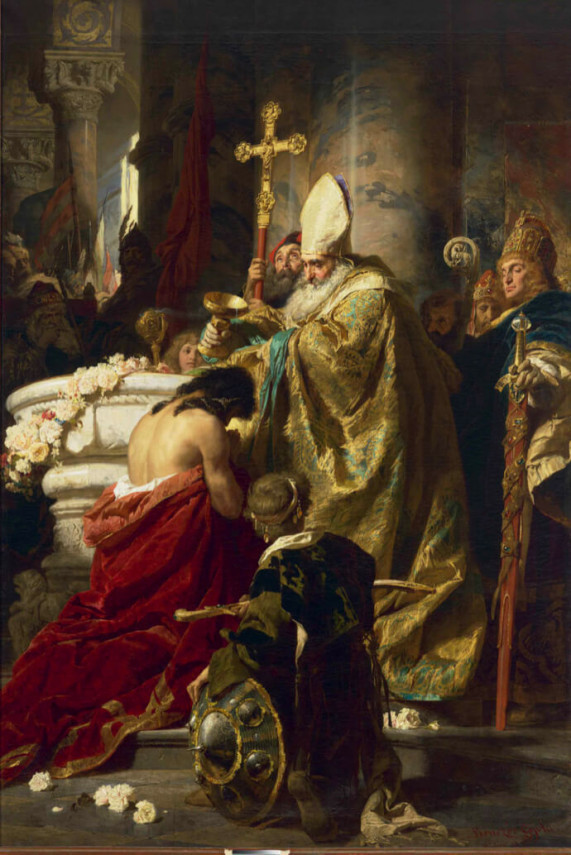
A milestone in the development of history painting during the new era that emerged around 1870 was the state competition for historical paintings announced in 1869 by József Eötvös, Minister of Religion and Public Education. Its aim was to promote a form of monumental history painting which was capable of expressing the values and aspirations of the new political order. Benczúr won the competition with his 1870 sketch for The Baptism of Vajk. As he developed the composition on a monumental scale, the lively, genre-like character of the sketch gave way to a solemn and carefully composed image reminiscent of an altarpiece.
The baptism of Vajk as an artistic theme entered the historical iconography of Saint Stephen only in the early nineteenth century. The subject was particularly well suited to the political climate that followed the Austro-Hungarian Compromise of 1867. The symbolic rebirth effected through Christian baptism offered a powerful visual parallel to the birth of the Christian Hungarian state. At the same time, the Compromise was widely interpreted as marking the beginning of a new era after centuries of political struggles, revolutions, and wars of independence. Completed in 1875, Benczúr's monumental painting transformed the baptism of Vajk into an apotheosis of national renewal and statehood.
Schools and Associations
As Hungary had no art academy of its own, Hungarian art students typically pursued their studies at the academies of Vienna and Munich. State-sponsored higher education in the visual arts began with the establishment of the Hungarian Royal School of Drawing in 1871, renamed the College of Fine Arts in 1908. The institution’s first director was Gusztáv Keleti, a painter who became known not so much for his paintings as for his stringent art criticism. It was Keleti whom Tivadar Csontváry Kosztka approached in November 1880 for artistic advice, only to be politely but firmly discouraged by the director, who failed to recognize the aspirations of the future painter. Keleti was succeeded by the painters Bertalan Székely and, later, Pál Szinyei Merse. With Szinyei’s death in 1920, the institution entered a new era in its history.
Associated with the National Hungarian Royal School of Drawing were the so-called master schools, attended by young artists who had already completed their studies either in Hungary or abroad and who worked under a considerably less structured program. The First and Second Master Schools were directed by the painters Gyula Benczúr and Károly Lotz respectively, while the School of Sculpture was headed by Alajos Stróbl. The women’s painting school in Buda was directed first by Géza Mészöly and later by Lajos Deák-Ébner.
The School of Drawing provided a solid foundation, yet after a few years almost all art students continued their studies at the academies of Vienna, Munich, Paris, or one of the Italian cities. Others enrolled in the increasingly popular independent schools and private academies. Munich attracted the largest number of Hungarian students and was also home to the school of Simon Hollósy, which enjoyed considerable popularity among both Hungarian and international painters.
The most important artistic organization of the Dualist period was the National Hungarian Society of Fine Arts, founded in 1861. Its first president was Count Gyula Andrássy, who was succeeded by Ferenc Pulszky, Arnold Ipolyi, Tivadar Andrássy, and later Gyula Andrássy the Younger. The Society's exhibition palace, the Kunsthalle (Műcsarnok), hosted three major seasonal exhibitions each year, featuring hundreds of Hungarian and international works. It also served as the principal venue for memorial exhibitions drawn from the estates of deceased artists. The gold medals and prizes awarded by the Society ranked among the most prestigious artistic distinctions of the period.
From the end of the nineteenth century onwards, the Society's virtual monopoly over artistic taste came increasingly under challenge from new exhibition venues and artist associations that were more receptive to modernist tendencies. Among the most significant were the National Salon Art Association, founded in 1899, the House of Artists (Művészház), established in 1908, and the Ernst Museum, which opened its doors in 1912.
As for the art press, Magyar Iparművészet (Hungarian Applied Arts), founded in 1897, regularly carried reports on the fine arts. It was followed in 1902 by Művészet (Art), edited by Károly Lyka, the first Hungarian periodical devoted specifically to the professional study of the visual arts. Richly illustrated and covering both historical and contemporary art, as well as international artists and artistic movements, the journal remains an invaluable source for the study of nineteenth- and early twentieth-century art.
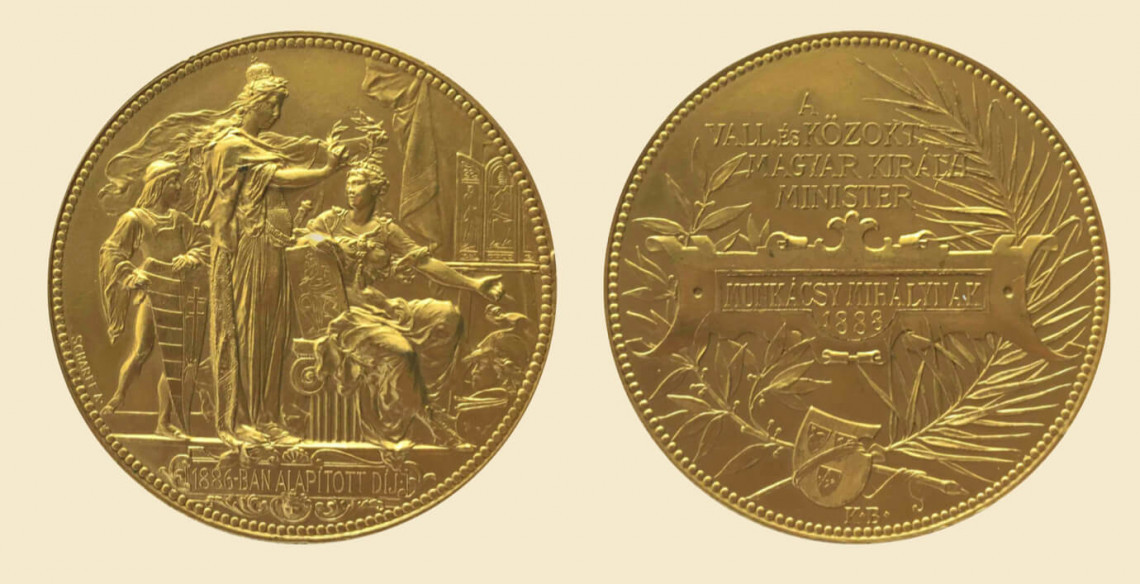
To mark the twenty-fifth anniversary of the National Hungarian Society of Fine Arts, Ágoston Trefort established the State Grand Gold Medal in 1886. The award was the most prestigious and valuable artistic distinction of the period. It was first awarded to Ferenc Eisenhut for his painting The Death of Gül Baba. The 60 mm gold medal, weighing 181.3 grams, was subsequently conferred on such artists as Gyula Benczúr, László Mednyánszky, Pál Szinyei Merse, Philip de László, and Alajos Stróbl. In 1888, Mihály Munkácsy received the award for his painting A Duel (Pillanatnyi Felhevülés).
Nagybánya, the Cradle of Modern Hungarian Art
As in so many other spheres at the time, Hungarian artistic life was mostly centered on the capital. To be sure, many provincial towns had artists or drawing teachers from whom local young people could learn the rudiments of painting, but sooner or later all roads led to Budapest. Seen in this light, the founding of the Nagybánya Artist Colony was an event of exceptional significance. In May 1896, Simon Hollósy arrived in Nagybánya with his enthusiastic Hungarian pupils, and before long several of them settled there permanently. The artistic ambitions and innovative aspirations of the young Nagybánya painters were encouraged by their great exemplar, Pál Szinyei Merse, who visited the small town on the border of Szatmár and Máramaros counties as early as 1896.
Nagybánya introduced new colors, new subjects, and a new way of seeing into Hungarian art, while also pioneering a new institutional model: artistic training independent of state-sponsored academies. Its significance was further enhanced by the fact that, even after the Treaty of Trianon, Nagybánya remained an important artistic center, also attracting an increasingly large circle of Romanian students. Around the turn of the century, artists’ associations and colonies began to proliferate both in Budapest and across the provinces. Following the example set by Nagybánya, an artist colony at Szolnok was established in 1902, followed in 1910 by another at Kecskemét, which would also become a center for avant-garde movements.
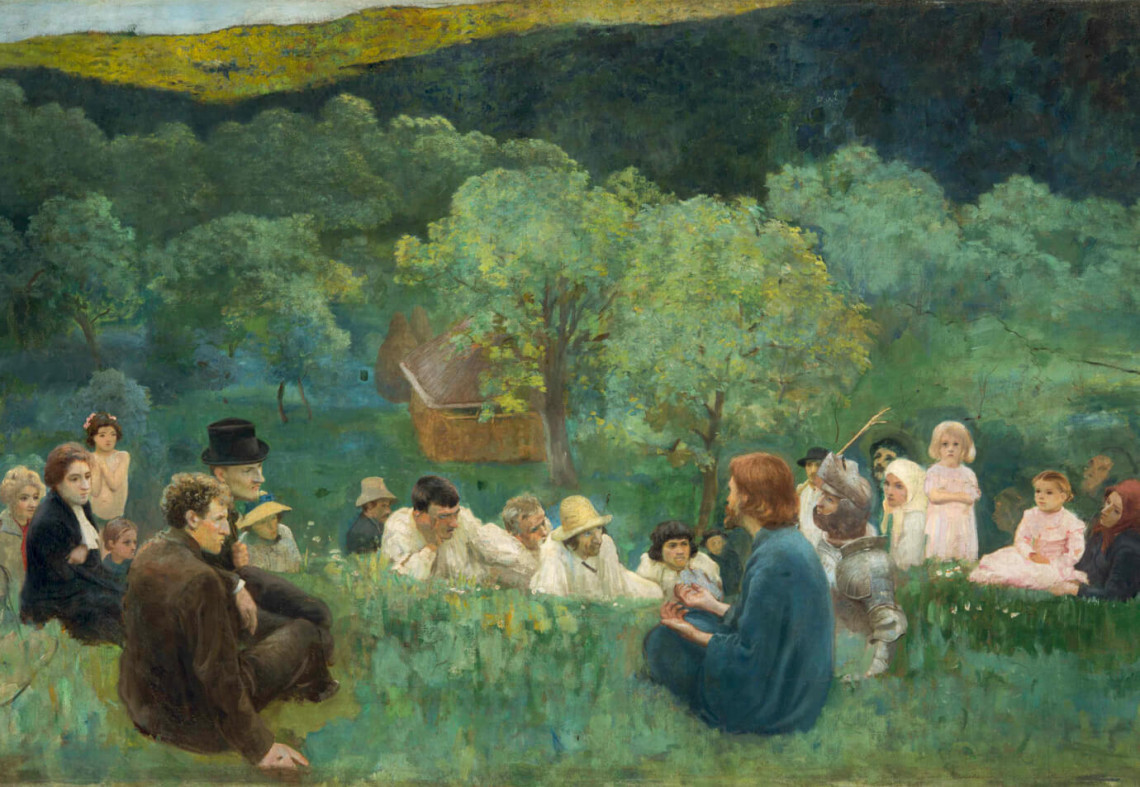
Oil on canvas, 135 × 201 cm
Hungarian National Gallery
The first summer painting course in Nagybánya took place in 1896, and was attended by a group of young artists drawn from the students of Simon Hollósy's Munich school. The spirit of the landscape, the sudden discovery of shared artistic concerns, and the opportunity to break away from the mechanized and instrumentalized environments of Munich and Budapest offered more than the prospect of stylistic and thematic renewal; they endowed the very condition of being an artist with a new meaning. Nagybánya held profound significance for every generation that passed through it. It is no coincidence that István Réti, one of the founders of the school, employed biblical language in his monograph, referring to his own generation as that of the “Founding Fathers,” while Károly Ferenczy described the region as “biblically monumental.” This perception is further reflected in one of the colony’s earliest works: Ferenczy’s The Sermon on the Mount, a modern interpretation of the biblical subject populated by ordinary contemporary figures.
Museums and Exhibition Venues
In the year of the Austro-Hungarian Compromise, 1867, art enthusiasts had relatively few opportunities to view exhibitions. The most important collection was the Esterházy Gallery, which had been displayed in the building of the Hungarian Academy of Sciences since 1865. In 1871, the collection was purchased by the state, forming the core of the National Picture Gallery, which from 1906 was housed in the new building of the Museum of Fine Arts. The Fine Arts Society also rented several rooms on the second floor of the Academy building, while the picture gallery of the Hungarian National Museum was open to visitors on Tuesdays, Fridays, and certain Sundays. Beyond these institutions, exhibition opportunities were rather limited.
From the 1870s onwards, however, a wave of museum founding and museum construction swept across Hungary, extending not only through Budapest but also to major provincial cities, from Szeged to Sepsiszentgyörgy and from Győr to Kassa. In 1877, the Fine Arts Society moved into its new headquarters and, in 1896, into the newly built Kunsthalle (Műcsarnok). The Museum of Fine Arts opened its doors in 1906, but by then the splendid building of the National Salon already stood on Erzsébet Square. From 1903 onwards, the exhibition galleries of the Könyves Kálmán Publishing Company on Nagymező Street regularly presented a diverse program of Hungarian and international art.
By 1910, however, exhibitions could be seen in an ever-growing variety of venues. They were held not only in established museums and galleries, but also in the Industrial Hall (Iparcsarnok) in the City Park, in the premises of the Joseph Technical University—then still located on Múzeum Boulevard—as well as in private residences and aristocratic palaces. In 1912, the Ernst Museum opened its doors, followed a year later by the inauguration of the House of Artists (Művészház).
The principal institutions of Budapest’s artistic life were concentrated in and around the City Park (Városliget), along Andrássy Avenue, and in the neighboring streets. A notable exception was the Art Nouveau palace of the Museum of Applied Arts, which, removed from the city’s main artistic axis yet only a short walk from the Hungarian National Museum, found its home in the heart of Ferencváros.
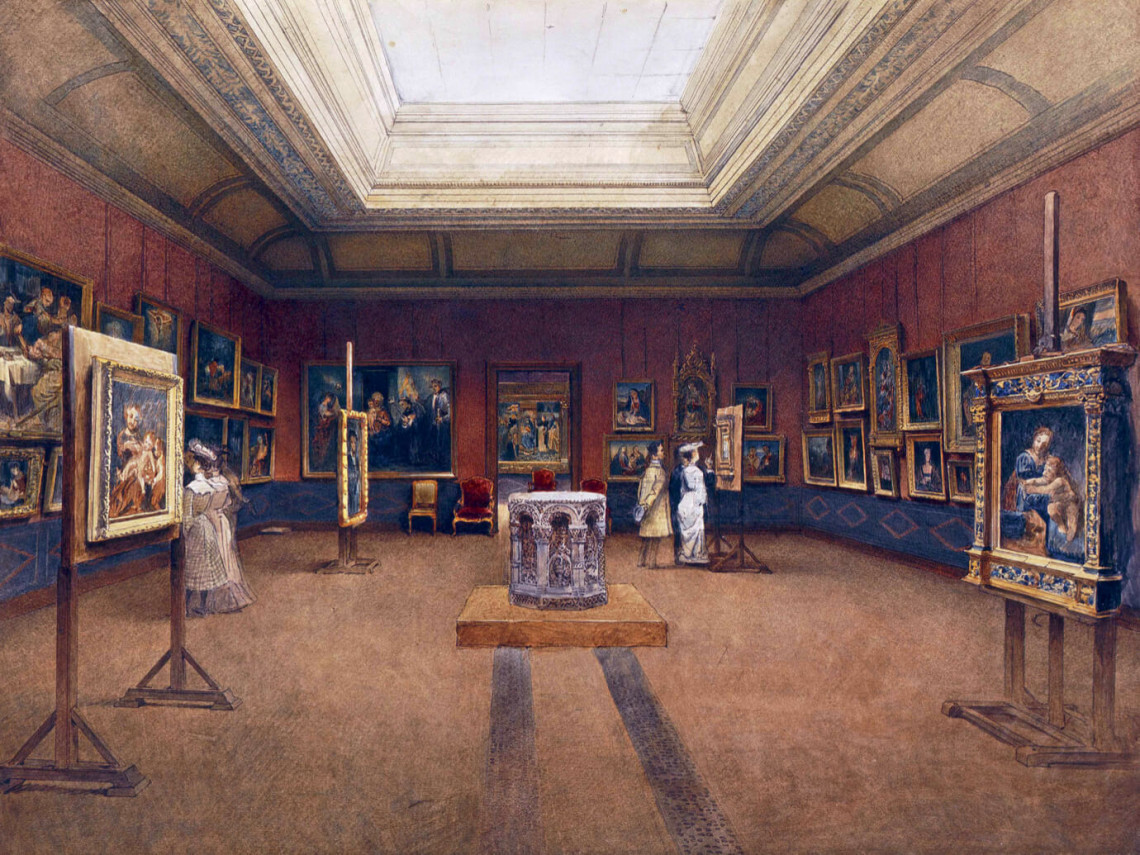
Until the opening of the Museum of Fine Arts, the Hungarian Academy of Sciences housed the country's most important art collection, the Esterházy Gallery, which the state had acquired in 1871. Enlarged with other collections, it became the National Picture Gallery before being incorporated into the Museum of Fine Arts. From 1906 onwards, the collection was displayed in the museum's newly completed building. In 1904, shortly before the transfer began, Gyula Háry, a gifted cityscape painter, commemorated the gallery in a series of delicate watercolors.
Major Exhibitions
The two most significant artistic events of the Dualist era were the National Exhibition of 1885 and the Millennium Exhibition of 1896. The National Exhibition—the first comprehensive exhibition of its kind in the history of Hungarian art—presented 355 works by 129 artists. At the Millennium Exhibition, visitors could view 1,276 works by 247 living artists. By the turn of the century, art had become almost a matter of public concern. This development was driven by three factors: the supportive cultural policies of the government, the emergence of a large number of highly trained Hungarian artists, and, finally, a public increasingly willing to engage with and support the arts.
In his overview of the 1896 exhibition, Gusztáv Keleti identified the audience as the weakest link in Hungarian art. As he observed:
“This is the weakest aspect of Hungarian fine art. [...] Yet the true life-giving force of the visual arts is the spontaneous interest of the wider public, which springs from its own artistic taste; the consistent desire of individuals—or rather of the educated and affluent classes—to surround themselves with works of art in their homes. This is the true soil in which art flourishes; everything else is merely artificial cultivation, which by itself cannot create a healthy artistic circulation.”
The first comprehensive display of modern Hungarian artworks was the inaugural exhibition of MIÉNK (Circle of Hungarian Impressionists and Naturalists) in 1908, where the National Salon displayed 187 works. Equally impressive was the jubilee exhibition of the Nagybánya painters held in Nagybánya in 1912. More than 450 paintings and drawings were exhibited, and the scale of János Thorma’s monumental Martyrs of Arad was such that it could only be accommodated in the gymnasium of the local secondary school.
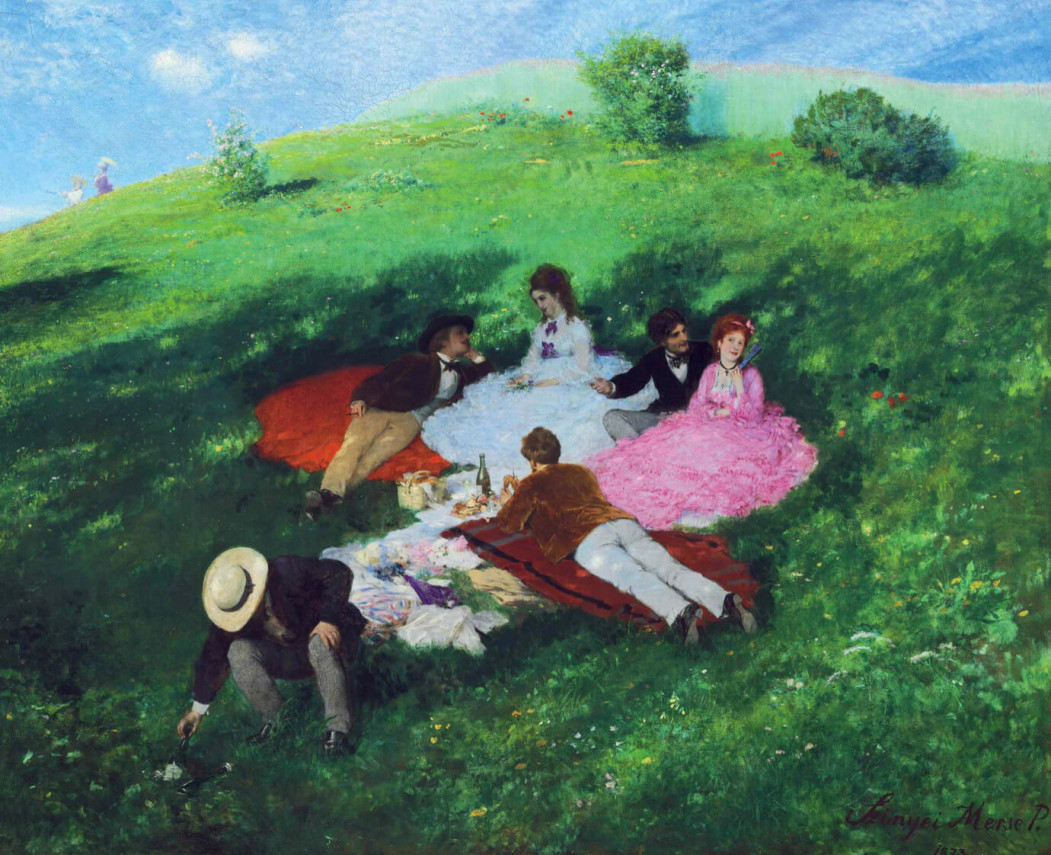
Oil on canvas, 127 × 162.5 cm, Hungarian National Gallery
One of the most celebrated works exhibited at the Millennium Exhibition was Pál Szinyei Merse’s Picnic in May (Majális). Although the painting had been completed in 1873, it had remained virtually unknown to the wider public until then. Reviewing the exhibition in 1896, Kornél Divald praised Szinyei’s paintings in the following terms: “ They are all perfect works of art, and if this is what the future of painting is to be, even the most ardent enemy of plein-airism would be won over by such examples…” The painting was purchased by the Hungarian state later that same year. Szinyei’s Picnic in May is one of the pioneering masterpieces of modern Hungarian painting and remains not only one of the defining works of its era, but also one of the most widely recognized paintings in the history of Hungarian art.
Art in Public Spaces
Alongside architecture, sculpture played a decisive role in shaping the artistic character of public spaces. In the age of nineteenth-century national revival, sculpture, too, developed a distinctly national program. Representations of national themes and monuments to national heroes came to occupy prominent positions in the parks and squares created through conscious urban planning.
The idea of a national monument had already emerged in the work of István Ferenczy in the early decades of the century, but its classic manifestations appeared only in the sculpture of the post-Compromise era. The great generation of monument sculptors came to prominence in the 1880s, and their principal works were created during the wave of monument-building that accompanied the Millennium celebrations. The monuments of György Zala, Alajos Stróbl, János Fadrusz, and József Róna became defining landmarks of cities from Kolozsvár to Sopron and from Arad to Pozsony. With the exception of a small number of works that have since been destroyed, they continue to serve as iconic features of the urban landscape today.
The erection of many of Budapest’s monuments was supported personally by King Franz Joseph. In 1897, he addressed a letter to Prime Minister Baron Dezső Bánffy, donating funds for statues of ten important figures from Hungarian history to be erected in the capital. Among the individuals listed was Anonymus. His statue in the City Park (Városliget) remains one of the finest achievements of Hungarian public monument sculpture.
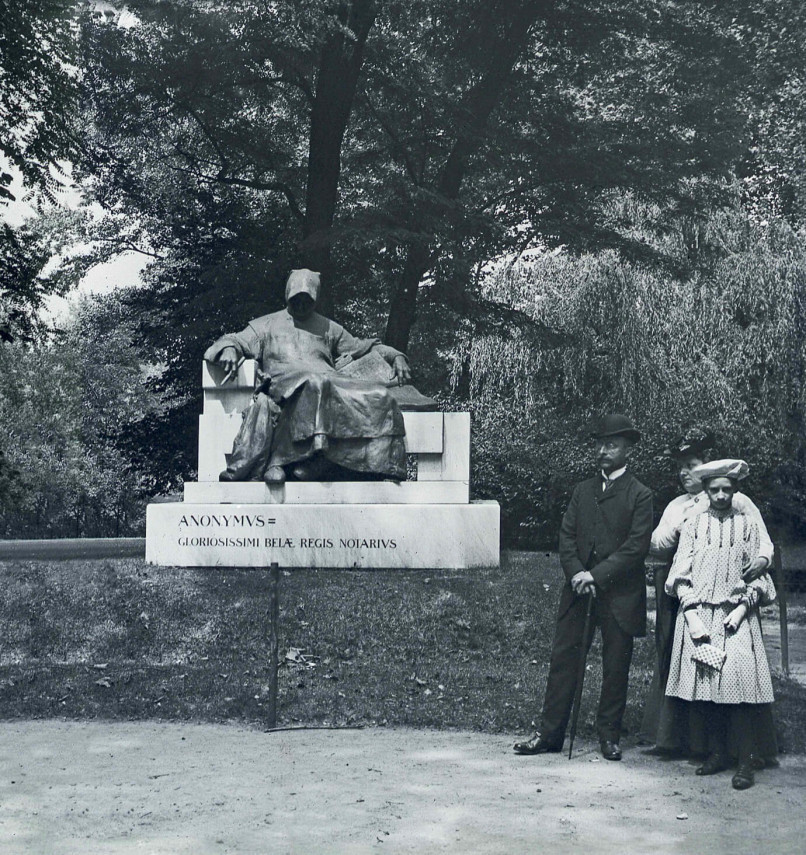
Bronze on marble pedestal, 190 cm
Budapest, City Park
The King’s Gift: A Remarkable Monument
In a letter dated September 1897, Emperor-King Franz Joseph instructed Prime Minister Dezső Bánffy to commission, at the expense of the royal household, ten public monuments in Budapest over the coming years. These statues were intended to commemorate “those outstanding figures of the past who distinguished themselves in the various spheres of national life.” Among the personalities selected was the anonymous notary of King Béla III, the medieval chronicler known simply as Anonymus. The commission for the monument was awarded to the young sculptor Miklós Ligeti (1871–1944). Yet the artist found himself with virtually no clues as to how the mysterious chronicler should be represented. Recalling the challenge years later, Ligeti wrote: “I strove to shroud the face in obscurity and to express through the figure what I imagined to be mysterious— that which was and remains a mystery.”
The task posed a formidable artistic challenge: how could one create a monument to a figure whose identity was unknown and whose life remained concealed by history? Alajos Stróbl strongly disapproved of the hooded, faceless figure, particularly because it stood almost at the viewer’s level rather than atop the customary high pedestal. János Fadrusz, however, came to Ligeti’s defense. He remarked enthusiastically that “this youngster” had discovered something that might well become a foundation of modern sculpture. Today, Ligeti’s Anonymus is regarded as one of the masterpieces of Hungarian public sculpture and remains among the most beloved monuments in Budapest.
The monument was unveiled in the City Park on November 8 1903. The work successfully combines the concreteness of the historical monument—the hand holding a quill leaves no doubt as to the figure’s vocation—with the ambiguity and suggestiveness characteristic of fin-de-siècle funerary sculpture. In keeping with the sensibility of the age, the hooded figure remains shrouded in mystery. Placed on a low pedestal, the mysterious chronicler seems almost to disappear among the ordinary participants of everyday life, in striking contrast to the heroic figures of earlier monuments, which towered several meters above the viewer. Rather than dominating its surroundings, Ligeti’s Anonymus invites a more intimate encounter, which has contributed greatly to its enduring appeal.
Domestic Art
In 1928, Gyula Krúdy looked back nostalgically on the world of the late nineteenth-century parlor:
“Parlor life! In a sense, this was how the new Hungary following the Compromise of 1867 was born. Men gradually abandoned the melancholy taverns, wine presses, summer pavilions, and dimly lit dining rooms where they had endlessly brooded over conspiracies, political changes, foreign news, and patriotic sorrows. Ladies returned from kitchens, farms, and gardens, where they had labored tirelessly in place of the absent generation of men—those living in exile, languishing in prison, or simply discouraged at home. Hungarian parlor life came to life, and old acquaintances could once again meet amiably and enjoy pleasant conversation which was no longer disturbed by the suspicion that a Bach hussar [a local official of the Austrian administration] or a spy might be lurking among the company. Parlor life! How much is contained in that expression! In a sense, it was there that the figure of the gentleman took shape—the gentleman whose home included a reception room. No reception room was complete without a painting by Tihamér Margitay on its walls, even if only in the form of an oil print.”
In the passage above, Krúdy perceptively captured the emergence of a new middle-class visual culture. In middle-class homes, paintings became an essential feature of the living room. They rarely depicted battle scenes, royal figures, or religious subjects such as the Holy Family. Instead, homeowners preferred genre scenes, landscapes, and still lifes—the pictorial genres most readily accessible to a broad public. Their appeal lay not in history, mythology, symbolism, or allegory, but in representations rooted in everyday experience and familiar reality.
The artist singled out by Krúdy, Tihamér Margitay, was one of the most fashionable and widely admired genre painters of the 1890s. His works, depicting scenes of contemporary life in a direct and engaging manner, perfectly matched the tastes of the growing middle-class audience and became a familiar presence in bourgeois interiors across Hungary.
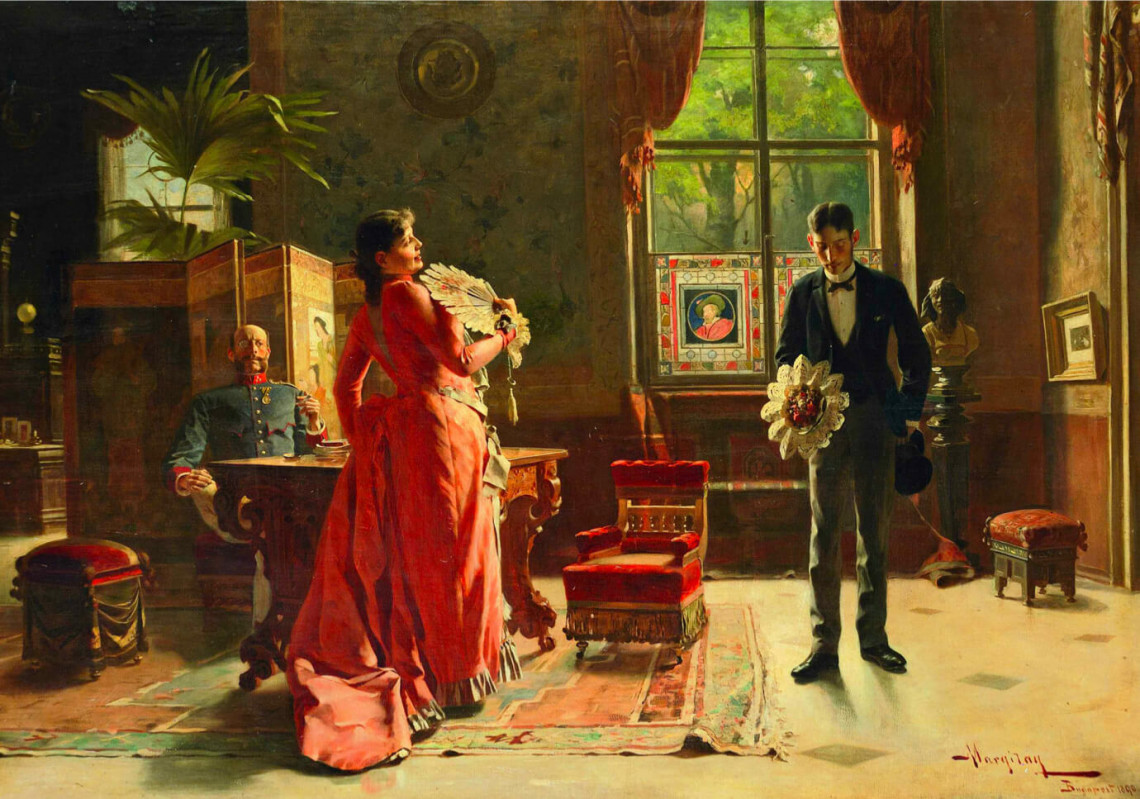
Oil on canvas, 116 × 170 cm, Hungarian National Gallery
Tihamér Margitay (1859–1922), who came from the Ungvár region, was one of the most popular Hungarian painters around 1890. His genre scenes offer keen and often humorous observations of parlor society and urban life. Their protagonists are typically suitors and rejected admirers, husbands and wives, young women in love or consumed by jealousy, awkward young men, and bold conquerors of hearts.
Margitay's star, however, faded almost as rapidly as it had risen. By 1905–1906 he had become little more than an imitator of his own earlier successes, and in 1922 he ended his life in poverty and obscurity. His career stands as a striking reminder of ephemeral artistic fame at the turn of the twentieth century.
Art in Public Institutions
Following the Austro-Hungarian Compromise, a new class of patrons emerged. County authorities, municipal administrations, casinos, banks, and civic associations commissioned an ever-growing number of portraits of kings, lord lieutenants, presidents, directors, and, above all, Ferenc Deák. Following the example of the old ancestral galleries, portrait series also continued to be produced, often taking the form of family or institutional portrait galleries. One notable example was the series of portraits of all Hungarian prime ministers commissioned by the king in 1895 for the rebuilding of the Royal Palace.
It may therefore be said that the late nineteenth century was a golden age of Hungarian portraiture. This was due not only to the emergence of the country’s first portrait painters of genuine international stature and reputation, such as Gyula Benczúr and Philip de László, but also to the revival of major iconographic forms, including the state portrait and the representative group portrait. It was also a great age because the opportunities for artistic commissions expanded dramatically.
The number of commissions from counties, municipalities, and public bodies grew to such an extent that, by the end of the century, even otherwise obscure provincial painters could secure prestigious assignments. This world of official portraiture proved influential enough to inspire even such a modern artist as József Rippl-Rónai. As Aurél Bernáth recalled, Rippl-Rónai once remarked, “I should have been the one to do it!” when the Somogy county authorities commissioned a portrait of Lajos Kossuth for the ceremonial hall of the Kaposvár County Hall, passing over the county-born painter whose reputation had been established in Paris and Budapest in favor of the little-known Béla Bacskay, a modest representative of the academic tradition.
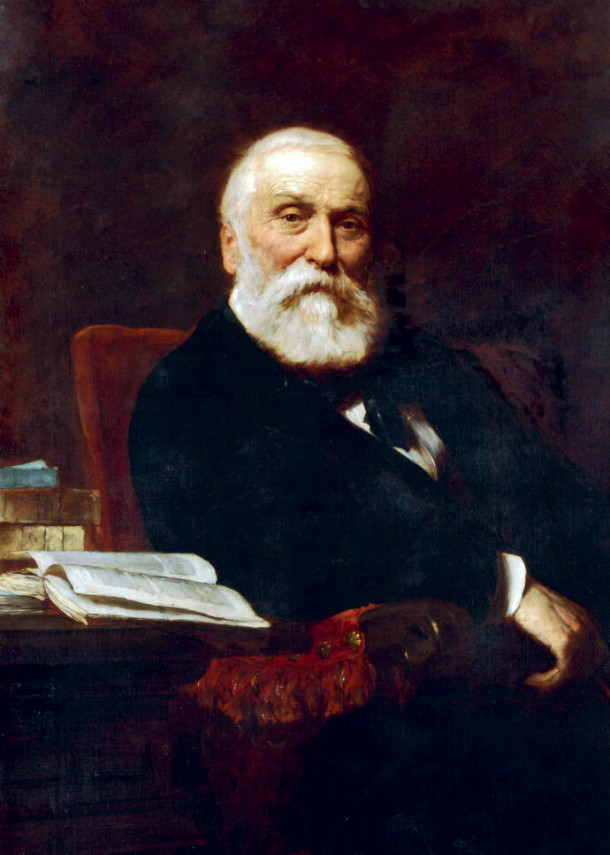
Oil on canvas, 132 × 93 cm, Hungarian National Gallery
Few nineteenth-century statesmen contributed more to the development of Hungarian art and culture than Ágoston Trefort. Serving as Minister of Religion and Public Education from 1872 until 1888 and, from 1885, simultaneously as President of the Hungarian Academy of Sciences, he played a significant role in shaping Hungary's cultural institutions. A founding member and first president of the Pest Art Society in 1839, Trefort remained a committed supporter of the arts throughout his career. During his ministerial tenure, the Academy of Music and the Museum of Applied Arts were established, Hungary's first legislation for the protection of historic monuments was enacted, and the system of state gold medals for artistic achievement was introduced. He also played a decisive role in founding the Master School of Painting in 1883 and personally persuaded Gyula Benczúr, then a professor at the Munich Academy, to return to Hungary and become its first director.
It was therefore particularly fitting that Benczúr should paint Trefort's portrait in 1885. The work marked an important moment in the artist’s career, being his first seated three-quarter-length portrait. Benczúr would subsequently return to this compositional formula in a series of portraits of leading Hungarian statesmen, including Sándor Wekerle, Kálmán Tisza, and István Tisza. The composition itself draws upon a long-established tradition of Renaissance papal portrait painting. Benczúr's immediate inspiration may have come from Carlo Maratta’s portrait of Pope Clement IX (1669), now in the Vatican Museums, or from Diego Velázquez’s celebrated portrait of Pope Innocent X (1650). The choice of Clement IX as a model was most probably deliberate: the learned and art-loving pope provided a fitting visual parallel to Trefort, one of Hungary's foremost patrons of culture. By the late nineteenth century, this pose, compositional structure, and dignified manner of presentation had become one of the most enduring conventions for portraying scholars, statesmen, and other figures of intellectual and political authority.
The Average Man
The depiction of ordinary people and everyday life was one of the most significant artistic developments of the nineteenth century. As early as the opening decades of the century, illustrated albums introducing the various regions of Hungary familiarized audiences with the characteristic inhabitants and costumes of different regions. Sometimes these figures appeared in isolation, almost as ethnographic types; at other times they were shown in scenes of everyday activity—ploughing, sowing, carrying water, or tending a fire. Such images reflected a growing fascination with folk life, which gradually elevated genre painting from a minor category to one of the most important forms of artistic expression.
By the 1840s and 1850s, genre scenes had become increasingly ambitious in scale and scope. Large oil paintings presented some of the most characteristic figures of Hungarian society, above all peasants and Roma communities. This growing interest in contemporary life coincided with a gradual decline in the prestige of history painting. In the decades following the Revolution of 1848-49 and, especially, after the Austro-Hungarian Compromise, historical painting lost much of its political urgency and moral force. Increasingly, it became a vehicle for celebrating national greatness rather than engaging with the pressing concerns of the present. As early as the 1860s, Bertalan Székely observed with some resignation that the age of history painting was drawing to a close and that genre painting would eventually assume the role once occupied by grand historical compositions.
The new prominence of genre painting encouraged many artists—particularly those trained in Munich—to specialize in specific subjects and social types. Among them was Pál Böhm, who became one of the best-known painters of Roma life. His Munich studio resembled an ethnographic museum, while his sentimental yet almost photographic genre scenes achieved international popularity and even entered American collections.
One particularly striking feature of nineteenth-century Hungarian genre painting is that the subject of urban life emerged relatively late. For much of the century, artists remained preoccupied with the countryside and its inhabitants. It was only gradually that the modern city and its social world found their place in Hungarian painting. From this perspective, the work of Pál Szinyei Merse occupies a special position. Painted in Munich, his Picnic in May can be understood not only as a genre scene but also as one of the pioneering works of modern Hungarian painting. “A modern picnic! Could there be a more commonplace subject in the world?” remarked a critic for Pesti Napló when confronted with the painting at the Vienna World Fair of 1873. The reviewer instinctively grasped what made the work so innovative: its strikingly everyday subject matter appeared remarkably modern to an audience accustomed to grand historical narratives and elevated themes.
Despite its brilliance, Picnic in May remained largely unknown to the Hungarian public for many years. When it was exhibited again in Budapest in 1896, it was not its urban subject matter but its almost Impressionistic elegance and vibrant coloring that attracted the attention of the new generation of modern painters. The city itself tended to appear in Hungarian painting as a place of poverty, struggle, illness, premature death, and crime, as can be seen in the work of Jenő Jendrassik, one of the leading masters of Naturalism.
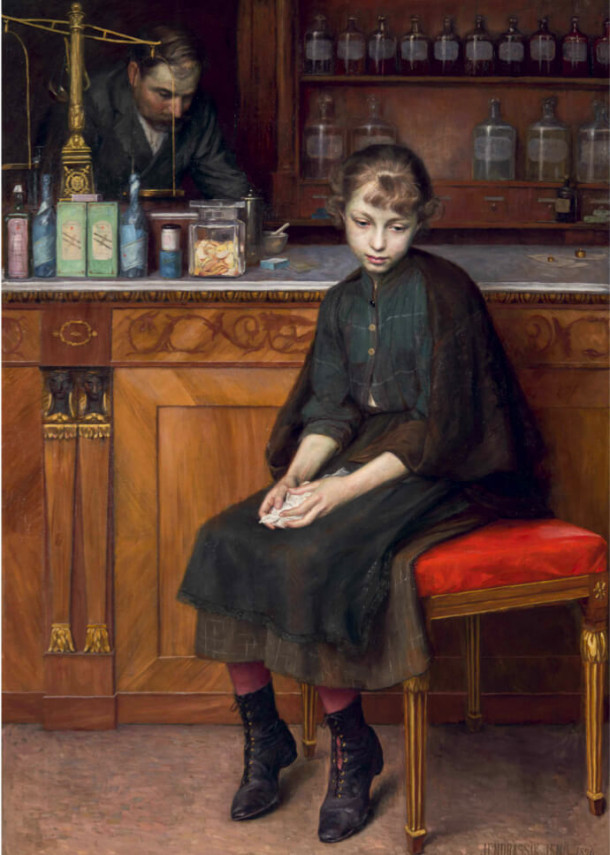
Oil on canvas, 142 × 100 cm, Hungarian National Gallery
The pioneers of modern painting, together with the critics who championed modern art, valued far more highly the depiction of changing light effects, atmosphere, and natural phenomena than the strongly narrative and often documentary character of Naturalism. Emotion, expressions of sympathy, and pictorial devices designed to evoke compassion were increasingly dismissed as unartistic. It is largely for this reason that the naturalism of Jenő Jendrassik received little attention in later histories of Hungarian art. Yet Misère is not only a remarkable example of the urban genre scene in Hungarian painting but also an early achievement of dramatic Naturalism. One of the work’s greatest strengths lies in its carefully constructed dramaturgy. Rather than depicting action or a sequence of unfolding events through emphatic gestures, Jendrassik built the composition around the body language of a principal and a secondary figure, creating a powerful image from a set of emotionally charged yet visually static states that could be rendered with particular force in paint.
Men and Women
Across Europe, the decades after the mid-nineteenth century witnessed not only a dramatic increase in the number of artworks depicting women but also the emergence of new, distinctly modern female roles and types. The growing prominence of female representation can be observed in the work of the Impressionists, in the paintings of Hans Makart in Vienna, and among such popular fin-de-siècle artists as Alfred Stevens, John Singer Sargent, Philip de László, as well as József Rippl-Rónai and János Vaszary. As the influential critic Camille Lemonnier observed, “The distinctive feature of modern painting is that it represents modern life through women.”
This development should be understood not merely as a consequence of the growing movement for women's emancipation, but also as evidence of a broader and increased interest in the individual and in social experience. The oeuvre of Bertalan Székely, for example, contains an unusually large number of female portraits and genre scenes centered on women. Yet his models typically avert their gaze modestly, avoiding any direct engagement with the viewer. As a result, these paintings portray not so much another human being as an impersonal model, an object of representation rather than an individual presence.
At the same time, the female sitters in the portraits of Gyula Benczúr and Károly Lotz, as well as in the genre scenes of József Molnár, gradually emerge from their conventional roles. Rather than remaining passive objects, they establish a direct and self-assured connection with the viewer. Their gaze conveys neither coquettish flirtation nor provocative challenge, but a quiet confidence in a firmly grounded sense of self. With the advent of the avant-garde in the early twentieth century, however, the representation of both the female and the male body underwent a radical transformation, opening up entirely new possibilities for the portrayal of identity, individuality, and modern experience.
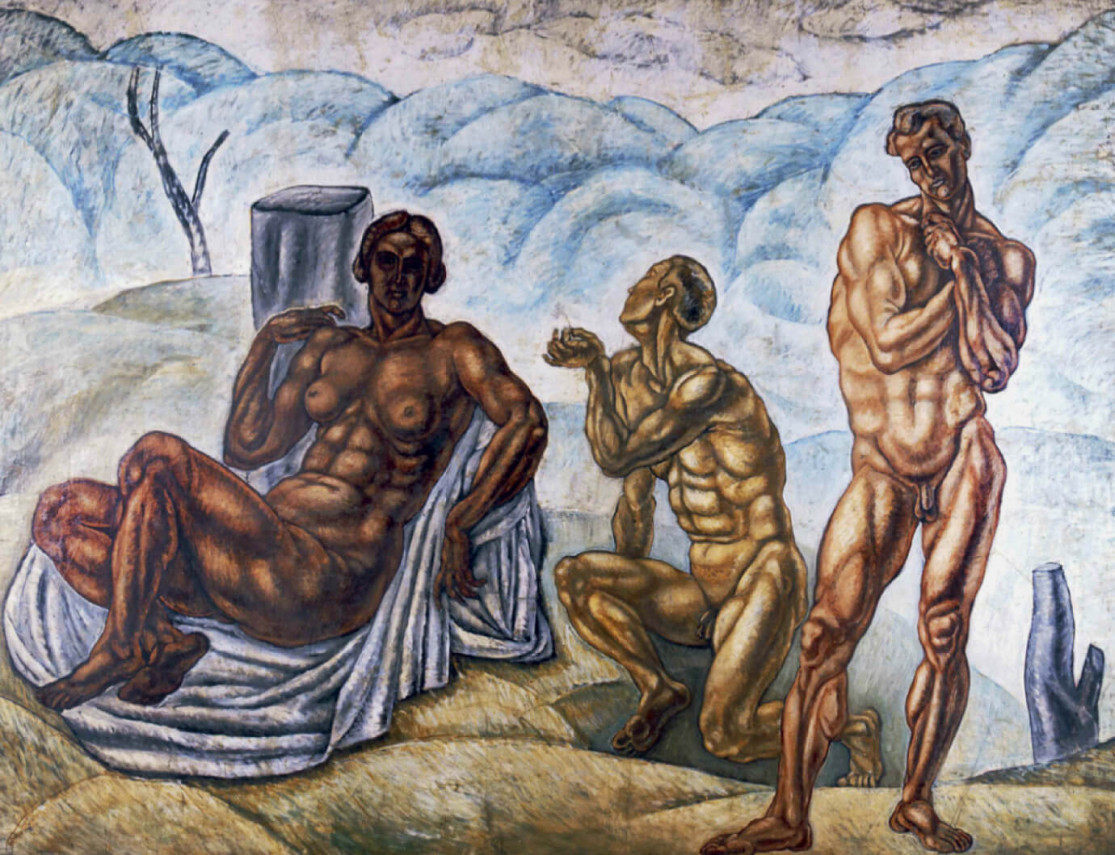
Oil on canvas, 238 × 350 cm
Janus Pannonius Museum
Avant-garde art, which rejected beauty and the subjective, sensual nature of the work of art—in other words, the validity of aesthetic pleasure and enjoyment—and replaced them with the truths of objectivity, consciousness, and reason, removed both man and woman from the realm of beauty. Never before had so many nudes been created as in the years following 1910. Yet nudity meant not only a longing for naturalness and a primordial golden age, but also a betrayal of the body itself: the human figure was transformed into an abstract, de-sensualized form, deprived of genuine love and left with nothing but sterile longing, as we can see in Bertalan Pór's monumental composition.
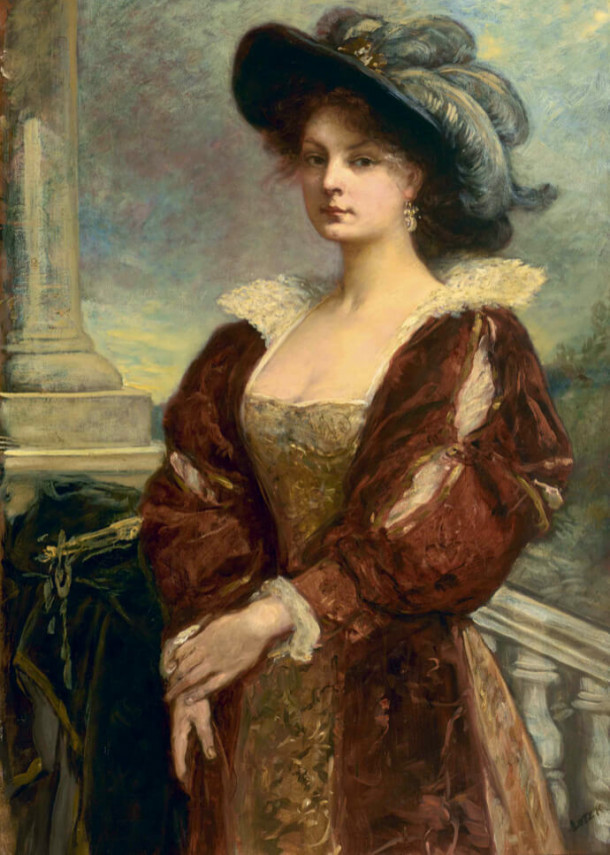
Oil on canvas, 109.7 × 81.5 cm, Hungarian National Gallery
A Modern Woman: Kornélia Lotz
Károly Lotz (1833–1904), born in Germany to a German father and a Hungarian mother, was one of the most influential masters of the nineteenth century. He was a figure of outstanding importance both as an artist and as a teacher. From the mid-1860s onwards, together with Mór Than, he became the most sought-after fresco painter in Budapest. In addition to palaces and public buildings, churches and schools, his frescoes also adorn the Hungarian National Museum, the Parliament Building, and the Budapest Opera House. From 1883, Lotz was a professor at the School of Design (today's Hungarian University of Fine Arts), and from 1896 he also directed his own studio. Among his pupils were to be found nearly all of the most distinguished artists of the younger generations.
Lotz turned increasingly to portrait painting from around 1870 onwards. From the 1890s, female portraits came to occupy a central place in his oeuvre, among which the portraits of his adopted daughter Kornélia are particularly remarkable. Appearing in a variety of roles—as a society lady, a seductive beauty, a goddess, or simply an object of desire—she embodies, in a certain sense, the modern ideals of womanhood at the turn of the century. The fascination of the portrait of Kornélia in costume lies in the fact that, despite its historicizing setting, the sitter's personality shines through, anticipating the great female types of the twentieth century.
From National Landscapes to Landscapes of the Soul
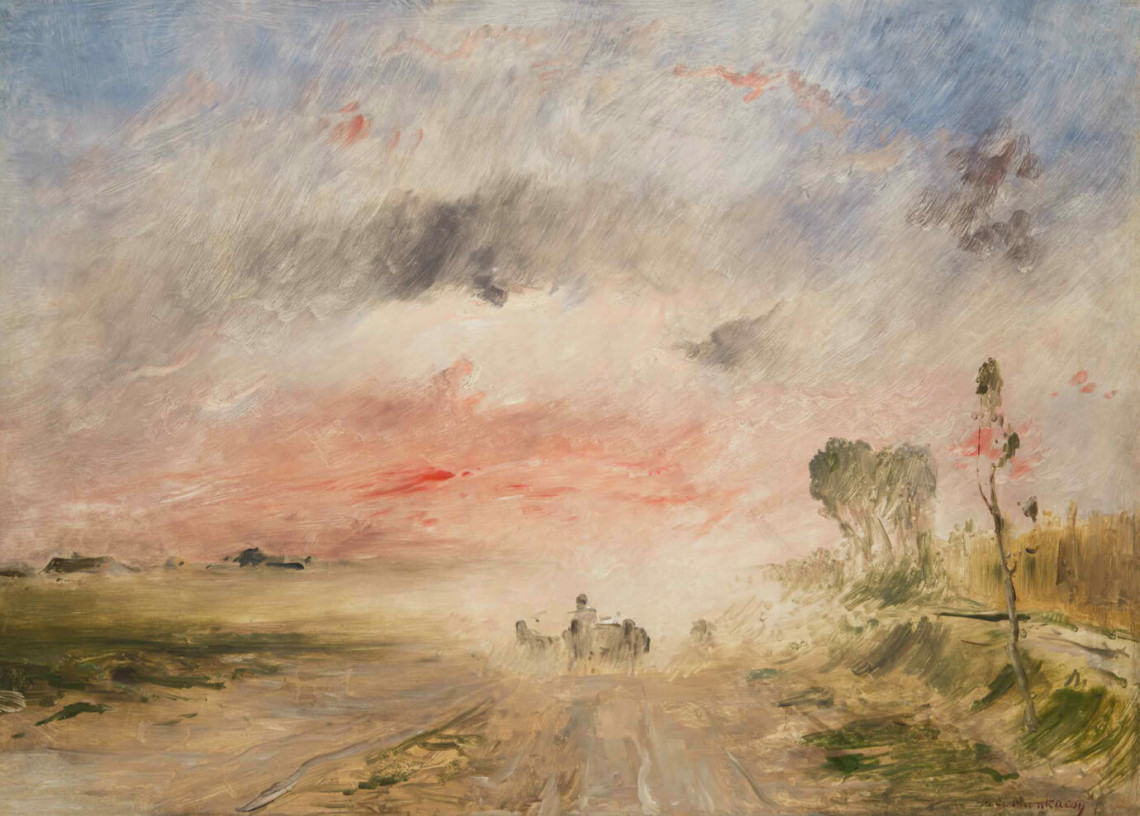
Just as portraiture increasingly sought to capture the inner life of the individual, landscape painting gradually moved beyond the representation of nationally significant sites toward the expression of more personal and subjective experiences. One of the principal ambitions of nineteenth-century Hungarian landscape painting had been the creation of great national landscape icons: the Great Plain, castles and ruins standing as witnesses to history, and later the images of Lake Balaton and the country’s great rivers. In the work of more modern painters such as Géza Mészöly, Mihály Munkácsy, Pál Szinyei Merse, and László Paál, however, these grand historical or symbolic locations mostly disappear. They are replaced by quiet forest interiors, fishing huts, groups of trees, and woodland clearings, accompanied by an increasingly sensitive rendering of light and atmospheric effects.
From around 1880 onwards, especially in the work of László Mednyánszky, landscape painting underwent a further transformation. The landscape itself became a vehicle for the expression of mood. This so-called mood landscape painting—identified by Austrian art historians as a distinct stylistic movement under the term Stimmungsimpressionismus (Mood Impressionism)—differs both from the dramatic landscape compositions of Munkácsy and Paál and from the refined visual analysis of French Impressionism. It also stands apart from the synthetic, colorful, and sunlit painting of the Nagybánya school. Artists seeking to convey the mood of a landscape looked beyond the visible scene, attending instead to the hidden significance of colors, light, tones, and subtle atmospheric nuances.
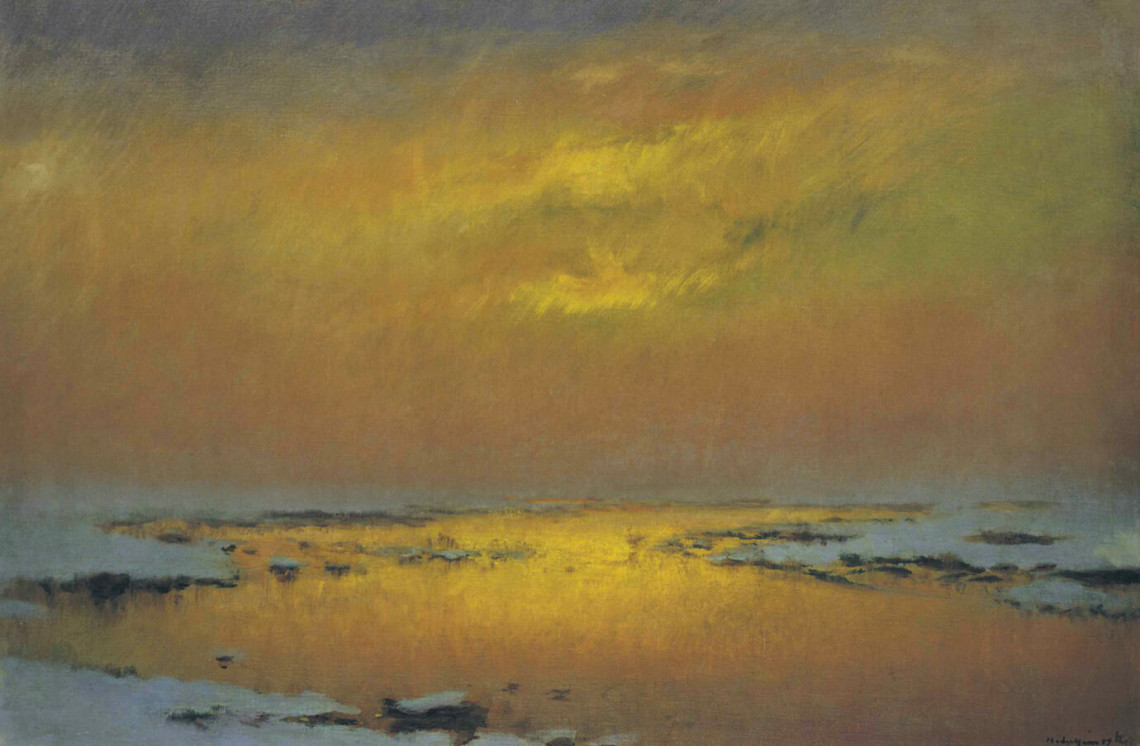
Oil on canvas, 66 × 99 cm, Hungarian National Gallery
The harmonies of nature and the reconciliation of opposites had long preoccupied Mednyánszky, whether in painting or in social matters. On 29 December 1908, he recorded the following thoughts in his diary:
“Equality will come about only when every individual reflects the cosmos in its entirety. As long as individuals and peoples reflect only a particular part of the universe, diversity—and therefore inequality—will remain. The struggle for existence is necessary because it compels every individual and every people to develop its own distinctive character more fully and harmoniously. The highest conceivable harmony can represent true progress only if every voice of which it is composed is clear and strong. Every color and every tone must be made as strong and as pure as possible. Every people possesses, in its language and in the distinctive coloring of its emotions, an essence which, when strong and self-aware, becomes a jewel—or a wreath—within humanity as a whole. This strengthening of the distinctive character of a people becomes conscious only in relation to other voices. The necessity of struggle does not exclude love. For this reason, both the individual and the people must be strengthened in their distinctiveness. Whoever seeks to create harmony by weakening individual colors or tones diminishes the value of the whole.”
Mednyánszky devoted himself to a profound search for those “strong, pure colors and tones.” No one explored nature with such depth, sensitivity, and freshness of vision, including human nature itself, with greater intensity than he did.
Transylvania: The Holy Land of Modern Hungarian Art
The biblical Holy Land is the place chosen by God for His people, where signs were given and miracles took place. It is the birthplace of faith, where saints, confessors, and prophets came into the world, and from which redemption itself arrived. A land is holy when, even a thousand years later, millions of pilgrims continue to journey there, seeking—even as unbelievers—to experience something of the power of faith and to open themselves to miracles. The history of Hungarian art also has its holy lands: places where artists in search of new paths encountered revelations and, returning home, became prophets and believers themselves. From the 1880s onwards, Transylvania and the region of Kalotaszeg assumed such a role, while their folk art became one of the principal sources of inspiration for modern Hungarian art.
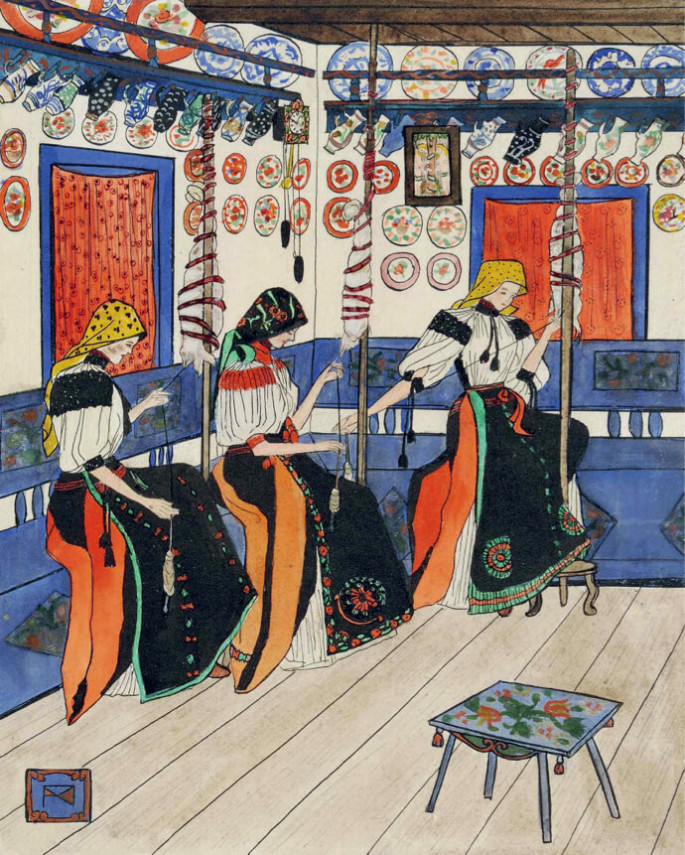
Pen and watercolor on paper, 246 × 200 mm, Hungarian National Gallery
But why did artists feel compelled to seek new paths? Above all because the world changed around 1850. The old system of the art academies (in which genres, prizes, distinctions, and even artists themselves were arranged in a rigid hierarchy) was becoming increasingly obsolete in the modern democratic and bourgeois societies of the age. Artists began searching for new sources of inspiration, and these were found wherever academic conventions did not prevail: in Asia, Africa, prehistory, the art of so-called primitive peoples, and, of course, in folk art itself. Folk art was of particular importance in this process. In Hungary, from the 1870s onwards, it came to be regarded as a potential source for the creation of a new Hungarian visual language.
(translated by Márta Pellérdi)