Free to read


John Paget is best known for his travel narrative Hungary and Transylvania: with Remarks on their Condition, Social, Political, and Economical, first published in 1839 by the distinguished London publisher John Murray. The English traveler—who later became a naturalized Hungarian citizen and a prominent landowner in Transylvania—approached the country’s landscapes, social composition, political issues, and economic development with unusual objectivity, keen powers of observation, and a distinct sense of humour.
Hungary and Transylvania appeared in Hungarian in two editions more than a century after its original publication: first in 1987 as Magyarország és Erdély (Helikon Kiadó), and later in an expanded edition in 2011 (Kriterion Kiadó). For various reasons, however, both editions omitted certain passages, particularly those containing Paget’s reflections on the nationalities. In these sections, he portrayed—at times sympathetically, at others critically—their way of life, national characteristics, and relations with the Hungarians. Even the Hungarians themselves, despite enjoying Paget's general sympathy, did not escape his critical scrutiny.
At the beginning of 1835, John Paget was staying in Rome, where he met his future wife, the Transylvanian aristocrat Polixéna Wesselényi, then still married to László Bánffy, a Transylvanian politician. The Baroness—a distant cousin of the famous political reformer Miklós Wesselényi—was deeply committed to the cause of political, social, and economic reform in Hungary and Transylvania. She not only awakened Paget’s interest in her homeland but also acquainted him with the country’s political and social conditions under Habsburg rule, as well as with the reform program of the Hungarian liberal opposition.
Paget’s travels began in June 1835 and lasted for approximately eighteen months. During this period, he journeyed throughout Hungary and Transylvania, becoming acquainted with a wide range of representatives of Hungarian society. He wrote in detail about the various sections of society and religious denominations, visited numerous estates belonging to both the higher and lesser nobility, and showed a keen interest in the lives of the peasantry. He also became closely acquainted with the leading figures of the Reform Era, devoting separate chapters for his English readers to István Széchenyi’s estate at Nagycenk and to Széchenyi’s political and economic efforts to modernize Hungary. In addition, he dedicated substantial sections of his work to the country’s nationalities, discussing their origins, customs, and ways of life. The following brief passages provide some examples of how this young, educated Englishman from the multi-ethnic British Empire perceived the Hungarians, Székelys, Saxons, Romanians, Slovaks, and South Slavs.
The Hungarians
During his travels, the more Hungarians John Paget came to know and the longer he stayed among them, the more he perceived in them a reflection of his own ideal of Englishness. This was particularly true of the Hungarian and Transylvanian Calvinist and Unitarian nobility, with whom he felt a particular affinity and whom he regarded as his social equals. To him, they were “brothers” neglected and forgotten by England. Over time, he increasingly felt at home among them and came to identify more closely with the ideas of the reformist opposition, which was deeply concerned with the future of Hungary and Transylvania within the Habsburg Empire.
Paget frequently emphasized the hospitality of the Hungarians, noting that he and his two English travelling companions, George Edward Hering and William Sanford, were welcomed with open arms throughout the country. Since English travelers were still a rarity in Reform-Era Hungary—where travel was often hampered by poor roads—they attracted considerable interest. Paget was especially struck by the educated classes’ familiarity with British domestic politics and by their desire to create in Hungary institutions modelled on those of Britain.
“It is wonderful how eagerly every one asks for information about our Parliament […] Many seemed to think the House of Commons must needs be the favourite resort of every one […] Not a single great name in either chamber but was familiar to our host. How did Lord Grey look? What would the Duke of Wellington do?”
As Paget observed, Hungarian interest in British political life was accompanied by frustration at how little the British knew about Hungary: “In truth, our ignorance of Hungary is bitterly complained of by the Hungarians: ‘You are more interested in England about the cause of the South Sea Islands than about us Protestant constitutional Hungarians; you know more of […] the interior of Africa than you do of a nation in the east of Europe.’ ”
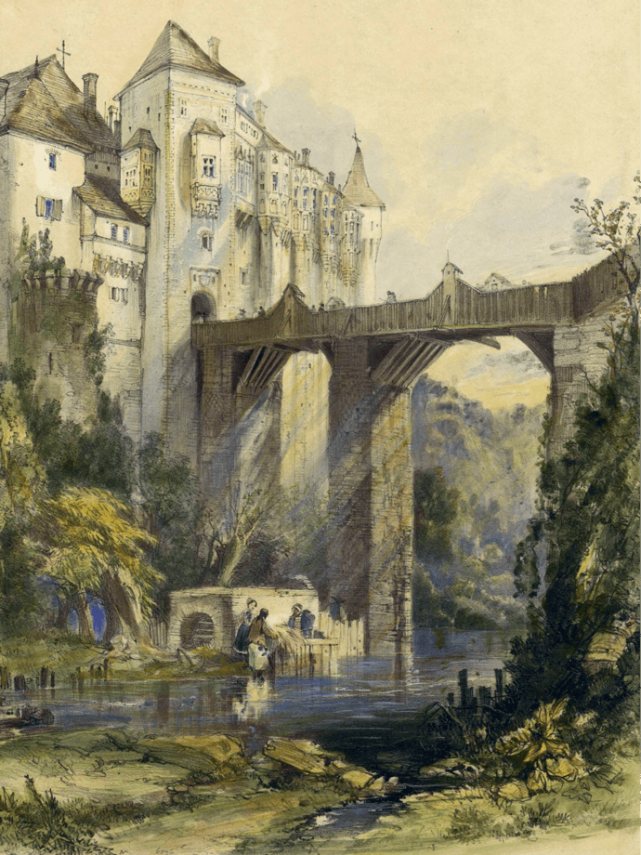
View of Vajdahunyad. Lithograph by James Baker Pyne after George Edwards Hering, mid-19th century
Paget was equally surprised “to find the names of the best authors of England familiar as household words,” and observed that Hungarians were “our superiors in a minute knowledge of the laws of their own country.” He studied Hungarian history with great care, along with the structure of the county administration—remarkably independent of Austrian influence—and the workings of the 1835 Diet of Pressburg. He also perceived strong parallels between the English and the Hungarians in their shared attachment to liberty. Moreover, the lifestyle of the Hungarian and Transylvanian nobility reminded him of the way English country gentlemen used to live in the late eighteenth century: “I think I hear an old English squire exclaim, ‘Hem! I do believe a man might live in Hungary.’”
Paget also observed that Hungarian women enjoyed a more favorable legal position than English women. In this respect as well, he regarded Hungarian society as enjoying certain advantages over his own country. As he observed: “An Hungarian lady never loses her maiden name, and even during her husband's life, actions at law regarding her property are conducted in her name. Over her property the husband has by law no right whatsoever; even the management of it she may retain in her own hands, though she rarely or never does so.”
Alongside these observations on Hungarian social customs and institutions, Paget was also amused by certain distinctive features of everyday life, particularly the widespread custom of wearing moustaches: “In no country of Europe is the mustache held in such respect as in Hungary; all, except the clergy—masters and servants, professors and students, from the highest Magnate to the lowest peasant—cherish with vast affection this hirsute covering of the upper lip.”
Beyond the familiar stereotypes, that Hungarians were good soldiers, conservative in their reluctance to embrace new ideas, and fond of music (the Rákóczi March, in his view, perfectly captured the melancholic Hungarian spirit), Paget also noted what he regarded as an excessive love of comfort. He associated this tendency toward idleness with a lack of energy, perseverance, and melancholic temperament:
“The Magyar is accused of being lazy […] A Magyar never moves when he can sit still, and never walks when he can ride. Even riding on horseback seems too much trouble for him; for he generally puts four horses into his little waggon, and in that state makes his excursions to the next village, or to the market-town. This want of energy is attended, too, with a want of perseverance. The Hungarian is easily disappointed and discouraged if an enterprise does not succeed at the first attempt […] The Magyar character has a singular mixture of habitual passiveness and melancholy, mixed up with great susceptibility to excitement. The Magyar’s step is slow and measured, his countenance pensive, and his address imposing and dignified; yet, once excited, he rushes forward with a precipitation of which his enemies have often felt the force. In success he gives himself up to the most unmeasured rejoicings […].”
Paget also noted a strong sense of national consciousness as the most characteristic trait shared across the various sections of Hungarian society. This manifested itself primarily in an attachment to a glorious national past, the Hungarian language and religion (by which he largely meant Calvinism), and to national dress. In his view, “the true Magyar character may be most advantageously studied” on the Great Hungarian Plain, particularly in Debrecen, where the population was overwhelmingly Hungarian.
“The Magyar has a passionate love of country, united to a conviction that no one is so happy and prosperous as himself. […] Truth in wine has long been proverbial, and it is nowhere better exemplified than in the Magyar. No sooner does the fear of ridicule forsake him than he is seized with an irresistible desire to weep over the miseries of his father-land. With high and low, the reign of Corvinus, when Hungary was respected abroad and the peasant protected at home, is the imaginary golden age to which they all refer. Not a mother wails more bitterly over her lost child than the wine-softened Magyar over the fallen glories of the Hunia.”
At the same time, Paget observed with considerable objectivity that Hungarian national pride could easily shade into contempt for other peoples. As he noted, “the Magyar look[s] down on every other nation by which he is surrounded with sovereign contempt.” According to the author, this attitude was especially common among the peasantry. Hungarian peasants, he wrote, regarded “[a]ll foreigners” as either “Schwab” (German) or “Talyán” (Italian), and “it is difficult to imagine the supercilious air with which the Magyar peasant pronounces those two words.” Their contempt for neighboring nationalities was, in his view, even more pronounced.
With the aid of an ethnographic map appended to his two-volume work, Paget identified the nationality question as one of Hungary’s major political issues. He emphasized that Transylvania surpassed even Hungary in the diversity of its ethnic groups, religions, languages, legal traditions, and political institutions. For his English readers, however, he considered it important to stress that “long before religious liberty, annual parliaments, payment of members, and the election of magistrates were dreamed of amongst us, they were granted to Transylvania by a solemn charter of their Prince, the Emperor of Austria.”
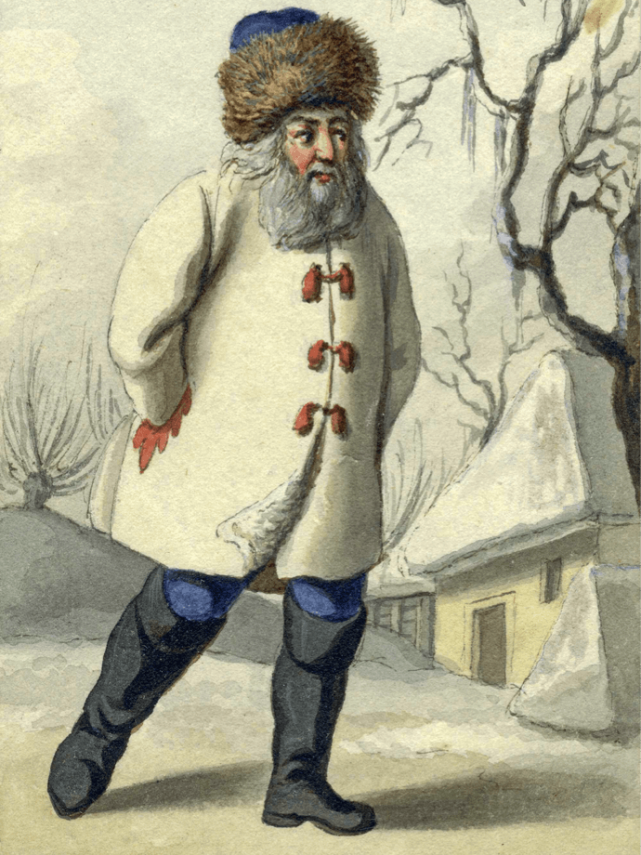
Saxon peasant in winter attire. Colored copper engraving by Carl Beyer after József Bikkessy Heinbucher, first half of the 19th century
The Székelys
During his travels in the Transylvanian region of Háromszék, Paget observed that agriculture was “of a higher standard and industry more developed” than elsewhere in Transylvania. He attributed this in part to the character of the local population, the Székelys, whom he considered more resourceful and industrious than the inhabitants of other regions, comparing them to the Scots. He accepted the view that the Székelys had already inhabited Transylvania at the time of the Hungarian Conquest, while emphasizing that “their language and origin are similar to those of the Hungarians.” In his account, they appear as a community firmly attached to both the Hungarian language and their religion.
At the same time, however, Paget was critical of what he perceived as a lack of refinement among some members of the local nobility: “Even in their own houses, the gentry show but little taste for comfort or cleanliness. In many cases, this may be attributable to poverty—then I have not a word to say; but in others, I have seen an admixture of tawdry splendour with squalid neglect, which presented a contrast highly ridiculous.”
The Transylvanian Saxons
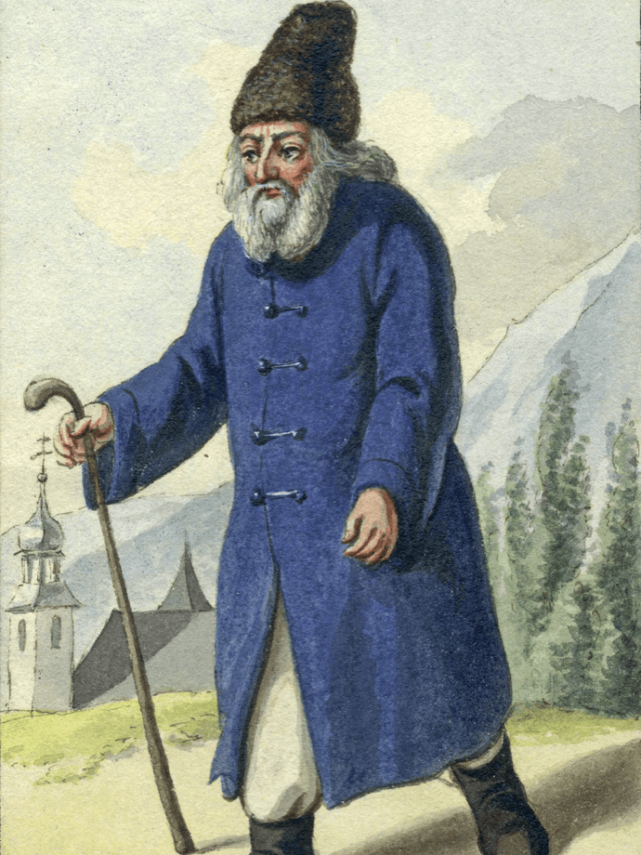
Paget praises the Saxons for their strong sense of social equality (“they have no nobles, no peasants”), as well as for their diligence and capacity for hard work. At the same time, he regarded them as politically cautious and resistant to change. As he observed, “The Saxons, however, are a slow people, suspicious of their neighbours, and caring more for material than political interests; and though they have long complained, they have scarcely ever ventured to demand a restitution of their rights.” Although the Saxons formed one of the “three nations” of Transylvania and possessed their own privileges and institutions dating back to the Union of Kápolna (1437), their loyalty toward Vienna increased during the 1830s. As Paget remarks, “whether from a recollection of former wrongs, or irritated by an insolent bearing on the part of the Hungarians, or afraid of losing their own privileges by aiding the objects of others, they have rarely joined the Liberal party.”
The Transylvanian Romanians
Unlike many of his contemporaries, John Paget had talent for languages and spoke several fluently. He conversed mainly in German with Hungarians but could also make himself understood in French and Italian. Struck by the similarity between Romanian and Italian, he devoted several pages to the Latin origins of the Romanian language and also discussed archaeological evidence from the Lower Danube that, in his view, supported the Dacian origins of the Romanian people.
Paget’s characterization of the Romanians is almost as detailed as his portrayal of the Hungarians, suggesting that relations between Romanians and Hungarians were already a frequent topic of discussion in Transylvania during the 1830s. Aware that many of his Hungarian hosts were not free from prejudice, he sought to rely not only on hearsay but also on his own observations, while at the same time attempting to explain traits that Hungarians commonly regarded as negative.
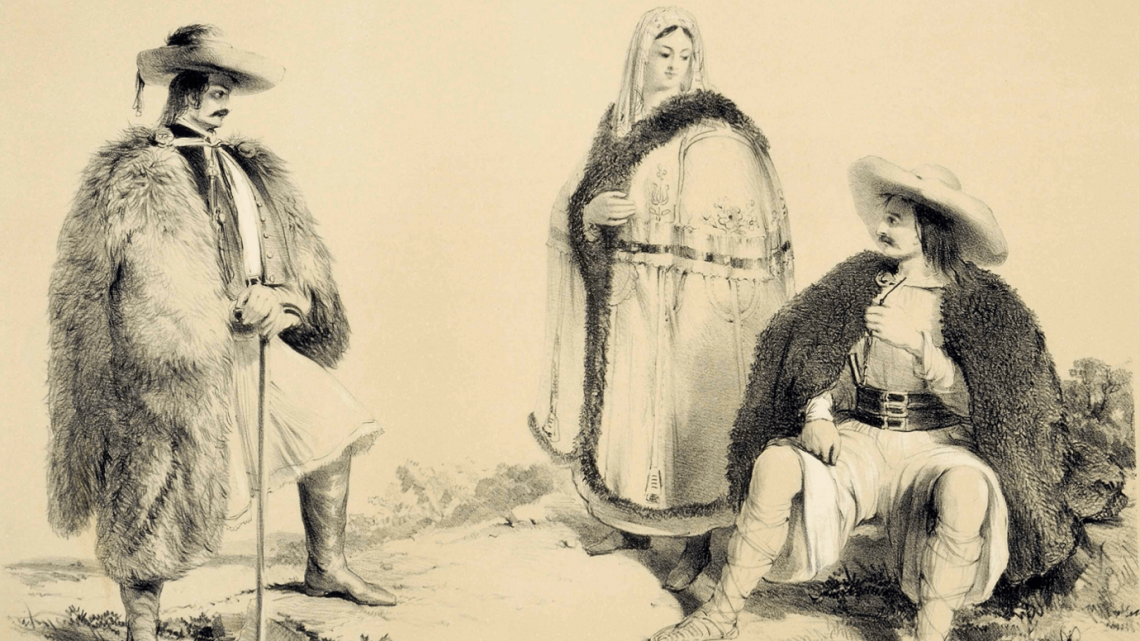
According to Paget, a tendency toward servility was widely considered characteristic of the Transylvanian Romanian peasantry. At the same time, however, he was inclined to act as their apologist, explaining such traits as the product of historical circumstances rather than inherent national characteristics. As he observed:
“I seldom remember to have seen among them the dull heavy look of the Sclavack, but still more rarely the proud self-respecting carriage of the Magyar. Seventeen hundred years' subjection has done its work; and I can readily believe that many of the vices attributed to the Wallacks are possessed by them, for they are the vices of slaves. They are not, however, without their redeeming qualities.”
Similarly, Paget rejected the common complaint that Romanians were naturally lazy. Referring to those who claimed that “it was impossible to make the Wallacks labour,” he argued that such judgements ignored the economic realities of peasant life. Romanian peasants had little incentive to work diligently merely to increase the prosperity of their landlords. In his view, different social and economic conditions would produce different results. As he noted: “By good management, regular payment, and constant employment, the lazy Wallack had become an industrious artisan, and the wandering, roguish, degraded gipsy, a clever steady workman.”
Although the author sought to explain rather than simply condemn the perceived shortcomings of the Romanian peasantry, he was well aware of the negative stereotypes commonly associated with them. As he remarked:“The Wallack is generally considered treacherous, revengeful, and entirely deficient in gratitude.” Yet he also emphasized the Romanians' strong attachment to their language, religion, and schools. This attachment, he argued, made them suspicious of institutions that appeared to threaten their cultural identity. Consequently, many Romanian parents were reluctant to send their children to better schools, fearing that such institutions served the cause of Magyarization.
Paget further believed that the superstitious Romanian peasantry remained under the influence of a poorly educated Orthodox clergy. Relying largely on the testimony of Hungarian nobles, he noted: “If we may believe the Hungarian nobles, the Wallack priest is characterized by cunning malice, which he employs to maintain his power over the peasant, to enrich himself, and to foment discord between landlord and tenant.”
More broadly, Paget regarded the Greek Orthodox clergy as a potential vehicle of Russian influence in the region. Similar concerns informed his views of several other nationalities within Hungary and Transylvania, particularly those among whom Orthodoxy played an important role in preserving collective identity.
The Slovaks
In connection with his travels in Upper Hungary, Paget also describes the Slovaks, whom he regarded as part of Hungary's indigenous population. He compared their position to that of the Celtic peoples of the British Isles, whose lands had been taken by the Saxons and Normans, among them his own ancestors. Despite this historical parallel, however, he showed little sympathy for them, perhaps because his judgment was shaped by a series of unfavorable personal encounters during his travels. Indeed, one passage describing his experiences with Slovak coachmen illustrates how such encounters influenced his perception of the Slovaks. As he wrote:
“The Sclavack is slow in every thing, and until roused by passion or intoxication, nothing can be more humble than his appearance, more slavish, I would almost say, than his manner. No matter how Stephan [Paget’s Hungarian servant ] abused the driver or beat his horses; it was seldom he even remonstrated against such proceedings, but it very rarely happened that he did not repay himself for the abuse by demanding more than the fair charge for his trouble, supported by some false statement; and frequently, after receiving two or three times the usual present, he would still ask for something more. I notice this particularly, because I do not recollect that I ever once met with such conduct among the Magyars.”
Yet the author's assessment was not entirely negative. While criticizing what he perceived as the servility and dishonesty of the Slovaks, he also acknowledged their industriousness and economic potential. Indeed, he regarded them as among the most hardworking inhabitants of the country:
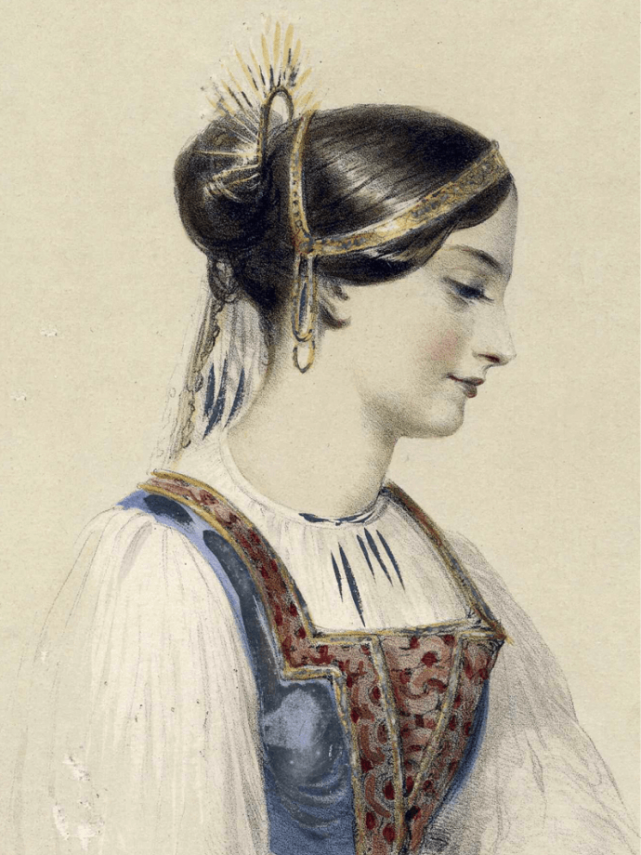
“The Sclavack is, after the German, probably the most industrious of the inhabitants of Hungary, and perhaps the only one of whom a manufacturer could be made; but his industry is far from rendering him rich; the soil he labours at is barren, and his small profits are all expended on spirit. Drunkenness is the Sclavack's bane, and leaves him among the worst lodged, worst fed, and worst clothed, of the Hungarian peasantry.”
Like many contemporary observers, Paget associated the poverty of the Slovak peasantry with alcoholism and the unfavorable natural conditions under which they lived. Nevertheless, his comments reveal an ambivalent attitude. Although he frequently criticized them for what he regarded as passivity and a lack of self-respect, he also recognized their diligence, practical abilities, and potential contribution to economic modernization. In this respect, his assessment was more nuanced than the views of many contemporary Hungarians, who tended to dismiss the Slovaks in far less favorable terms.
South Slavs
In his discussion of Croatia, the author draws attention both to the region’s considerable economic potential, which he believed remained underexploited by Hungary and Austria alike, and to the growing strength of South Slavic national consciousness. In his view, this development was reinforced by religious factors, particularly the influence of the Greek Orthodox Church. As he observed:
“It is a curious circumstance, too, that the Catholic and Greek [Orthodox] religionists, generally such bitter enemies, are said to agree exceedingly well in Croatia.”
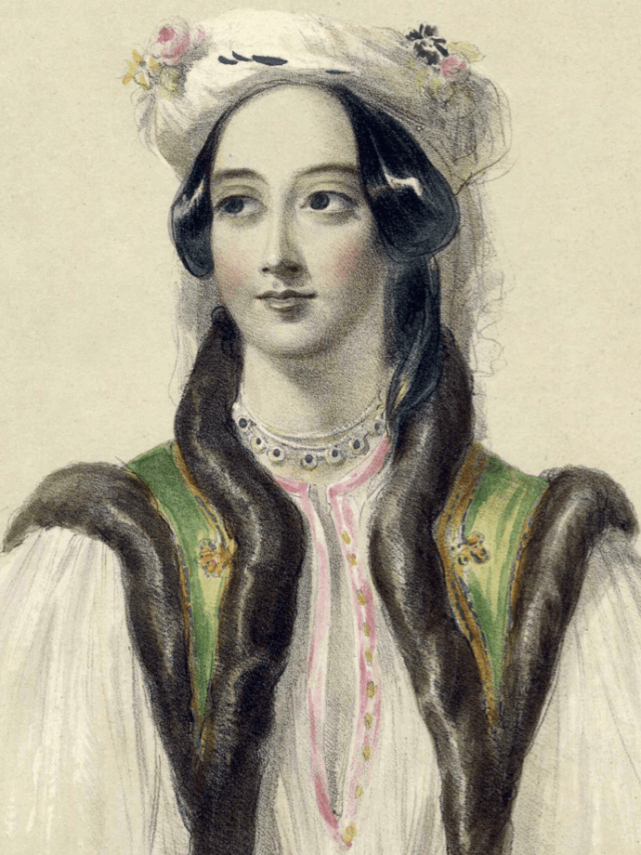
Paget interpreted this cooperation between Catholics and Orthodox Christians as evidence of the increasing cohesion of the South Slavic population. More generally, he regarded the growing solidarity among the South Slavs as one of the most significant political developments in the region, endangering the unity of the Kingdom of Hungary.
According to Paget, anti-Hungarian sentiment in Croatia was largely a reaction to the decision to replace Latin with Hungarian as the official language in 1836, a measure that encountered strong resistance among the South Slavs. This opposition was particularly significant in light of Croatia’s distinct constitutional status within the Kingdom of Hungary and the existence of its own representative assembly, the Sabor. At the same time, he was critical of certain features of Croatian public life. In particular, he found it objectionable that Croatian laws afforded fewer religious liberties than those of Hungary or Transylvania, since Protestants were not permitted to acquire landed property—a right generally recognized in both Hungary and Transylvania.
For Paget, such restrictions stood in marked contrast to the more liberal principles that, in his view, should guide the political and social development of the Hungarian territories of the Habsburg Monarchy. Although he considered the spread of the Hungarian language and culture desirable, he repeatedly warned that national integration could not be achieved through coercion. Reflecting on the relationship between Hungary and Croatia, he maintained that even desirable changes should be pursued with caution rather than imposed by force:
“No one can doubt how highly conducive it would be to the good of Hungary that Croatia should be made completely Hungarian; or that it is disgraceful to the age in which we live, that Protestants should be excluded from a whole country on account of their faith; yet indubitable as are these facts, it may nevertheless be very impolitic to seek to remedy them by violent means.”
For the English author, lasting political stability depended on gradual reform and economic development rather than administrative pressure from above.
John Paget's multifaceted travel narrative makes it clear that, like many contemporary foreign observers, he regarded the nationality question as one of the key challenges facing the future of Hungary and Transylvania. This perspective lends particular value to his observations on the Hungarians and the various nationalities of Hungary and Transylvania. Although he developed close ties with many Hungarians and increasingly identified with the goals of the Reform Era, he did not simply reproduce the prejudices of his informants. Instead, his descriptions of both the Hungarian and the non-Hungarian populations provide important insight into the increasingly strained relations between these groups during the 1830s. Read in retrospect, his account reveals tensions that would later contribute to the ethnic conflicts accompanying the Hungarian War of Independence of 1848–1849. By that time, however, Paget had made Transylvania his permanent home and was no longer merely a “traveler.” Having settled in the region and having become deeply involved in its social and political life, he had largely ceased to be an outside observer and had instead become a participant in the society he had once described.
(translated by Márta Pellérdi)