Free to read


“My God, if we could only live the way we live…!” sighed the journalist Andor Kellér, the witty older brother of the humorist Dezső Kellér, in an article describing Budapest nightlife in 1928. He mused that the middle class of the city went out every night to have fun even though they could ill afford it, squandering the money they had saved up for the gas bill or the tailor. Frivolity may be eternal, but this is not entirely true: money spent on fulfilling the desire for something different provides only a momentary release from the monotony of life. And yet, one needs to have fun.
Turn-of-the-century Pest music hall and nightclub culture was romanticized even in its own time. One has only to consider the title of Béla Zerkovitz's 1907 cabaret song “Látta-e már Budapestet éjjel?” (Have you seen Budapest at night?), which became a catchphrase, or the first act of Emmerich Kálmán’s 1916 A csárdáskirálynő (The Csárdás Queen), which takes place in a Budapest music hall. However, the socio-political tsunami that followed World War I transformed the nature of the Budapest entertainment industry. From 1920 onwards, newspapers began publishing obituaries on the “death of Budapest nightlife” – and an era had indeed come to an end.
Trauma, taste, morality
The “death of Budapest nightlife” in practical terms meant that the entertainment venues lost most of their audience and there were now three waiters for every guest. Due to the economic situation, few could afford to stay out late at night, and even those that did thought twice about it, not least because it didn’t take much to get beaten or stabbed in the dark streets – even after nighttime street lighting was restored in 1922. The industry lost several leading entrepreneurs during this period (Dezső Bálint, Dezső Gyárfás, and Imre Waldmann) and the mandatory early closing times, the entertainment tax, and the Spanish Flu epidemic further reduced the clientele, decimating the venues.
The cabarets and the “debauched and frivolous lifestyle” associated with them became an object of scorn from politicians. In 1924, cocaine made its appearance, adding an illicit white tinge to the already diabolical image of the revelers. The few establishments that remained open during the energy crisis were condemned by the Hungarian right in the name of Christian morality and by the left in the name of “public welfare and social considerations.” Although the entertainment venues were not to blame for the housing and coal shortages, they became targets as symbols of “excess” – despite the fact that the tax collected on admission fees and consumption brought in significant revenues to the capital’s coffers. The issue of regulating the entertainment venues was closely linked to the political anti-Semitism of the era, one manifestation of which was the numerus clausus law of 1920, limiting Jewish access to Hungarian universities.
One of the cultural consequences of the Treaty of Trianon was a lingering identity crisis that plagued many and could be reduced to the simple question, “What is Hungarian?” Public figures tended to view cultural and taste-related novelties with suspicion, assuming that they were intended to destroy or at least poison values and genres deemed national. Such was the case with the growing popularity of jazz, which was contrasted with Gypsy music. When Imre Magyari’s Gypsy Orchestra’s performance was either cancelled or disallowed (the circumstances remain unclear) in London in 1925, the incident was seen by the Ministry of the Interior as a blow struck against Hungarian pride.
Why this particular incident reached the highest levels of the Hungarian government is an interesting question, but in any case, the foreign minister saw it as an opportunity to regulate the Budapest music scene. He planned to issue a decree banning foreign musicians from performing in Hungary, effectively expelling the fewer than twenty foreign jazz musicians who were playing in the capital at the time.
Cooler heads prevailed the following day, however, when it was observed that Hungarian musicians working abroad could be banned in response, making the measure much less compelling. Soon after, another decree was passed regulating the employment of foreign performers and artists and imposing administrative burdens on them to protect “Hungarian jobs.” This justification was completely groundless in this sector, since the absence of foreign acts or attractions would not lead the music theaters, circuses, and nightclubs to employ Hungarians instead. Entrepreneurs would contract with those who could sell the most tickets, for this was how they obtained their income.
Another major cultural challenge of the 1920s was the change in operetta style. In 1922, the American theater entrepreneur Ben Blumenthal decided investing in Central European theaters was a good idea, for they were relatively cheap to acquire and promised good returns once political conditions stabilized. He reopened the Capital City (former Somossy) Orpheum on Nagymező Street as the Capital City Operetta Theater. (Contrary to popular belief, this theater has nothing to do with the current Budapest Operetta Theater located in the same premises; any assumption of continuity is incorrect.)
The theater’s purchase was viewed with concern from many quarters. In a lengthy statement, the Association of Hungarian Artists – the primary professional organization for non-actor performers – lamented that actors, and not artists, would be employed at the city’s first quality orpheum. The political debate was primarily focused on Blumenthal being Jewish and an American: domestic cultural policy viewed theaters not as performance venues but as pillars of nation-building and saw the purchase as a clash between the “Hungarian” and “foreign” worlds.
The theater nevertheless reopened under American management and had already changed its repertoire before two years had passed. The idea – similar to that of Parisian or Anglo-Saxon revue theaters – was to present one large revue per year – or even less frequently depending on the success of the performance – instead of having several operetta seasons. Musical spectacles without a particular storyline were not new to the city, but the scale of the proposed production far surpassed anything that had come before. The show was titled Halló, Amerika!, which placed the theater in the crosshairs of public opinion once again, pitting “Hungarian” operettas against “foreign” revues, with Blumenthal’s decision – likely based on purely business-related considerations – seen as an “Americanizing” threat.
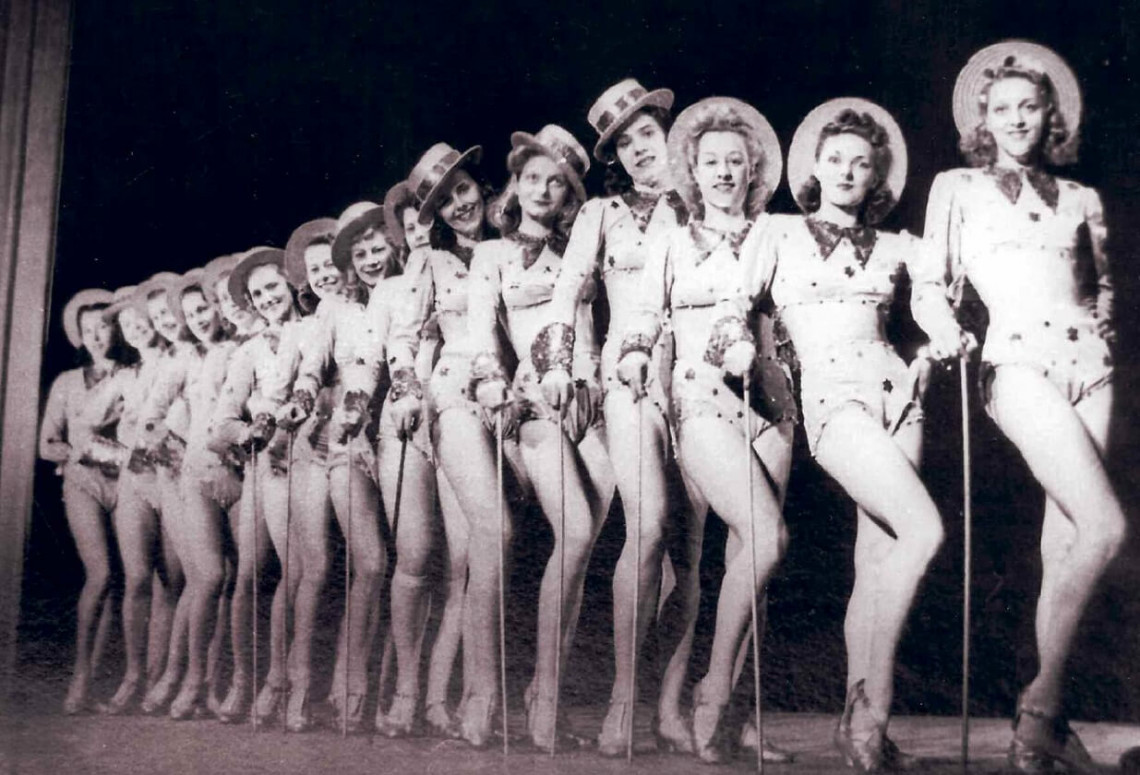
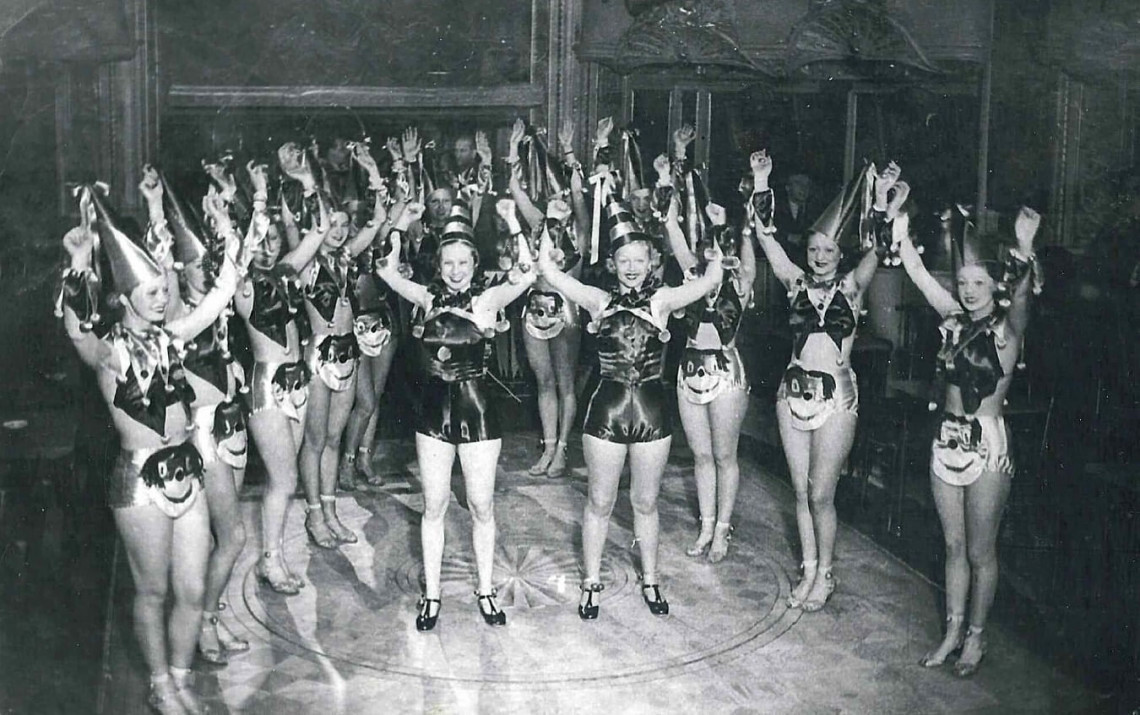
The show was directed by the American choreographer Jack Haskell, and the premiere was received with enthusiasm. (It should be noted that although the production was probably the largest and most professional revue ever staged in Budapest, Haskell achieved this result through heavy-handed mental and physical terror.) Despite its success, the show ran for only six months instead of the planned year, and the theater lost a significant amount of money. Nevertheless, it was unavoidable from the perspective of Hungarian cultural life in general that the revue was copied, parodied, and restaged by almost every major Hungarian theater within and beyond the country’s borders. It also marked the beginning of the so-called “chorus girl” culture in Budapest.
The chorus girls were the focus of the shows, with ten or twenty of them dancing more or less simultaneously either alone or as a stage troupe. The girls hoped to build a career, but this mostly remained an illusion. The chorus girl represented the lowest rung on the contemporary performance ladder, a position also associated with maximum exploitation in financial, mental, and physical terms, with the male employers usually abusing their position. Nevertheless, despite the onerous conditions, for many young women this represented an opportunity and emancipation: although the monthly salary was 80 pengő (roughly 14USD in 1927) and was barely enough to live on, a young woman nevertheless earned it through her own work.
Performances in the entertainment venues were supplemented by a very important activity from a business perspective – consumption. This did not mean prostitution – although this wasn’t ruled out either – but rather the encouragement of male guests to consume. However, the middle class, from which the former regulars of the drinking and dining establishments came, could no longer afford such encouraged revelry after the war, so they mainly frequented variety shows and music halls. By the middle of the decade, only variety theaters with reserved seating operated, where no one was pressured to consume.
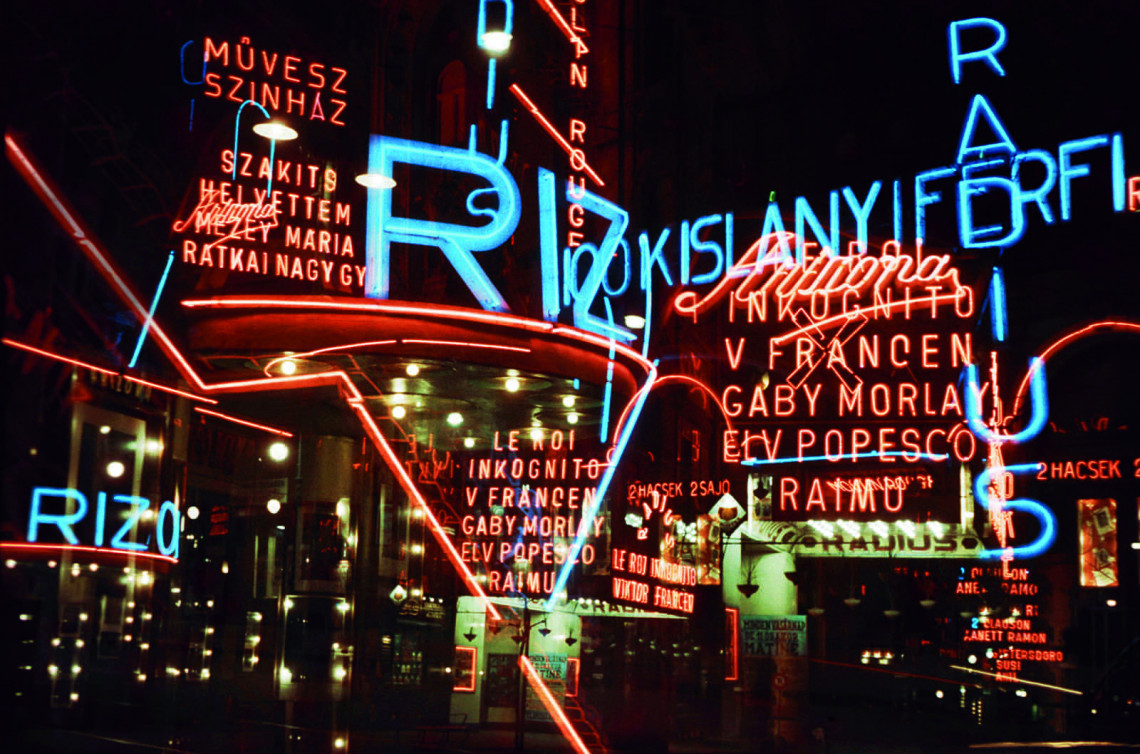
Club culture slowly revived after 1925, and the prewar nightlife became a subject of nostalgia. It was now possible once again to stumble through the streets underthe neon-lit streets dancing and singing at night without any particular danger. Starting in 1927, the Hungarian tourist office launched night bus tours, stopping at four night clubs along the way. The café of the Capital City Operetta Theater was separated from the rest of the building, making it easier to find tenants, and in 1925 this part of the building was reborn as the Moulin Rouge under the management of Herman Keleti and Miksa Riebner. Riebner was a Jewish entertainment entrepreneur who started his career with a bicycle storage facility in front of the Old Buda Castle Gate in the City Park [Városliget], from which he obtained his starting capital. Keleti, on the other hand, came to show business from the hospitality industry and by the turn of the century was codirector of the Folies Caprice on Révay Street.
There had been shows at the Moulin Rouge before, but the renovation made the venue truly appealing. The main attraction was a glass dance floor: when the box lights went out, the colored lights installed under the floor were turned on. Thus, fifty years before the first disco, it was possible to perform fashionable dance steps on a lighted dance floor. Nevertheless, as the years passed, visiting the nightclubs became primarily a pastime of the aristocracy, especially among the youth – both male and female. Thus, Count Tivadar Zichy was only 14 (!) years old when his Jesuit chaplain (!!!) took him to a nightclub for the first time. It is no mere anecdote that the young count once lost his physics textbook somewhere, which was found at the Tabarin Club after a long search – thanks to the cleaning lady who kept it. Girls of high status, accompanied by their mothers and brothers (with the company of their girlfriends later being sufficient), went dancing and, if possible, to meet other aristocrats. This development was probably due to the fact that the political role of aristocratic families had declined significantly after the war.
As the political situation stabilized, debates regarding the legal existence of nightclubs quieted down, but the moral debates did not. In 1927, the minister of the interior issued a decree calling on the police to prioritize the monitoring of public events in order to protect so-called “public morals.” The latter constituted an indefinable political concept, whose meaning was known only by those advocating in its name. Although not explicitly saying such, the decree targeted the people of Budapest and sought to draconically restrict the possibilities for intimacy between people while enforcing prescribed norms of behavior. This did not even refer to the situation regarding sexual minorities but to such mundane things as swearing in the street or dancing in a manner “offensive to good taste.” The first few weeks of the decree saw an operetta production banned, some posters taken down, and in some cases skirts were painted onto posters that showed women’s thighs.
The madness extended to a bookstore reported for displaying a book with the Venus de Milo on the cover. The Hungarian morality decree provided Budapest cabarets with material for a year; after the Venus affair, it became the subject of public ridicule in the English, French, and German press. Its only long-term effect was to reduce the authority of the police – it was they who had to implement the decree, not the minister – and to increase the number of syphilis cases through clandestine prostitution.
“Morality” was also invoked when they wanted to prevent Josephine Baker from performing in Budapest. The international superstar embarked upon a Central European tour in 1927, and Béla Zerkovitz, the then director of the Royal Orfeum, successfully signed her up for May 1928, followed by evening performances at the Moulin Rouge. However, Gyula Petrovácz, a representative of the Christian Economic and Social Party, caused a political scandal over her guest appearance, citing racist and moral objections. Baker agreed to perform a preliminary “audition” before the chief constable and the officials from the Ministry of the Interior, who ultimately expressed no reservations about her performance. Among other things, obstructing the performance would have meant government interference in a valid private contract between Baker and the Orpheum.
During Baker’s fourth performance, overwrought university students threw stink bombs from the balcony onto the ground floor seats, but no other disruptions occurred. The uproar surrounding the American revue star only benefited Baker and the Orpheum, as tickets only sold out all the quicker. Another small positive arising from Baker’s visit was that Zerkovits composed a foxtrot for her title “Gyere, Josephine” (Come, Josephine), which was added to Baker’s repertoire under the title “Dis-moi Josephine” (Tell me, Josephine). Neither her performance in Budapest a year later nor in 1933 caused any similar political stir.
While a common sight in nightclubs, blue-blooded visitors were rare in the variety and revue theaters. Although many dignitaries saw Halló, Amerika, this was rather the exception. In 1926, Archduke Friedrich, Duke of Teschen, watched a show at the Royal Orpheum with his family. We know that the regent, Miklós Horthy, went to the Capital City Operetta Theater to see a performance of the operetta Régi Orfeum (The Old Time Music Hall) in 1932, starring Hanna Honthy, and then in 1937 he saw a performance of the Rivel clown troupe at the Fényes Circus. A year later, the Archduke Joseph August of Austria and his family also went to see the latter.
By 1935, however, both the Royal Orpheum and the Capital City Operetta Theater had declared bankruptcy, and a year later, the other operetta theater, the Király Theater, also closed. Although Bernard Labriola, director of the Ronacher Theater in Vienna, hoped to establish a 2000-seat variety theater in Budapest, his venture quickly failed. Entertainment theaters could only be profitable on a small scale, and even then not from ticket sales alone.
Success, money, glamour
In the 1930s, Budapest’s nightclubs gained universal renown in the Western world. This was not only due to the experience and business acumen of the new generation of managers but also due to international developments. Hitler and the Nazis’ seizure of power in 1933 put a quick end to Berlin’s notoriously free-spirited club culture of the 1920s. Budapest was considered an exotic locale on the fringes of Western Christian culture, where a night out was significantly cheaper than in other European cities. Moreover, from the middle of the decade onwards, nightclubs began offering more sophisticated entertainment experiences of a quality never seen before. Not only European entertainment magazines but also correspondents from the American Variety and Billboard magazines reviewed shows at the larger venues.
While foreign clientele were enticed by the cosmopolitan nature of the programs, domestic audiences were drawn to their local character. Even smaller nightclubs promoted themselves as “cosmopolitan entertainment venues,” where “sophisticated programs” could be seen. Budapest, however, with its one million inhabitants, was considered cosmopolitan only in a Hungarian context – at least according to its standard meaning: neighboring Vienna had twice as many inhabitants, but even this paled in comparison with the true cosmopolitan centers of Berlin, Paris, and London. Rather, “cosmopolitan” here referred to the nostalgic ideal of a political and cultural center where everything beautiful and good finds a stage. It was in this context that Budapest was able to acquire a central place.
Although the Hungarian minister of trade Tihamér Fabinyi declared that Budapest should be “the city of entertainment” in addition to its baths, this did not mean that any official support was forthcoming beyond the inclusion of “Pesti (Budapest) Broadway” and its nightclubs in travel guides and tourist brochures issued by the Tourist Office. The city’s nightlife of the 1930s soon made its appearance in plays and pulp novels of varying quality – both Hungarian and English. It also made an early appearance in film: In the 1931 film Hyppolit Gyula Kabos ogles Mimi, played by Mici Erdélyi, from the confines of a private room of the Kolibri Bar during a performance of “Pá, kis aranyom, pá” (Bye, my darling, bye).
In 1931, Ernő Flaschner took over the Moulin Rouge following the suicide of its previous manager. Like many of his fellow entrepreneurs, he was Jewish and had worked as a waiter for almost a decade. Flaschner assembled a more or less permanent creative team (designer Eric, director Jimmy, writer Dezső Kellér, and others) with whom he devised and staged interactive attractions. He regarded the nightclub as a theater, and by the second half of the decade the program booklet – which also served both as souvenir and an advertisement – had grown to 64 pages, lauding itself in English, French, Italian, and German, in addition to Hungarian. The scale of the shows is well illustrated by the fact that whereas the venue’s capacity was around 300 people, at its peak the establishment employed some 120 people each month to stage its revues.
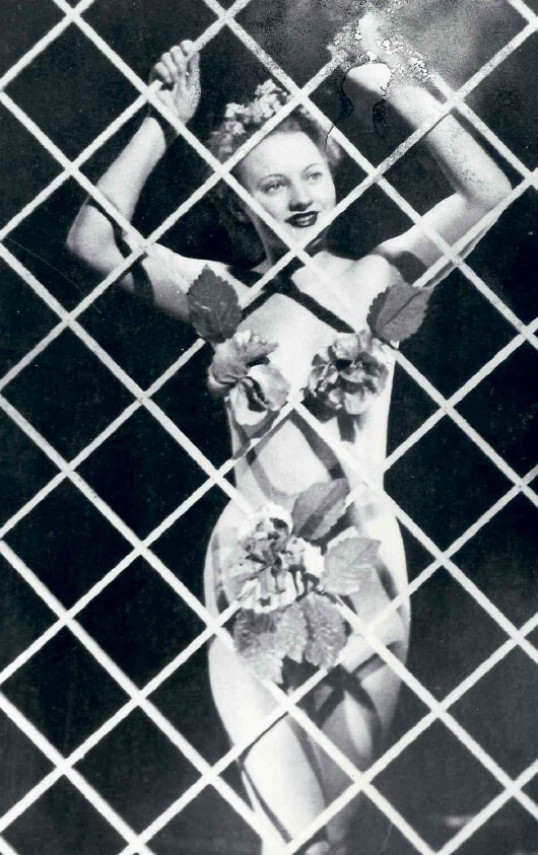
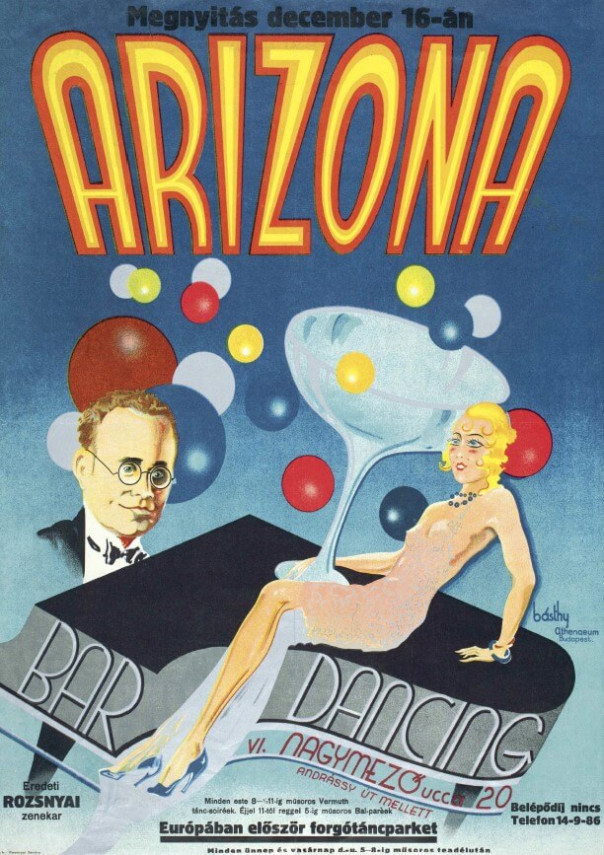
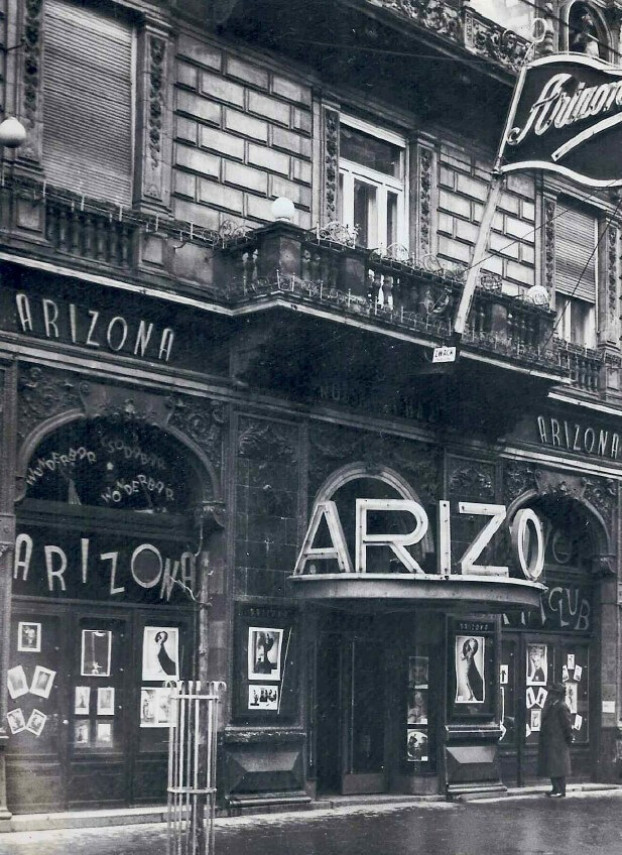
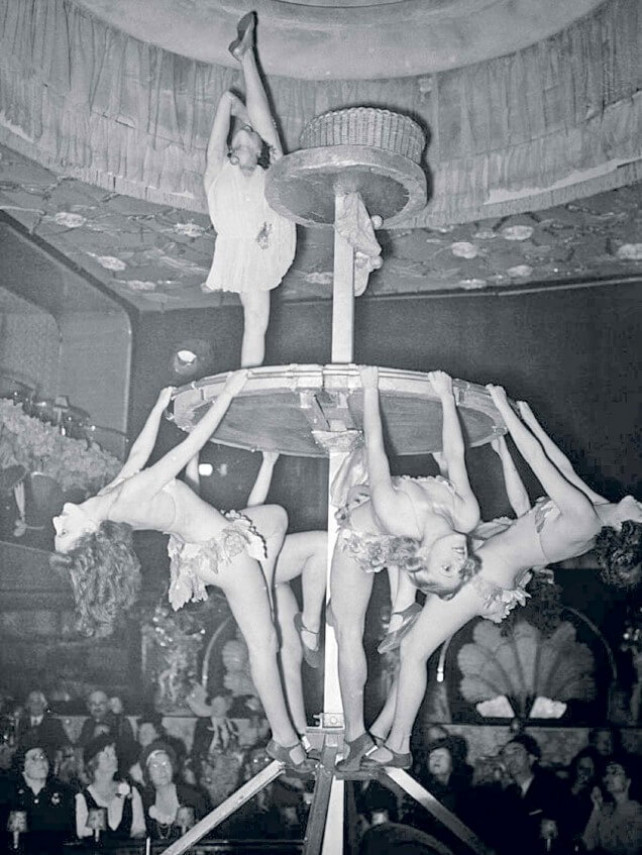
In 1932, after fifteen years touring the continent, musical parodist and conductor Sándor Rozsnyai and his wife, the acrobat and singer Mária Senger, bought the Mai Manó house located opposite the Moulin Rouge. They renamed the establishment the Arizona Dance Revue, with Senger – billed as Miss Arizona – as the star of the show. But it was not Senger’s artistry that was the main attraction. The show principally revolved around the chorus girls’ performances – who were sometimes hung upside down from the chandelier – and, above all, the technical innovations of the venue. The small dance floor functioned as a revolving stage, rising and falling, while the side boxes next to the stage descended at the press of a button – like elevators – into dark discretion. After one visit, the actor Gyula Csortos muttered that he felt like he was at the Ganz machinery works. Occasionally, animals also appeared in the shows, including a monkey, a fox, and Aida, a baby elephant which later gained renown for wielding a shaving razor as part of a circus act. When opening the nightclub, interior design was a major concern. Rozsnyai and Senger tried to postpone or avoid the emergency exits legally required by the fire department, as these would take away space for paying guests. The interior design, in addition to being functional, had to create a unique atmosphere that would also serve as a permanent backdrop for the shows.
The Arizona was not the only venue that focused on creating unique interiors. The interior of the Jardin d’Atelier club on Erzsébet királyné Street was reminiscent of a French village, the Sanghay (Shanghai) Bar on the Buda side was richly decorated with Chinese motifs, while the stucco work of the Capri Bar on the Grand Boulevard imitated a stalactite cave. However, according to today’s sensibilities these nightclubs must have been terribly stuffy: Guests danced wearing multiple layers of clothing and tried to mask the sweat with perfume, all the while smoking cigarettes and cigars or drinking and spilling various alcoholic beverages. In the absence of air conditioning, the owners of the Moulin tried to cool their establishment with ice blocks in the summer. From this perspective, outdoor entertainment venues, such as the Jardin de Paris in the City Park and the Parisien Grill in Margaret Island, were considered much more pleasant places – although they only operated in the summer months.
The two luxury clubs on Nagymező Street operated on a similar business model: There was no cover charge, but consumption was expected and encouraged by staff. The Arizona’s gross profit margin on a bottle of apricot brandy was 93%, but champagne was the main source of income. Such nightclubs had no interest in selling hard liquor because it could quickly incapacitate the guests, preventing them from buying more alcohol. Nor was it preferred that guests harbor romantic inclinations for the house girls, because this could lead to assignations outside the establishment, meaning they would be drinking someplace else. One widely detested consumption trick was the use of “palizab,” or snacks, such as salted almonds, left on the tables by the waiters depending on the guests’ disposition to drink.
Both entertainment venues changed their programs monthly, unless there was continued demand for the existing program or one of its songs. At the Moulin, the program began at 10pm, with the second show starting at midnight. The Arizona, meanwhile, boasted a new attraction every quarter of an hour. In 1934, they introduced a full program for five o’clock tea – quasi-matinees – on Sundays and holidays for those who were curious about the nightly shows but did not want to stay up late. Their revues featured the latest fashionable dances, such as the beguine and the rumba, as well as other dances now long forgotten but which had been invented solely to be performed in the new shows.
Between and after the numbers, the dance floor belonged to guests to enjoy until closing time at five in the morning. The excellent in-house Hungarian jazz bands were often broadcast on Hungarian Radio and even the BBC. Gypsy musicians were equally important, comprising part of Hungary’s international image. In April 1937, the Moulin presented a Hungarian folklore program – or rather a “Hungarian-style” show inspired by elements of folklore – which was soon copied by all major venues except the Arizona. The program was intended for foreign audiences so that those who could not travel to Hortobágy to experience the romantic Hungarian countryside could experience its charm there in the nightclub.
Both the Moulin and the Arizona sought to objectify young women and exploit them to the full. Many nightclubs went so far as to condone both male and female prostitution. Eroticism and nudity were subjected to a double standard: while the nightclub programs and corresponding brochures, exhibited explicit nudity, Hungary’s first men’s “lifestyle” magazine, the Playboy-like Új Magazin (New Magazine) was banned – even though they published the same photographs by the same photographer as in the brochure. The love narratives featured in the shows were intended to make desire fashionable: the performers sought to satisfy the fantasies of the nightclubs’ primary audience – middle- and upper-middle-class heterosexual men.
From 1935 onwards, the two luxury nightclubs also became known as the unofficial meeting places for both the highborn and financial elite. István Bethlen, the son of the Hungarian prime minister of the same name, and István Horthy, the son of the regent, regularly partied through the night as playboys, with champagne flowing and no limits to their wasteful extravagance, before returning home with multiple sexual partners. Upon being engaged, István Horthy took his future wife, Countess Ilona Edelsheim-Gyulai, out to party, which was her first time out on the town. (Although she enjoyed it immensely, her aristocratic family disapproved.) German Chancellor van Papen, Austrian Chancellor Schuschnigg, the Dutch Crown Princess, and the Queen Mother of Egypt were all guests of at least one Budapest party in the 1930s.
The royal personage who received the loudest press coverage was Edward, Prince of Wales, who, upon abdicating the British throne, returned to the bars of Budapest to drink apricot brandy and dance the csárdás (or whatever he was taught to do under that name). However, the list of international celebrities went beyond the aristocratic and financial elite, as even film stars of the era came to spend the night in Budapest’s nightspots. Thus, actresses Grace Moore and Myrna Loy, actors Harold Lloyd and Sacha Guitry, and director Louis B. Mayer made their appearance in Budapest solely to have fun. While Hungarian popular belief held that many regional trifles were “world famous,” the Budapest entertainment industry of the era was indeed well-known in the Western world. Even New York’s Vogue magazine remarked on how great it was to party in Budapest.
Changeovers, restrictions, and the end of an era
In 1938, as part of the First Anti-Jewish Law, the government established a Chamber of Film and Theatrical Arts to restrict the participation of Jewish artists and intellectuals in Hungarian cultural life. (When the chamber was established, references were also made to “national spirit” and “Christian morality.”) The Second Anti-Jewish Law, introduced in 1939, prohibited the employment of Jews in the artistic management of theaters and in positions where they could make decisions regarding personnel. However, this so-called “changeover” was not easy, as it threatened a sudden paralysis of cultural life. The Jewish theater managers tried to use their influence and connections to keep their businesses open. Sándor Rozsnyai registered the Arizona in his wife’s name. Shortly thereafter, he and his son were called up for labor service, with the latter choosing suicide instead.
Ernő Flaschner ran the Moulin Rouge until 1942, while continuing to employ Jews. The circumstances surrounding the change of management at this time are unclear, but it is known that János Nedeczvári, a restaurateur and sympathizer of the extreme right, eventually took over the business. He renamed the nightclub Vörös Malom (Red Mill), the Hungarian translation of Moulin Rouge, and augmented the program with revisionist motifs. In the spirit of “national pride,” he also had foreign-sounding stage names rendered into Hungarian. In practice, this meant that the chorus girls had to be listed under their registered names instead of their fantasy alter egos; thus, Márta Mázik appeared on the playbills instead of her nom d’artiste, La Bella Marta. Due to Hungarian naming conventions, it became particularly ridiculous if a dancer was married, with the name Wiesner Józsefné evoking different connotations and fantasies than the previous Bäby.
Variety shows did not fall under the purview of the Chamber of Film and Theatrical Arts; nevertheless, the chamber was openly hostile towards them. They tried to interfere with management in the most trivial matters; thus, in the case of the Revüszínház (Revue Theater), they banned the use of the word “theater” in its name. The chamber engaged in intensive lobbying to obtain oversight of variety shows – in effect, their quasi-abolition – but the Hungarian Artists’ Association fought for its members as a genuine advocacy group. In fact, it maintained the membership of many performers who had been supposedly banned from performing on stage, such as the operetta star Rózsi Bársony and comedian István Békeffi, who were thus able to continue working. Far-right newspapers demanded that this “loophole” be closed, and the chamber was eventually successful in forcing a decree from the minister of the interior to the effect that only chamber members could perform monologues, couplets, solo acts, and anything else that belonged to the “theatrical arts.”
It would have taken a venturesome soul to provide a strict legal definition of what the latter meant. The Artists’ Association naturally protested, especially since – with the borders closed – performing in variety shows in the German Reich was practically the only possibility, provided one had the right birth certificate and the appropriate act.
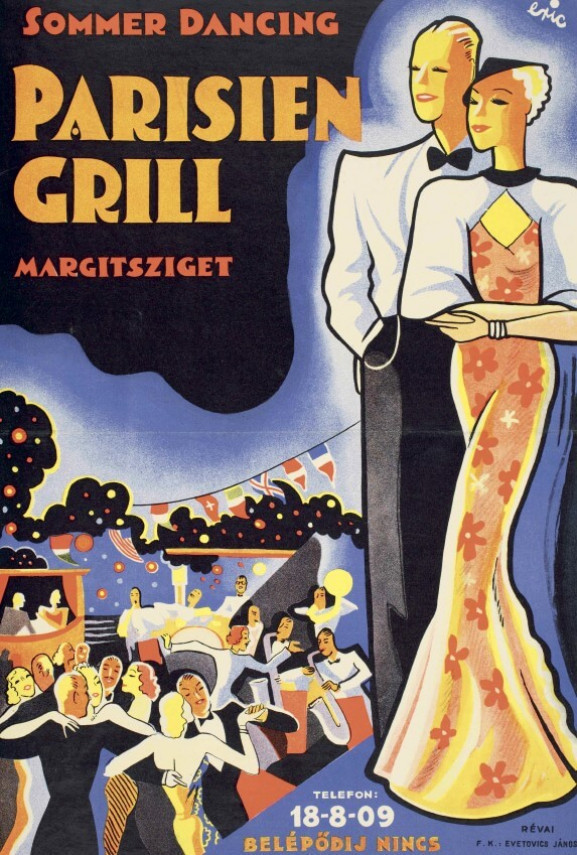
Eric Vogel’s poster for the opening of the Parisien Grill’s summer room, 1934. The restaurant and nightclub operated in the city from spring to autumn, with its open-air summer room built on the ruins of the old monastery on Margaret Island. Although there was no entrance fee, they didn’t allow in just anyone, and people were expected to imbibe. This proved no problem for its clientele, who could drink and dance away alcohol worth several times the average monthly salary in a single night.
After the Nazi occupation, in March 1944, the minister of the interior ordered the closure of all theaters and entertainment venues for one week. This time was used to identify and root out any Jews still working in the industry. (The 1944 membership review discovered there were still 150 Jews among the Artists’ Association’s 2000 members.) Due to the labor shortages and the wartime situation, many nightclubs did not reopen, and those that did saw a drastic decline in clientele, which had been falling since 1942. The Arrow Cross newspaper Magyarság (Hungarian) proposed converting nightclubs into “literary cabarets” run by “purely Aryan and nationally committed professionals.” The new mayor of Budapest, citing “morality” and “virtue,” envisioned a radically different Budapest, one where fewer nightclubs – preferably none – would operate. In its last issue of August 1944, the entertainment paper Artisták Lapja (Artists’ Journal) advertised eight (!) venues with programs, but in September all the venues were closed again for a month. Although some theaters reopened afterwards, the entertainment venues likely didn’t. The persecution of the Jews decimated both entrepreneurs and performers: Rozsnyai was deported, and his wife was shot into the Danube.
After the war, the entertainment industry, and especially nightclubs, once again became symbols of evil. Objections could indeed be raised about how much wealth was squandered in these clubs by a few wealthy privileged to the detriment of the poor. Thus, from this perspective, club culture of the 1920s and 1930s was merely a reflection of dramatic social inequalities. But luxury entertainment does not exist without demand; that said, anyone who could afford an evening at one of the famous nightclubs of the 1930s would likely have wanted a repeat visit. However, this was not a reflection of social inequality but rather an appreciation of professional excellence. If the cultural perceptions of the time had not regarded those genres promoting pure and simple entertainment to be inferior to others or otherwise worthless, their success might have helped a great deal in healing the spiritual crisis and wounded self-esteem Hungary had suffered in the wake of the First World War. Regardless, the most successful period of Budapest’s entertainment industry had come to an end. It remains to be seen, however, whether Budapest’s renowned ruin pub culture of the 2000s will acquire a similarly romanticized veneer in a few decades as that of Budapest’s nightclubs of the 1930s.
(translated by John Puckett and Andrea Thürmer)