Free to read


And the blessed heroes, who fought for land and home
Are now landless exiles, wanderers left to roam
And those trait’rous villains, who betrayed hearth and home
Now lord over estates; and I can only mourn
(Sándor Petőfi: “On Majtényi Field”)
Petőfi wrote the above poem on May 30, 1847, and met his death just over two years later, while many others – including the governor-president Lajos Kossuth – were sentenced to a life in exile.
Almost a century to the day after Petőfi put his words to paper, Prime Minister Ferenc Nagy and Béla Varga, president of the National Assembly, chose to flee the impending Soviet dictatorship. Then, one after the other, followed Dezső Sulyok, leader of the Freedom Party; Zoltán Pfeiffer, leader of the Independence Party; Károly Peyer, a veteran social democrat; and István Barankovics, leader of the Democratic People’s Party, along with thousands of others who opposed the suppression of freedom and national independence.
Suppression, just as in the 18th and 19th centuries, was carried to victory by imperial ambitions. Yet the advocates of freedom also had to contend with internal forces aligned with the will of the Soviet Union – forces that employed every available means to thwart democracy and independence, since this was the only could they secure their own power. By the end of 1947, the Communist Party, aided by the Soviet occupiers, had gained the upper hand in this struggle. For the defeated, the alternatives were the Gulag, prison, execution, or flight. It is this last group – those who chose exile, the so-called “1947–49ers”– that the present article seeks to portray in broad outline.
The successive waves of emigration following World War II – 1944/45, 1947/49, and 1956/57 – resulted in a serious loss of population for Hungary. The reasons for leaving during and after the war could vary greatly. The initial exodus began as soon as the front approached, which was subsequently augmented by the evacuation order issued by the ruling Arrow Cross. By April 1945, approximately 600,000 to 700,000 Hungarians were living in the “West,” mainly in Austria and Germany.
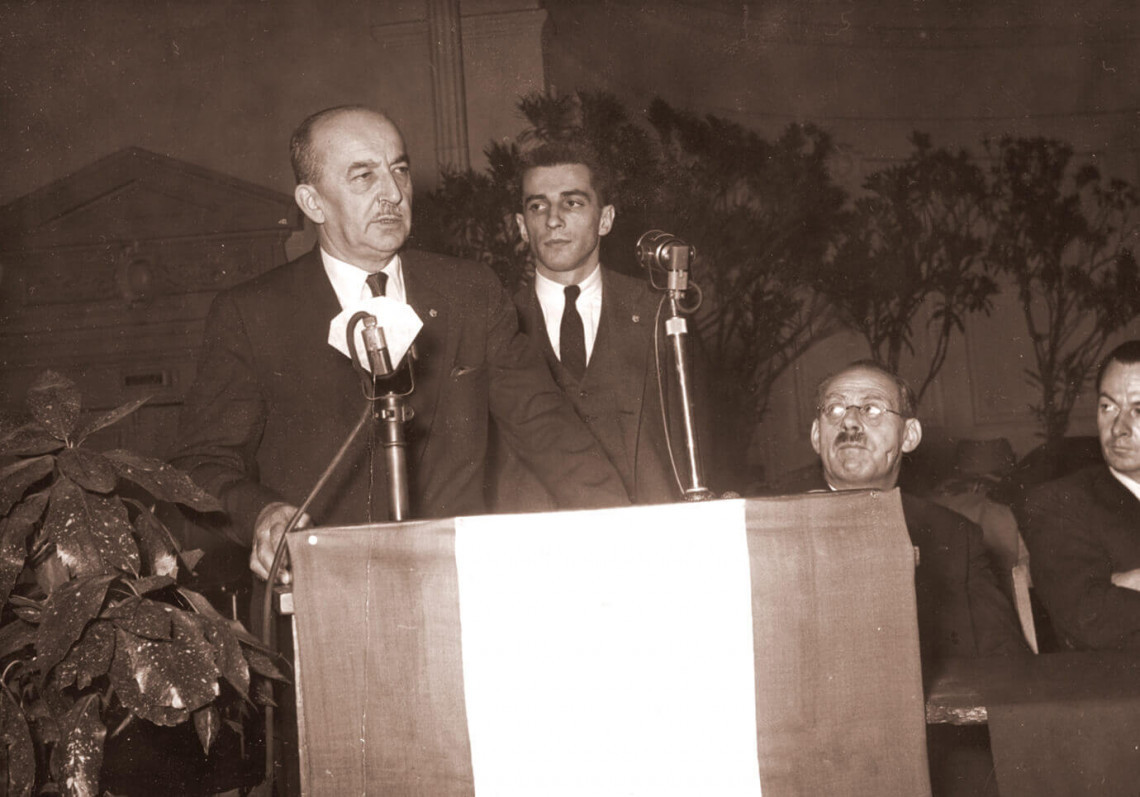
Ferenc Nagy
Those who returned
Many of those who fled the front were taken prisoner by the Americans, and since cooperation among the Allied powers was still prevalent at that time, many were handed over to the Soviet authorities in occupied Hungary. The settling of accounts had begun as early as February 1945, and by summer, lists had been compiled of those Hungarians whom the Soviet authorities requested from the Americans. The final determination of who would be classified as a war criminal and thus be deported back to Soviet Hungary was made by Martin Himler – the US OSS officer responsible for Hungarian affairs. In the case of especially noteworthy personages, Himler would consult with more senior American officials.
It is worth noting that those taken prisoner by the Germans in 1944 and survived subsequent incarceration were most likely to avoid extradition. This list included, first and foremost, the former regent Miklós Horthy (whose extradition was requested by the Yugoslav government, but not by the Hungarian government), former prime minister Miklós Kállay, the former minister of the interior Ferenc Keresztes-Fischer, and deputy police chief József Sombor-Schweinitzer, etc. There were a myriad of reasons for this, however. The presence of the former regent among the exiles must be considered an important factor, even if he had no direct connection with the 1947/48 emigres discussed here.
Some of the emigres were thus brought back and hauled before the courts – this is what happened to four former Hungarian prime ministers. Those who returned voluntarily were sent to “screening camps,” whose pathway could then lead to court, an internment camp, or freedom – Gusztáv Jány, the former commander of the Hungarian Second Army, for instance, ended up in court. By 1947, the number of Hungarian exiles in the American occupation zones had fallen to 50,000 – 30,000 in Germany and 20,000 in Austria – but they no longer had the intention of returning home.
Why did they leave?
The immediate end-of-war emigres consisted of those who fled the country not just for political reasons but also to escape expected retribution for their wartime actions. This list included individuals who had come into conflict with both Hungarian and universal human rights laws during the German occupation, and especially following the Arrow Cross coup. Among them were high-ranking state officials who assisted in the deportation of hundreds of thousands of Hungarian citizens and members of an Arrow Cross mob that looted Persian carpets from abandoned Buda villas.
There were others who fled at this time who saw the Soviet occupation of Hungary as threatening personal endangerment. The conflation of the Hungarian political system of the interwar period with “fascism” was readily apparent in 1945. Many of the political elite during the Horthy regime felt they had to leave Hungary. This included many among the formerly economically advantaged, such as landowners, who were condemned to destruction as a “class” in 1945. The subsequent nationalization of property supplied a constant stream of recruits for this emigre camp. Others left (or did not return) because they no longer felt at home in their homeland with other Hungarians. This was especially true of the Jews who survived the German occupation.
Mention must also be made of those who did not leave the country of their own free will but who had been sent to the Third Reich as members of military and paramilitary formations. Many of them did not return home to Hungary even after their time as POWs had ended. There were many reasons for this, ranging from fear of retribution to a simple thirst for adventure. One need only consider the many thousands of young Hungarians who joined the French Foreign Legion. Many public officials, factory managers, specialists, and others also left in compliance with Arrow Cross evacuation orders.
The dilemmas of adaptation
The years between 1945 and 1949 saw a much more significant wave of emigration – driven fundamentally by political motives and closely connected to the evolving political and social conditions in Hungary. The root causes of this flight of emigres were similar to those that fueled centuries of Hungarian emigration – it was the choice of the losers, of those who had been temporarily defeated in the political struggle.
Hungarian society faced a difficult dilemma in 1945. The old lament of “reality” weighed heavily on the emigre, which in other situations is commonly referred to as “a course dictated by circumstances.” “Reality” dictated that Hungarians had to adapt to the new situation. The essence of this “reality” was that Hungary was now occupied by the Red Army, and the expansion of the vast Soviet (communist) empire into Central Europe was now a fait accompli. This had even been recognized by the other “superpower” remaining on the scene – the United States.
Perfect adaptation, in this respect, was epitomized by the Hungarian Communist Party (MKP), which set itself the goal of introducing the social, economic, and political system of the Soviet Union in Hungary as well. This adaptation, however, was only made perfect by the fact that leaders of the Communist Party – almost without exception – were returnees from the Soviet Union, often former Soviet citizens, high-ranking Soviet military officers, etc. This made it easier for them to adapt to the new “reality,” but it also imposed a difficult task, as they planned to introduce an irrational system completely alien to the traditions of Hungarian social and legal developments and the economic conditions of the area. The imposition of Stalinism in Hungary (and Central Europe) could only be achieved and sustained through force and the will of a great power – as was the case in the Soviet Union.
The end of the war saw Hungarian society confronted by the Soviet Union’s imperial ambitions. Finland, Lithuania, Latvia, Estonia, Poland, Romania, and Turkey had already faced a similar situation when the Soviet empire expanded in alliance with Hitler in 1939-40. Hungarian society, meanwhile, had its own frightening experience of communist rule in 1919, which used every means at its disposal to achieve its aims. Thus, the highest degree of adaptation was represented by the complete acceptance of a Soviet-style social, economic, and political system.
The situation was complicated by the fact that the victorious allies had promised democracy to Central Europe. Their Yalta declaration clearly stated that the establishment of Western-style democratic institutions was both a goal and a requirement (!) in these countries. Although the Soviet Union behaved as an occupying power, it proclaimed itself to be a “liberator” and the “guardian of democracy” in its public pronouncements. There was, therefore, a strong belief in Central Europe that processes consistent with the will of the people could be set in motion, meaning a democratic socio-political system in the Western European sense could be established. There is no doubt that even the segment of Hungarian society that had not been particularly committed to democracy still preferred this alternative.
The choice was made easier by the fact that democracy seemed to offer the possibility of national independence, whereas the establishment of a Soviet system promised imperial vassalage. This belief was strongest where free elections were possible in the region. This only occurred in Hungary and Czechoslovakia. Czechoslovakia was numbered among the “victors,” and elections were held in April 1946. More miraculous was that free elections were even allowed in defeated Hungary, and indeed much earlier, on November 4, 1945.
The elections showed that the Hungarian people made a clear indication of the path to be followed in their country: political democracy, the full exercise of civil liberties, an economy based on private property, and a public life based on Hungarian national traditions and Christian morality. These were in line with the expectations and promises made at Yalta as well as with all the other political declarations of the victorious Allies.
The Communist Party won barely 17% of the vote in the 1945 Hungarian elections. On the other hand, bourgeois, national democracy – in the form of the Independent Smallholders’ Party – achieved a significant 57% majority; democracy also had a significant basis in the National Peasant Party and even the Social Democratic Party (Szociáldemokrata Párt, SZDP). The forces united in the Independent Smallholders Party espoused the same political program as the other democratic parties. The only difference between them was in the tactics to be followed. Everyone knew that they had to cooperate with the occupiers and their extended arm – the Communist Party. That is why a grand coalition was formed.
The conflict manifested itself in specific political decisions: how far could they go in making concessions to the Communist Party and its allies? The Soviet occupation forced the democratic parties into a constant defensive stance, attempting to preserve the democratically elected National Assembly until after the final peace treaty came into force so that sovereignty and the will of the people could prevail. President Zoltán Tildy and some of his supporters went to extremes in making concessions, as did Prime Minister Ferenc Nagy and his circle, which committed the penultimate step of expelling some of his own members to appease the Communists. However, there were those who warned from the outset that the Smallholders were pursuing the wrong path. These included Dezső Sulyok, one of the party’s leading legal experts, who refused to accept the infamous “executioners’ law” (hóhértörvény) on the protection of the republic and the democratic state order (Act 1946:VII. tc).
Sulyok and many others saw that this legislation would give the Leftist Bloc (the Communists and their allies) a tool with which to shift the political struggle from the assembly to the courtroom. In so doing, the advantage would be given to the Leftist Bloc, which already enjoyed almost unhindered control over the political police and the judiciary. On March 12, 1946, Dezső Sulyok and 20 of his colleagues were expelled from the Smallholders Party as a concession to the Communists. Those who were expelled formed the Hungarian Freedom Party, which fought a determined struggle for national democracy in 1946-47.
A stream of refugees
In early 1947, the Smallholders’ Party was liquidated with the help of the “executioner’s law.” Prime Minister Ferenc Nagy, Béla Varga, the president of the National Assembly, and many other political figures were thus forced into exile. The Communist Party decided to pursue this path in order to liquidate the National Assembly. For Ferenc Nagy this was the last straw, and no longer willing to accede to communist pressure, he was accused of “conspiracy,” blackmailed with threats to his young son’s life, and so on. On June 1, 1947, he finally resigned as prime minister and failed to return from a Swiss holiday.
On July 25, 1947, President Tildy dissolved the National Assembly, whose mandate should have extended until November 1949. This meant an end to all parliamentary protections and eliminated the last arena where the Freedom Party could express its views, as its meetings were already being broken up and its press organ silenced. In August 1947, Dezső Sulyok joined the ranks of the emigres, following passage of the “Lex Sulyok,” which excluded almost a tenth of the electorate and prevented the opposition leader from running in the parliamentary elections. His party subsequently boycotted the elections.
November that same year saw the leader and several members of the Independence Party join the leaders of the Smallholders Party and the Freedom Party in exile. Even after the dissolution of the National Assembly in July, Zoltán Pfeiffer – the head of the Independence Party – had still clung to the belief that democracy could still be saved, despite the fact that Soviet troops would remain in Hungary even after the peace treaty came into force. Thus, he founded the Independence Party a mere four weeks before the August 1947 elections.
The intention behind the elections, which had been moved forward to August 31, 1947, was to provide the Leftist Bloc with an absolute majority in parliament, thereby removing this obstacle in eliminating the democratic experiment – and the Communists did everything in their power to achieve this goal. At least 600,000 people were illegally excluded or “forgotten” from the electoral rules, people whom it was assumed would not vote for the Hungarian Communist Party. Election day saw approximately 200,000 fraudulent votes cast in the form of forged blue-colored electoral ballots allowing for absentee voting in multiple districts, along with other forms of electoral fraud. Pfeiffer’s supposition was proven right, however, as his party still attained almost 14% of the vote, with the combined opposition achieving almost 40%, and the civic and democratic parties in general amassing 54.5%! This was a more courageous and edifying stance in support of the will and determination of the Hungarian nation than that taken in the 1945 elections.
The Left Bloc covered up its failure with yet another illegal act: with the assistance of the Electoral Court, the National Elections Committee, and the Ministry of Internal Affairs, they annulled all 49 mandates won by the Independence Party and dissolved the party. Zoltán Pfeiffer himself was whisked out of the country by the American secret service after November 4, 1947. This subterfuge gave the Leftist Bloc an absolute majority in parliament, thus removing the last obstacle to gaining total power. The Hungarian Social Democratic Party was soon liquidated as well. The first to flee was the former leader of the SZDP, Károly Peyer – an anti-communist who took democracy seriously – as the political police had already prepared a “conspiracy” case against him. Already in exile, Peyer declared that “Hungary today is very far from being freed from fear and want.”
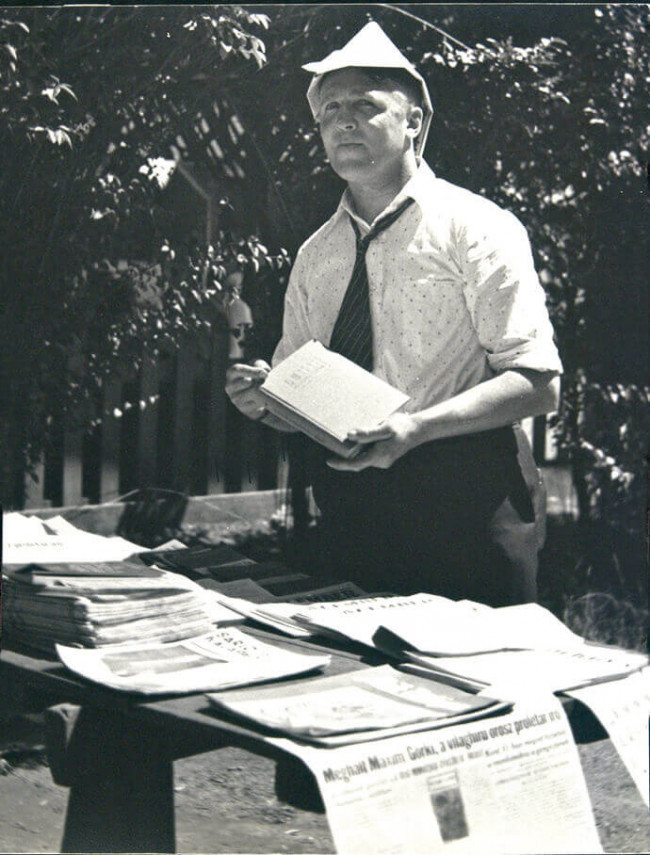
János Nagy selling Hungarian emigre literature in New York, 1936
Those Social Democratic leaders who objected to a “merger” between the MKP and the SZDP or who had no interest in “adapting” to the new reality could also choose either emigration or a complete withdrawal from political life. Some had already been sentenced to prison, just to speed up the process of party disintegration, while others – including the parliamentarian Anna Kéthly – were imprisoned a few years after these events. Even those party members who facilitated the end of the Hungarian Social Democratic Party, such as Árpád Szakasits and György Marosán, could not avoid prison; however, in due course they sought the favor of their former jailers. Eventually, even Zoltán Tildy – the politician who had gone the furthest in “adapting” to the new civil realities – experienced the complete bankruptcy of his policies. He was forced to resign as president in the summer of 1948, his son-in-law was sentenced to death, and he was kept under house arrest until 1956. Writing about him, Zoltán Pfeiffer stated, “He neither led his nation nor followed it,” despite being shown the correct path by them in both elections.
With the civic democratic parties having been dealt with in the summer and fall of 1948, it was the turn of the Christian opposition parties, heralded by the trial of József Mindszenty, Archbishop of Esztergom, which opened on February 3, 1949. The party leaders realized the only option was to flee. Thus, István Barankovics, leader of the Democratic People’s Party, and Margit Slachta, head of the Christian Women’s League, chose to emigrate in early 1949.
Following these developments, the only civic political and opposition leaders who remained on the scene were those who had chosen to surrender their own identity and to align completely with the communist alternative.
Political blindness
The propensity to emigrate in 1947-49 was directly proportional to the enforcement of the Communist Party’s will and the decline in democratic forces. The tactics pursued by the MKP’s leaders were clearly discernible: they always directed their attacks at a single person or, at most, a small group. This strategy ensured the complete isolation of the target individual or group. Those not targeted, meanwhile, would become subject to political blindness, believing they could evade the same fate. They often expected their own positions to be strengthened as a result of those targeted having been eliminated. The leaders of the Smallholders Party viewed the brutal campaign against Dezső Sulyok and the Freedom Party with indifference. In fact, Ference Nagy – the Smallholder prime minister – went so far as to call the Freedom Party reactionary and an enemy to democracy. (This transpired when the Freedom Party’s popularity had begun to rival that of the Smallholders.)
In early 1947, it was the Smallholders’ turn, as a small group of their representatives were accused of “conspiring against the republic” only to be persecuted by their own party and even expelled. On February 26, 1947, the Hungarian parliament greeted news regarding the Soviet abduction and deportation of Béla Kovács, secretary general of the Smallholders' Party, with barely a murmur. After Ferenc Nagy emigrated, the leadership and some members of his own party turned on him with scathing criticism. Neither Zoltán Pfeiffer nor Károly Peyer found any support or assistance. The Smallholders Party even joined the election petition against the Independence Party – as did the Social Democrats. This occurred despite the warning of Social Democrat Anna Kéthly that “if we cast out Pfeiffer’s party, our own standing will decrease.” But soon the Social Democrats and later the leaders of the Democratic People’s Party found themselves alone in the crosshairs.
Possibilities
After the breakdown of superpower relations in March 1947, the possibility arose of forming a political group among those that chose to emigrate following the suppression of Hungary’s democratic experiment. Ferenc Nagy, Béla Varga, Dezső Sulyok, Zoltán Pfeiffer, and István Barankovics were among the prospective leaders of this group. Like most political emigres, they considered their absence from their homeland to be temporary. In going abroad, they sought support from those who they hoped could radically change the situation in Hungary and Central Europe. This meant, first and foremost, the United States. In the wake of the growing US-Soviet confrontation and the outbreak of the Cold War, exiled civic and national politicians flooded into the US from all over Central Europe.
Tibor Eckhardt, a co-founder and longtime president of the Smallholders Party, had been living in the US since 1941. In September 1944, Eckhardt founded the Movement for an Independent Hungary, whose manifesto declared that the Hungarian government had lost its freedom of action. He believed in national independence, human rights, and Christian traditions, declaring a “war of independence” until Hungary regained its freedom. Eckhardt’s attempt was unsuccessful, as he found little support among the Hungarian emigre community. Moreover, his initiative caused serious outrage among political circles back in Hungary, as it completely ignored the efforts of Hungarian governments to revise the Trianon borders.
In 1947, Tibor Eckhardt resumed his activities and emerged as one of the leaders of the anti-Nazi and anti-communist emigre community. It complicated Tibor Eckhardt's situation that he had a reputation as a committed legitimist, although the notion of a Central European settlement, also envisioned by Otto von Habsburg, may have even crossed the mind of President Roosevelt.
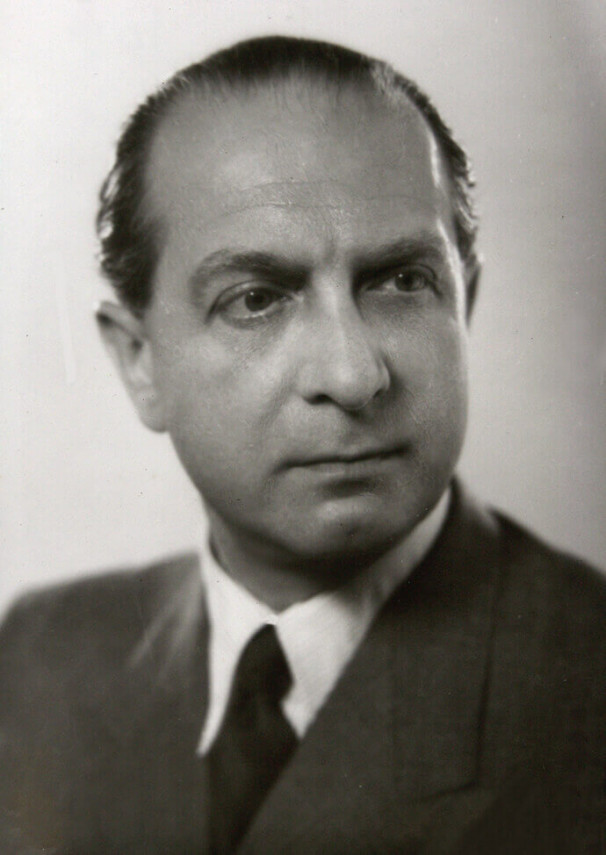
György Bakách-Bessenyey
Otto von Habsburg also resided in the United States during World War II and should be regarded as a member of the Hungarian emigre community as well – as should Count Mihály Károlyi (former prime minister and president) and his circle. Károlyi was able to return home in 1946 and was generously compensated for the use of his estates (he left Hungary in 1919). And even though the National Assembly enshrined his contributions in law, he remained an emigre in his own country. He left Hungary once again in 1949 but had no direct contact with the democratic opposition of 1947-48 due to his excessive affinity for Marxism.
A number of influential Hungarian diplomats – including György Bakách-Bessenyey, György Barcza, and others – refused to recognize the 1944 German-imposed government of Döme Sztójay. Following the German occupation of Hungary in March 19, 1944, the locus of the Hungarian emigre community became Switzerland – this was due to the efforts of György Bakách-Bessenyey, the Hungarian ambassador to Switzerland, who formed the so-called Ambassadors’ Committee in that country. Bakách-Bessenyey's central role was facilitated by the fact that Prime Minister Miklós Kállay had sent him to Switzerland in 1943 armed with five million Swiss francs as part of his “swing” policy in foreign affairs. This money would play a significant role in the later life of the Hungarian exiles. György Bakách-Bessenyey also had excellent connections with the Anglo-Saxon world. Bakách-Bessenyey’s group, which was both anti-Nazi and anti-communist and consisted of members from Hungary’s pro-Horthy elite, should be counted among the emigres of 1945, even though there was some overlap with those from 1947-48. Thus, it is no coincidence that Bakách-Bessenyey also became a member of the executive of the Hungarian National Committee established in 1948.
Besides the US, several other countries took in Hungarian emigrants after World War II, including Switzerland, Italy, Britain, Australia, etc. One influential group operated in France under the leadership of jurist and diplomat Pál Auer.
Unity and recognition
The most salient issue for the Hungarian emigres was whether – given the myriad and varied emigre groups – there would be an organization that could represent the Hungarian emigre community in a way that could incur recognition by a great power, that is, that could function as some sort of government-in-exile. And, in fact, attempts had already been made to form such an organization. The Ambassadors’ Committee had been close to success at one point but ultimately failed. On August 20, 1947, Lieutenant General Ferenc Farkas de Kisbarnak – chief scout of the Hungarian Boy Scouts and the former commander of the Hungarian VI Army Corps – attempted to form a rival government in Altöttingen, in Bavaria, but was unsuccessful.
Events accelerated in the summer of 1947, when civic and national democratic politicians began fleeing Hungary as a result of communist persecution. This was closely connected to the two “superpowers” turning on one another; thus, this new wave of Hungarian emigration had the potential to become a factor in international politics after World War II. Most expected the US to quickly put an end to the Communist Party’s rule in Hungary, which is why Ferenc Nagy, Béla Varga, Dezső Sulyok, Zoltán Pfeiffer, and István Barankovics all settled there. György Bakách-Bessenyey moved to the US, and the former Hungarian ambassador to Washington – Aladár Szegedy-Maszák – also found refuge there. The leader of the Social Democrats, Károly Peyer, also joined the ranks of American-Hungarian emigres.
Establishing a national representative center abroad first required achieving unity. Establishing unity, however, was not easy; besides accepting the requirements set by the US, it was necessary to develop a program acceptable to the broadest spectrum of the population, one excluding extremism while expressing the goals of the emigres in succinct form. It was imperative that they establish a governing body, both authoritative and representative. It was also necessary that all the emigres have faith in their quick return.
Gyula Dessewffy summarized the tasks in December 1947 as follows: “By uniting our forces, we must fight for the Hungarian people and with the Hungarian people for their certain and imminent liberation.”
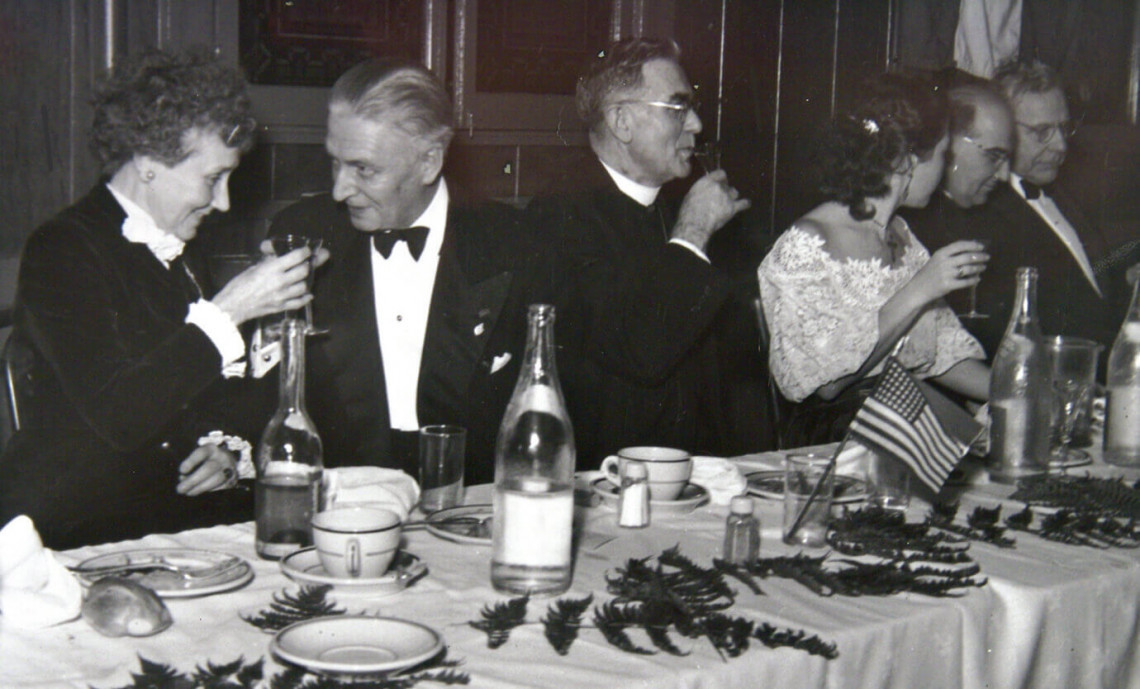
Tibor Eckhardt at a luncheon at St. Stephen’s Church, New York, 1953
The Hungarian National Council
Efforts to create an emigre center date back to at least December 1947. Ferenc Nagy, Béla Varga, Tibor Eckhardt, Dezső Sulyok, and Zoltán Pfeiffer had previously issued a proclamation to the Hungarian people summarizing the situation as follows:
“The communist leaders have deprived the Hungarian people of not only their freedom and right to self-determination but also of all means of self-defense. The Hungarian people did everything in their power to preserve their national independence and civil democratic freedoms. The Hungarian people bear no responsibility for what has happened nor for anything that the Moscow-imposed government will do in the future. Although bereft of support, the Hungarian people must survive this darkest period of our history. Nevertheless, it needs be known that all heroism and active resistance are pointless if the Western powers decline to intervene forcefully. Therefore, we call on you to withdraw from public life, do not cooperate with the foreign oppressors, do not listen to provocateurs, stay in your homes, and organize passive resistance.”
Despite differences in opinion, emigre Hungarian politicians sought to put aside all their animosity in early 1948 and established a five-member executive committee comprising Tibor Eckhardt, Ferenc Nagy, Zoltán Pfeiffer, Aladár Szegedy-Maszák, and László Acsay. This committee was tasked with conducting negotiations with various emigre organizations and groups in order to establish an executive body.
The negotiations were marked by heated debates; nevertheless, the tense global political situation favored the establishment of common ground. The American demand for a Hungarian emigre center that would support US foreign policy also became apparent. On June 1, 1949, the National Committee for a Free Europe (later renamed the Free Europe Committee) was established. This organization was established by a number of influential Americans with the aim of “supporting political refugees from the communist countries of Central and Eastern Europe, promoting the work of the institutions they lead, and keeping alive – through its own initiatives – the hope of liberation from Stalinist oppression and confidence in the future of democracy among the people of the regions in question.” It was generally understood that these “influential Americans” meant the US government since the committee was organized with the participation of Dwight D. Eisenhower, later president of the United States; Allen W. Dulles, one of the most influential leaders of the American secret service; and former ministers, ambassadors, trade union leaders, and others.
Following the declaration of the American mission statement, the Hungarian National Committee – the most important Hungarian emigre organization – declared its existence on July 21, 1949. The establishment of the new organization had been presaged in an announcement made in “Notice No. 1,” dated June 10, 1948. In it, Béla Varga declared that preparations were underway to establish a body that would replace the Hungarian parliament.
When the Hungarian National Committee – originally intended as an emigre parliament – was founded, it had approximately 90 members, including members from the parliaments of 1945 and 1947, as well as some members of the 1939 National Assembly who opposed the validity of the wartime parliament. Besides the 1947-48 refugees, the committee also included the former prime minister Miklós Kállay, the former president of the Hungarian National Bank Lipót Baranyai, the former regent’s younger son Miklós Horthy Jr., the former Archbishop of Pannonhalma, Kelemen Krizoszton, the industrialists Ferenc Chorin and Móric Kornfeld, and others.
An executive committee of 13 was elected to head the commission, running day-to-day affairs and comprising a sort of government-in-exile. Béla Varga served as president, with Vince Nagy (Hungarian Freedom Party) and János Dombay (Social Democratic Party) as his two vice-presidents. Other members included Pál Auer, György Bakách-Bessenyey, István Barankovics, Tibor Eckhardt, Béla Fábián, József Közi Horváth, Ferenc Nagy, Károly Peyer, Zoltán Pfeiffer, and Dezső Sulyok. The organization received financial support from the US government – in the guise of the Free Europe Committee – and maintained an elegant office in New York’s East Village. The main goal of the committee was to promote Hungary’s liberation from communist rule. Dezső Sulyok resigned from the executive committee in 1949.
The work of the Hungarian National Committee was also aided by the establishment of Radio Free Europe, which began broadcasting to Central Europe on July 4, 1950. The committee operated according to “portfolios,” with Dezső Sulyok heading the interior ministry, György Bakách-Bessenyey the foreign ministry, Tibor Eckhardt the army, Ferenc Nagy finance, Károly Peyer labor, and Zoltán Pfeiffer justice and the press.
The executive committee of the Hungarian National Committee retained a leading role among the Hungarian emigres until the suppression of the 1956 revolution. With the suppression of the revolution, another large wave of emigres arrived in Western Europe and the United States, including Anna Kéthly, József Kővágó, Béla Király, and others. This gave rise to renewed conflicts and the creation of new organizations, such as the Hungarian Revolutionary Council, the October 23 Movement, etc.
Finally, the so-called Hungarian Committee was established, whose executive was formed in March 1958. It included both the leadership of the former Hungarian National Committee as well as participants of the 1956 events. Béla Varga remained president, with József Kővágó as vice president.
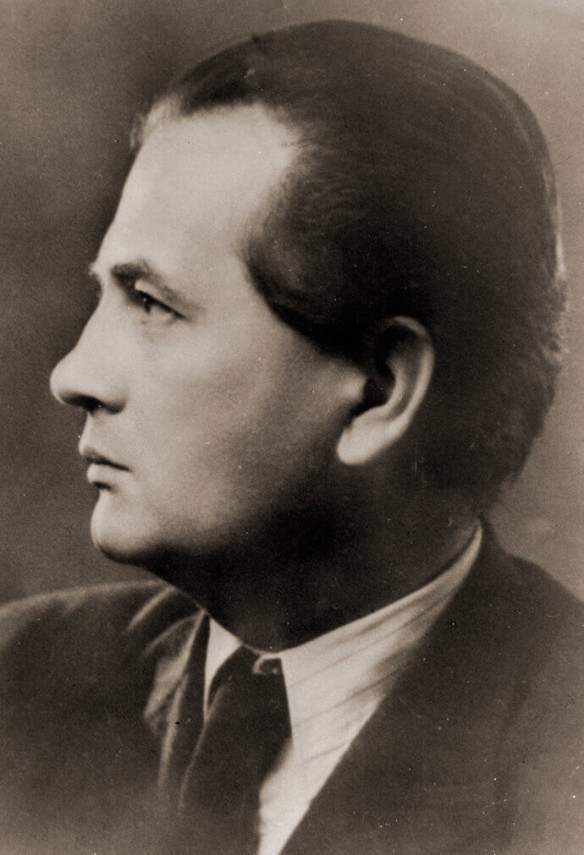
István Barankovics, circa 1946
The 1956 revolution raised new hopes, but its defeat and the consolidation of the Kádár regime led to the grim realization among most emigres that there was now no possibility of returning home. It also greatly reduced the standing of the emigre organizations. The American response to the 1956 revolution also made it clear that the US was unwilling to undertake any significant risks or sacrifices in order to free Hungary (and Central Europe). Zoltán Pfeiffer remarked bitterly during the revolution that “if the most wondrous national revolution in history – in which every man and woman, youth and maiden, of the abandoned Hungarian people heroically took part – is allowed to perish, then the last bastion of the West will be destroyed, proving that Western solidarity has ceased to be and that further, even greater exploits will be needed to halt Moscow’s advance towards world domination.”
Points of contention
Despite the seeming unity forged within the Hungarian emigre community, points of contention were constantly present. Manifestations of this contention grew in proportion to the length of time spent in exile, but they were by no means confined to the earliest waves. The sources of this contention ranged from differences in evaluating US policy in Central Europe to understanding the events in Hungary between 1945 and 1949, and assessing fundamental national issues. These latter had a special reference to the question of borders, the nature of the political system between the world wars, and – in the latter context – the differences between the emigre waves of 1944-45 and 1947-49 – not to mention animosities and conflicts of a personal and existential nature.
A major source of contention within the emigre community arose in respect to the direction of US foreign policy and how the Hungarian emigres should orient themselves in response. The majority accepted the premise that the US sought to free Central Europe and that this would be facilitated by the “governments-in-exile” created by political emigres from the nations in question. It was in such a spirit that Béla Varga informed his homeland that “we live for your liberation, and yet for the sake of this universal national goal we have avoided contact with you. But you will receive instructions from us when the time to act comes.” An extreme manifestation of this policy was “the creation of preconditions for unrest,” primarily through the assistance of Radio Free Europe. Ferenc Nagy summed up the unwavering faith in US policy as follows: “Let no person of Hungarian descent forget that increasing America’s strength today means serving the interests of the entire free world.”
An opposing group – led mainly by Dezső Sulyok, leader of the Freedom Party – believed as early as 1949 that the US “never had the resolve of freeing the enslaved nations.” And under such circumstances it would be a crime to incite disorder. This group saw the truth of its presentiments when the US abandoned Hungary in 1956 during the country’s fight for freedom.
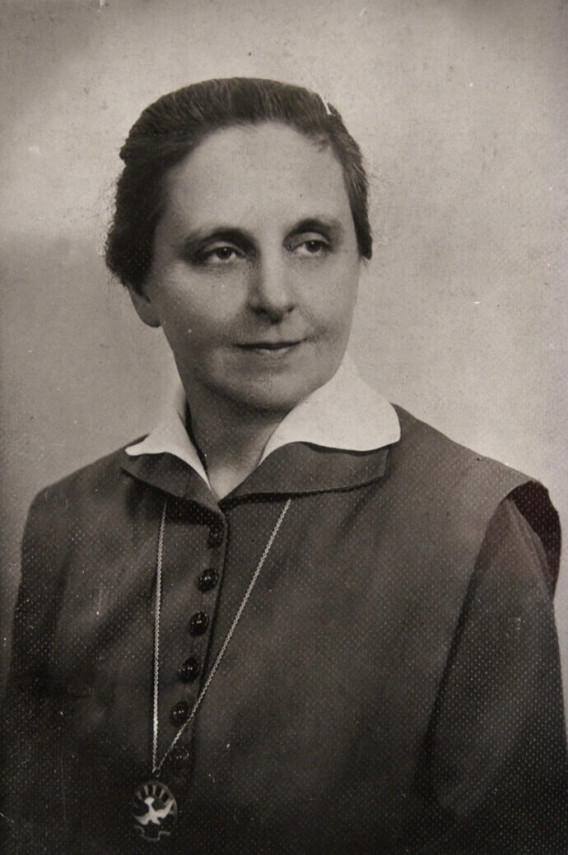
Margit Schlachta, January 6, 1946
From this one fundamental disagreement, many others followed. One example involved the composition of the Hungarian National Committee, as the main consideration in its formation was the exclusion of those who, “whether as tools of the Nazi or the communists,” had delivered Hungary into foreign hands. But who fell into such a categorization was a matter of political judgment. Béla Varga and the majority of the executive committee wanted to exclude those who openly collaborated with the communists and the Nazis, that is, those who performed official functions. Opponents, however, questioned at what point did cooperation with the communists after 1945 change from necessary compromise to “collaboration.” Dezső Sulyok and his Freedom Party associates were already in opposition by March 12, 1946, so they were “clean” in this regard, while Béla Varga and Ferenc Nagy had collaborated with the communists until the end of May 1947. According to Sulyok and his group, “the committee included individuals who played a very significant role in allowing Hungary’s internal political life to pass out of the hands of the civic democratic majority and into that of pure communist rule.”
The above perception led to the notion that the US’s “false liberation” policy, i.e., the US’s failure to come to Hungary’s assistance in 1956, was linked to the prominence of Hungarian “collaborators” in the emigre movement. “It is natural,” Dezső Sulyok later wrote, “that when it was necessary to look for a partner here, the American collaborationist policy found Hungarian collaborators to be the most suitable for this purpose.” The smallholder Béla Varga, on the other hand, explained that “I am not ashamed for having tried to cooperate with the communists and the Russians.
We fulfilled a world mission in the name of all humanity when we tried to achieve a modus vivendi with them. And I accept responsibility for this – together with Ferenc Nagy. We acceded to the demands of the three Allied powers, and in doing so we gained the experience that it is impossible to work with the communists or even to compromise with them.”
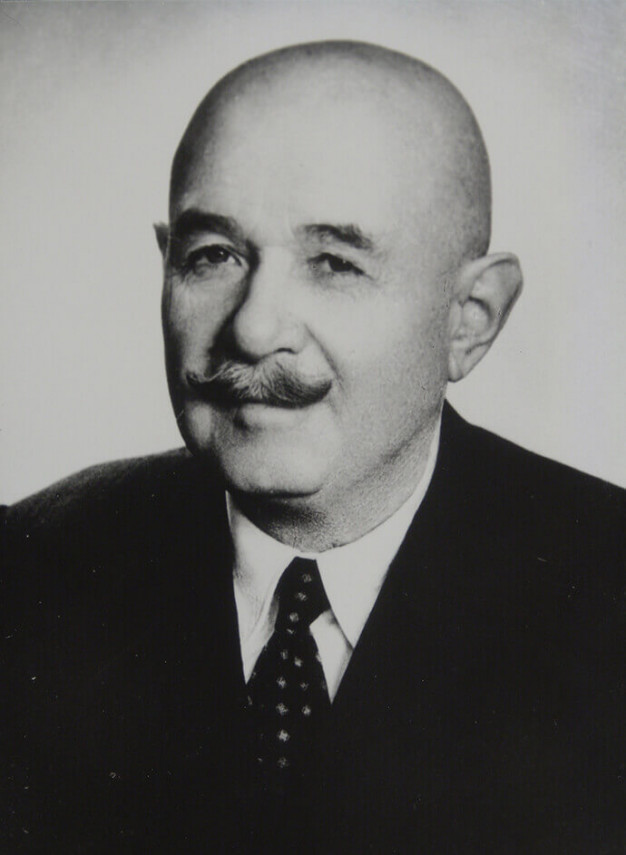
Károly Peyer
Thus domestic political conflicts followed the emigres abroad. The failed tactics pursued by former prime minister Ferenc Nagy were also the subject of criticism at this time as well, although most of the attacks were directed at Béla Varga, the president of the emigre committee. Those opposing the committee complained that Béla Varga was basing his presidential ambitions on the claim that he had been the last freely elected president of the National Assembly (February 7, 1946–July 3, 1947), that he had not resigned his position, and that he was also the deputy head of state under Act 1 of 1946. In other words, Béla Varga assumed his leading position on the basis of “legal continuity,” that is, that the true will of the Hungarian people was represented by the last freely elected National Assembly and its officials, which would include Varga. Thus no one else, even someone more qualified, could take his place. Béla Varga’s “entrenched” position as head of the Hungarian emigre community seemed unquestionable, even though the general view among the emigres was that Zoltán Tildy’s removal as president of the republic and subsequent house arrest in 1948 were illegal. Thus, his opponents launched increasingly furious attacks against him over time, charging him with collaborating with the occupiers, citing his “betrayal” of Béla Kovács – the secretary general of the Smallholders' Party, who was abducted and deported by the communists – and accusing him of participating in the coup against prime minister Ferenc Nagy, both said events occurring during Varga’s tenure as president of the National Assembly.
There was also a serious disagreement over how the leading Hungarian emigre organization should approach the issue of Hungary’s borders, that is, a revision of the Trianon treaty. The situation was complicated by the fact that the Hungarian National Committee was only one of a number of Central European emigre organizations established in the US. The Czech and Slovak, Romanian, and Yugoslav emigre organizations thought in terms of the borders between the two world wars, as did the Polish, Lithuanian, Latvian, and Albanian organizations. The Hungarian National Committee did not raise the border issue because this would have completely isolated it from the other international emigre organizations while also eliciting US disfavor for having caused such discord. The committee thus adopted the document “Declaration of Aims and Principles of Liberation of the Central and Eastern European Peoples,” which was drafted in Philadelphia on February 11, 1951. The document made no mention of Hungarian border demands. This issue sharply divided the Hungarian emigre community, with Béla Varga and Ferenc Nagy often accused of doing nothing more than continuing their failed foreign policy of 1946, which had resulted in an even less favorable treaty than the Treaty of Trianon.
This issue was also connected with criticism regarding the Hungarian National Committee’s financial dependence on the US. Critics argued that the financial and existential dependence of emigre leaders on a host country or private organizations also meant surrendering their political independence. In certain cases, such as the border issue, this existential dependence could even lead to the abandonment of national interests. An aggravating factor, however, may have been personal animosity towards those receiving regular monthly stipends due to their positions in various emigre organizations. Nevertheless, paid committee members received justifiable criticism from those able to establish an independent existence in the US.
The sharpest conflicts during the long years of exile were elicited by contrasting opinions regarding Hungarian history, in particular, the few years between 1944 and 1948. It was also the issue addressed the most by the executive committee as well as the Hungarian-language press. In other words, even while based in the US, the emigres were still mostly concerned with Hungarian domestic politics. László Varga made a disparaging comment on this, noting that “it is hardly acceptable for certain politicians to focus their available energy on purely domestic political issues.”
The focus on historical debates centered on the extent of cooperation perpetrated with the communists (necessary compromise or collaboration). An article such as this can only touch upon a small number of these issues. The first and most important cause of dissension concerned an appraisal of Act VII of 1946, the so-called “executioner’s law.” Many emigres believed that the law – which had been pushed through despite the opposition of both the Hungarian nation and the Smallholders as a party – was clearly intended to prepare the ground for the elimination of democracy. Some former smallholders, however, continued to view this law as an acceptable piece of legislation and only regretted that the geopolitical situation allowed the communists to use it against democracy. Thus, the March 1946 expulsion of those who refused to accept the law was seen as a coup by a small group of collaborators. It should be noted here that the tactics pursued by Ferenc Nagy as prime minister and head of the Smallholders in 1946-47 were in many cases contrary to the will of the party majority. Critics projected this dichotomy onto the emigre community as well, claiming that Béla Varga and Ferenc Nagy were continuing to pursue realpolitik against the views of the majority.
This dichotomy was also evident over the issue of accepting the Hungarian-Czechoslovak population exchange agreement of 1946 and the post facto legalization of abuses incurred during implementation of the 1945 land reform act. Criticism also arose over the fact that Varga, the former president of the National Assembly, and Nagy, the former prime minister, ultimately expressed no objection to fellow Smallholder Béla Kovács’s arrest and deportation to the Soviet Union.
There was also a significant difference in the emigre community’s assessment of whether the top-ranking politicians of the time were victims of witch hunts or merely silent accomplices. On this and every other issue, two positions – untenable in themselves – were in constant conflict: one side arguing that all blame lay with the occupiers and the aggressiveness of the Communist Party, while the other barely took these into account when formulating their criticism. This latter included those who had been in parliamentary opposition since March 1946 in the name of national democracy and had waged a determined struggle against communist aspirations.
It was completely logical, then, that those who had opposed the communists when in the National Assembly should adhere to their previous stance when in exile. For example, critics objected to the fact that the Smallholders Party – which had won 57% of the vote in November 1945 – ceded the Ministry of the Interior to the Communist Party. Ferenc Nagy justified the decision, citing blatant and heavy-handed Soviet intervention. Dezső Sulyok, on the other hand, did not become prime minister in 1946 because, in a famous parliamentary speech, he wanted to limit communist participation in government to a 17% share (matching their share in the 1945 parliamentary elections).
Such a division in views was also evident in the establishment of the Economic Council, the use of “salami tactics,” during the “conspiracy” trials, and in the lack of retribution for the “people’s courts” in Gyömrő and elsewhere. Thus, Ferenc Nagy and Béla Varga were accused of tolerating ÁVO (state security) excesses, the B-list decree (ideological screening of state officials), the sabotage of municipal elections, the amateurish preparations for the Paris peace negotiations, the brutal crackdown of the Freedom Party, and the enactment of Law XXII of 1947 (which disenfranchised almost half a million voters). As Dezső Sulyok concluded, “If we have been weak, let us atone for that. If we have been guilty, let us be punished. From this time onward, only those from the left and right with clean hands should have a say in our nation’s future.”
The emigres of 1947-49 were also divided in their attitudes towards the emigres of 1945. There were also serious divergences with respect to the political system of the interwar period (although opinions were not divided regarding the anathema of the Arrow Cross). Thus, Tibor Eckhardt, former president of the Smallholders Party, came into conflict with other leaders of the executive committee when he joined the Hungarian Warriors Comradeship Association, a veterans’ organization of the Horthy regime. An eight-month conflict of interest case was opened on the assertion that this organization had collaborated with the Arrow Cross. In the end, Tibor Eckhardt was allowed to remain on the executive committee, and a new split in the emigre community was avoided, but it required Béla Varga’s skill and ingenuity to defuse the situation.
The influence and significance of the Hungarian political emigre organization decreased in the 1970s and 1980s. Nevertheless, divisions continued, as the issue of bringing the Holy Crown home became an important source of discord in the seventies. Cardinal József Mindszenty, who was living in exile at the time – and perhaps the majority of emigres as well – was opposed to the crown returning to socialist Hungary, which had become synonymous with János Kádár. Tibor Eckhardt, on the other hand, wanted the crown returned to the Hungarian people. Béla Varga, Ferenc Nagy, Imre Kovács, László Varga, and Béla Király took the same position. Thanks to this, the Holy Crown returned to Hungary on January 6, 1978.
Hungarian emigres played an important, but not decisive, role in the political preparations for the regime change of 1989-90. It is symbolic that Béla Varga, the last freely elected president of the Hungarian parliament before the advent of socialism, lived to see the collapse of the socialist political and economic system and the return of the most important element in restoring the rule of law – free elections. Appearing before the National Assembly on May 2, 1990, he counseled that “every Hungarian must realize in their hearts and minds that Hungary belongs to Europe, not only because of its geographical location, but also because of its traditions and way of thinking – just as St. Stephen perceived it 1000 years ago.” With the restoration of free elections and the rule of law, the underlying cause of the 1947-49 emigration wave also disappeared. Many who lived through those years were able to return home, and some even resumed their political careers. The return of Hungarian democracy reduced the political role of the emigre community to a bare minimum; nevertheless, the divisions of opinion that wracked that community returned home with it.
(translated by John Puckett and Andrea Thürmer)