


 Free to read


Shakespeare wrote in his comedy Measure for Measure, “Heaven grant us its peace, but not the King of Hungary’s!” This notion proved poignantly true during the First World War. Of the various belligerents, the four years of the war saw the Austro-Hungarian monarchy make the most attempts to resolve the conflict through compromise. Since no official demand for unconditional surrender appeared until the autumn of 1918, these attempts were rightly seen as holding out the possibility of success.
In contrast, the positions of the various belligerents in the Second World War were much clearer in this respect. As early as January 1943, the Western allies declared at Casablanca that they would accept nothing less than unconditional surrender. The Germans, partially in response, followed suit by declaring total war, with the Soviets eventually declaring at the Tehran Conference late that same year that they would not be party to a separate peace. During the First World War, however, room for a negotiated peace lingered, with the dual monarchy launching several initiatives.
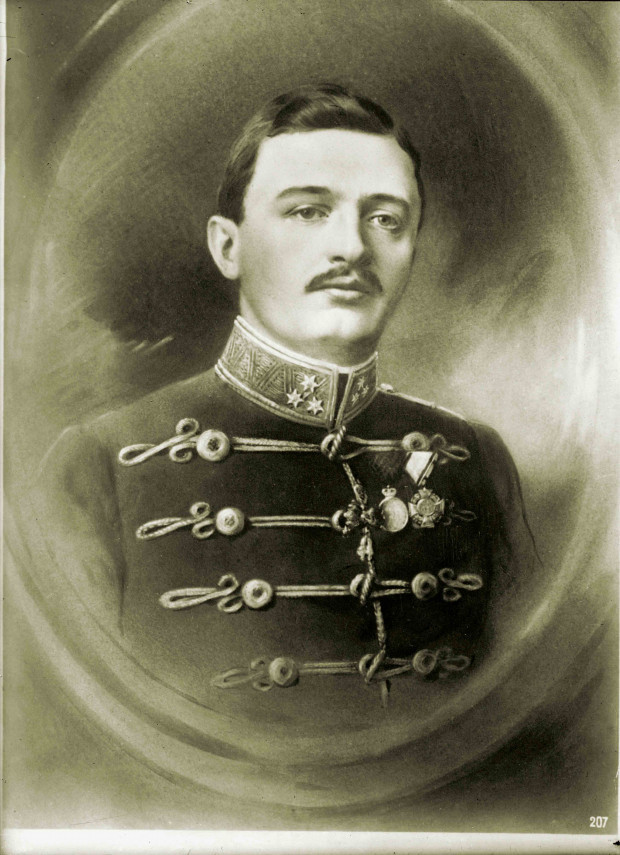
The First World War began with Austria-Hungary’s declaration of war on Serbia. Pope Benedict XV issued the first appeal for peace, in November 1914, calling the conflict “the Suicide of Civilized Europe.” Several backroom diplomatic initiatives to resolve the conflict – in some cases initiated by neutral states – followed the failure of the armies to force a decision on the battlefield in 1914. However, these efforts quickly proved fruitless and did not lead to any concrete peace proposals. Some sources claim that a now aged Franz Joseph expressed privately that peace should be concluded, but nothing official was ever put forward. The monarch’s disposition toward peace may have been partly accounted for by the situation on the battlefield – by January 1916, the dual monarchy had occupied both Serbia and Montenegro while driving both the Russians and Italians out of Austro-Hungarian territory. Thus, Vienna’s objectives set at the beginning of the war – maintaining the territorial integrity of the dualist state – had been essentially fulfilled.
Charles ascends the throne
On November 21, 1916, Emperor Franz Joseph, who had ruled the empire for 68 years, died at the age of 86. He was succeeded by his grand-nephew, the 29-year-old Charles. In his first proclamation, the young monarch stated:
I will do everything to end in the shortest possible time all the horrors and sacrifices of the war and to restore the hard-earned blessings of peace to my people as soon as the honor of our arms, the necessary conditions for my state’s faithful allies, and the defiance of our enemies allow it.
Having personally witnessed the horrors of the war on the front line, the new monarch – a profoundly religious man with a strong social conscience – had advocated a swift end to the war even as Crown Prince. On Charles’s initiative, the Central Powers made a peace proposal on December 12, 1916, but did not formulate any specific demands or conditions for the Entente – they simply proposed an end to the bloodshed. The Entente rejected the proposal on December 30, the same day that Charles was crowned King of Hungary.
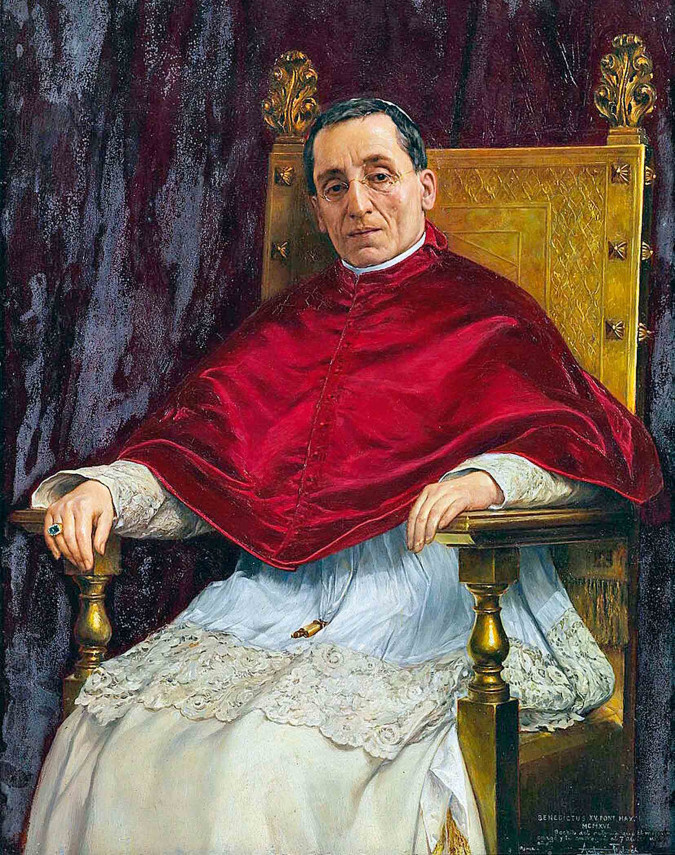
Witnessing this failure, Charles’s wife, Zita of Bourbon-Parma – Empress of Austria and Queen of Hungary – his mother-in-law, Archduchess Maria Antonia of Austria, and his half-aunt, Archduchess Maria Annunciata, also made efforts to help the peace process. The new foreign minister, Count Ottokar Czernin, stated bluntly in a letter that “Charles had been thoroughly worked over by the women.” Zita’s two brothers, Sixtus and Xavier of Bourbon-Parma, who were French nationals serving in the Belgian army, offered a convenient means for approaching the enemy. Their initial efforts to join the French army at the beginning of the war had been rejected by the French Third Republic due to their Bourbon ancestry.
Charles’s first letter
In late January 1917, the Archduchess Maria Antonia met the new Austro-Hungarian emperor’s brothers-in-law, Sixtus and Xavier, in Neuchâtel, Switzerland. Charles’s mother-in-law confirmed that the emperor was determined to make peace and in doing so would offer more favorable terms to the Entente. In response, Sixtus and his companions communicated the Entente’s three conditions, that is, a “just” settlement regarding Alsace-Lorraine, Belgium, and Serbia. The negotiations continued on February 17, 1917, through Charles’s close confidante, Count Tamás Erdődy, and ended with the Bourbon-Parmas traveling to Vienna, where they met Charles and Count Czernin.
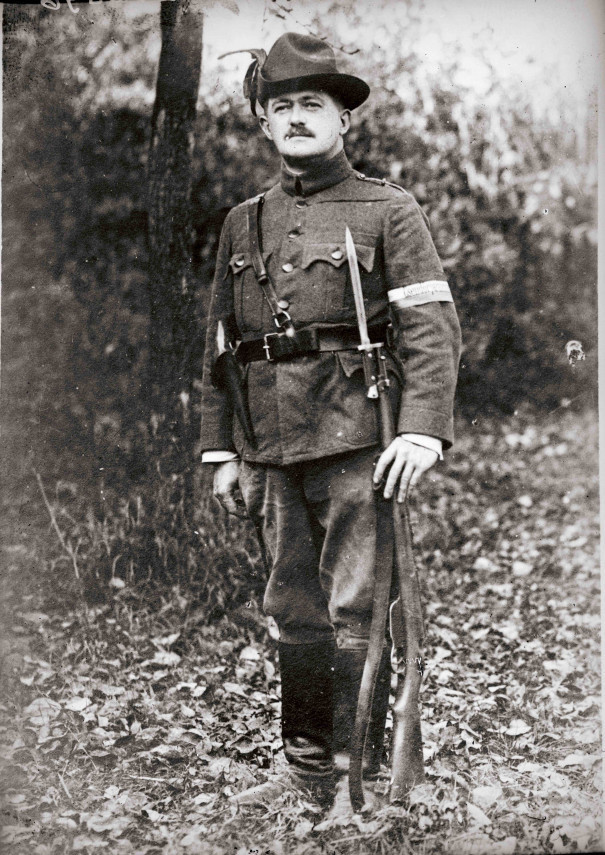
This mission could only take place under the strictest secrecy, as a state of war existed between the empire and Belgium. Charles was persuaded to accept the terms formulated in Switzerland in which the French did not address the situation regarding Italy or the issue of Rome’s irredentist aspirations.
On March 24, Charles handed Sixtus a letter written in ink addressed to the French president, Raymond Poincaré. In it, he expressed his support for “France’s rightful claim” to Alsace-Lorraine, promised to restore the sovereignty of Belgium and Serbia, and held out the prospect of securing access to the sea for the latter. However, he stipulated that Serbia must renounce its Greater Serbia political aspirations and propaganda.
The Habsburg ruler thus recognized – at least on paper – the goals set forth by Great Britain (Belgian sovereignty) and France (Alsace-Lorraine) in continuing the war. This was the first declared attempt to make peace during the First World War that offered a realistic compromise for ending the conflict as soon as possible. The emperor, however, did not share the final text of the letter with his own foreign minister, Count Czernin, something that would have fatal repercussions a year later.
The letter – whose contents were known only to the British and the French, but not the Italians – had a serious impact within the Entente camp. On March 31, British Prime Minister Lloyd George declared flatly that Charles’s letter was peace itself (C’est la paix!). Apprised of the letter’s contents, Paris and London sounded out the Italians to see whether they would be willing to end the conflict without fulfilling the goals of the 1915 London Agreement, that is, with South Tyrol and Trieste remaining in Austro-Hungarian hands. The Italian political leadership firmly refused.
Charles’s second letter
On April 3, 1917, Charles held important talks with German Emperor Wilhelm II in Bad Homburg. The Austrian emperor did not reveal his intentions to pursue peace, but he did point out the danger of revolutions breaking out in the countries of the Central Powers, as had happened in Russia three weeks earlier. The Germans, however, immediately rejected Czernin's proposal that Berlin annex Polish territories in the east in order to conclude a separate peace in the west, compensating thereby for the loss of Alsace-Lorraine.
In order to propel the peace initiative and expand upon the provisions of the first letter, the two Bourbon-Parma princes travelled to Vienna again in May 1917. On May 9, Charles presented them with another letter iterating that he shared France and Great Britain’s views on the establishment of a European peace. Nor did he completely reject the Italian demands either, saying they should be assessed. Count Czernin, however, objected, stating repeatedly that Vienna had no hope of fulfilling Italy’s territorial demands since Tyrol’s German-Austrian population would reject them.
Afterwards, Sixtus reported to Poincaré and the French Prime Minister, Alexandre Ribot, once again. However, contact ceased at this point, as the French and British were no longer interested in pushing for a resolution of the Italian question, as America’s entry into the war on April 6, 1917, had subsequently improved the Entente’s position significantly. In retrospect, the two Sixtus letters can be seen in the following light – as an effort by the Western Entente to see how far Charles was willing to go in pursuit of peace, how the Germans would react to such intentions, and whether the Germans were party to the negotiations. Meanwhile, with Washington not declaring war on the dual monarchy until December 1917, another great power exerted its influence over a possible Austrian-negotiated peace starting in the spring of that same year.
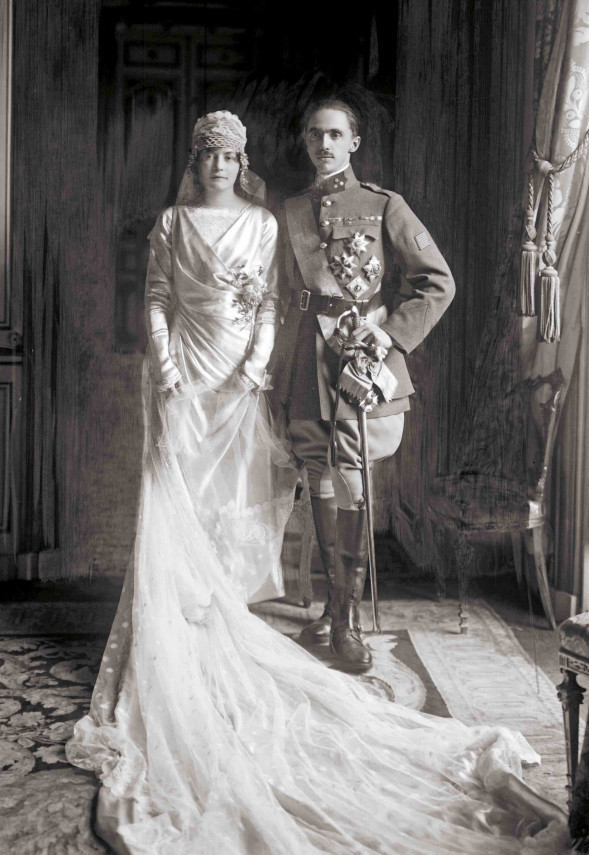
The dispatch of the Sixtus letters was the most important among Charles’s attempts to seek peace. Charles perceived the chance for an agreement during this period since Russia had been weakened by the democratic revolution and the US had yet to actively join the war. Moreover, the Western Entente was experiencing its own share of difficulties at this time. The French Army, following the failure of its spring offensive, was on the verge of collapse, placing the stability of the entire Western Front in doubt. British Prime Minister Lloyd George was even compelled to say on May 9, 1917, that “under these circumstances it would be most advantageous to make peace with Austria.”
Despite his efforts, however, Charles was unable to obtain a peace treaty in 1917 that would preserve Austria-Hungary’s territorial integrity, as Italy, Serbia, Romania, and Czechoslovak nationalists all insisted on their territorial claims. As for Britain and France, they could not allow Germany and Austria-Hungary to strengthen their position in the east, as this would have upset the balance of power in Europe.
The Entente’s intransigence regarding Charles’s peace proposals was also fuelled by the fact that they attributed Charles’s efforts in part to the weakness of the dualist state. Paradoxically, Charles’s peace offer merely emboldened those groups that had already formulated radical goals aimed at destroying the Austro-Hungarian Empire at the very start of the war. The story of this peace-making endeavour and the lack of response from the Entente likely would have ended here had it not had been from the “Sixtus Affair” and the scandal surrounding the letters which broke out a year later.
The Armand–Revertera negotiations
On August 1, 1917, on the third anniversary of the start of the war, Pope Benedict XV issued another peace plan. He had informed the Central Powers of his intentions beforehand; thus, some of Charles’s ideas could be discerned in the document. The Pope called for a negotiated peace without annexations or mutual reparations, and in this spirit he proposed the evacuation of territories occupied during the war. The Pope’s initiative quickly found itself on infertile ground: The French saw the handiwork of the Central Powers in the proposal, while US President Wilson, in whom his contemporaries had already begun to detect messianic tendencies, preferred to have himself play the central role in the peace process.
Despite the eventual failure of the Sixtus mission, Charles did not give up hope on the possibility of peace, encouraged nevertheless by the partially positive response from the Entente powers. To this end, on August 4, 1917, he sent Count Nikolaus Reverta to Fribourg, Switzerland, to negotiate with the French Count Abel Armand, whom Paris had entrusted with negotiating a separate peace with the dual monarchy. The negotiations lasted about three weeks with the full cognizance of the Germans, although the latter believed the discussions amounted to little more than general feelers. The negotiations, however, ended in failure as the Entente powers essentially repeated their previous conditions, of which the fulfilment of Italian demands remained unacceptable to Vienna. Moreover, the military situation had grown more favorable for the Central Powers since spring: the Entente offensives had been repelled, and unrestricted submarine warfare held out the prospect of victory.
Entente initiatives
Following the German and Austro-Hungarian breakthrough at Caporetto, the defeat of the Italians, and the consequences of the Bolshevik takeover in Russia, the Entente also resumed its previous peace overtures. Following preliminary discussions conducted by American Colonel Edward House, the British general Jan Smuts was sent to Switzerland on November 29, 1917, to negotiate with Vienna’s representative, Count Albert Mensdorff-Pouilly-Ditrichstein. The negotiations, which took place in Geneva on December 18–19, 1917, broke down after Mensdorff proposed peace based on the current military situation in the west, something unacceptable to the French.
Nevertheless, Charles’s peace efforts found unexpected support in late 1917 and early 1918. Having seized power in Russia, Lenin called for an immediate armistice and an end to the “imperialist war.” Shortly thereafter, on December 22, he signed an armistice with the Central Powers and entered into peace negotiations, which concluded on March 3, 1918, in Brest-Litovsk. As a result, the Central Powers gained control over the Baltic States, present-day Poland, and the majority of present-day Belarus and Ukraine. Moreover, the Ottoman Empire also gained significant positions in the Caucasus region.
On January 8, 1918, US President Woodrow Wilson presented his 14-point peace program to Congress. Two of these points – 9 and 10 – specifically concerned Austria-Hungary: The former aimed at “readjusting” Italy’s borders in accordance with the principle of nationality, while the latter aimed at ensuring “the freest opportunity to autonomous development” for the nationalities of the dualist state. Wilson also confirmed the notion of peace without annexations, first formulated by Benedict XV. Much to Wilson’s disappointment, Vienna was the only belligerent that offered what could be considered a favorable response. For this reason, Wilson even offered financial assistance to the dualist state if a separate peace could be concluded. However, nothing concrete resulted from this.
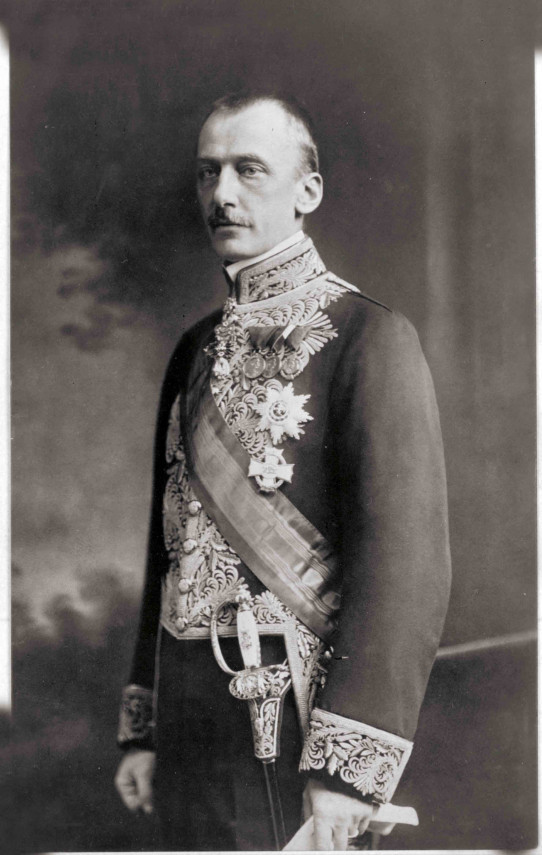
On February 1, 1918, the Armand-Revertera negotiations, which had been suspended in August 1917, were resumed in Fribourg on France’s initiative. During these discussions, Ottokar Czernin, the dualist foreign minister, gave Revertera strict instructions that Alsace-Lorraine was to remain part of the German Empire, contrary to the statements made during the Sixtus mission and the position taken in August 1917. This condition naturally provoked French objections.
The Sixtus affair
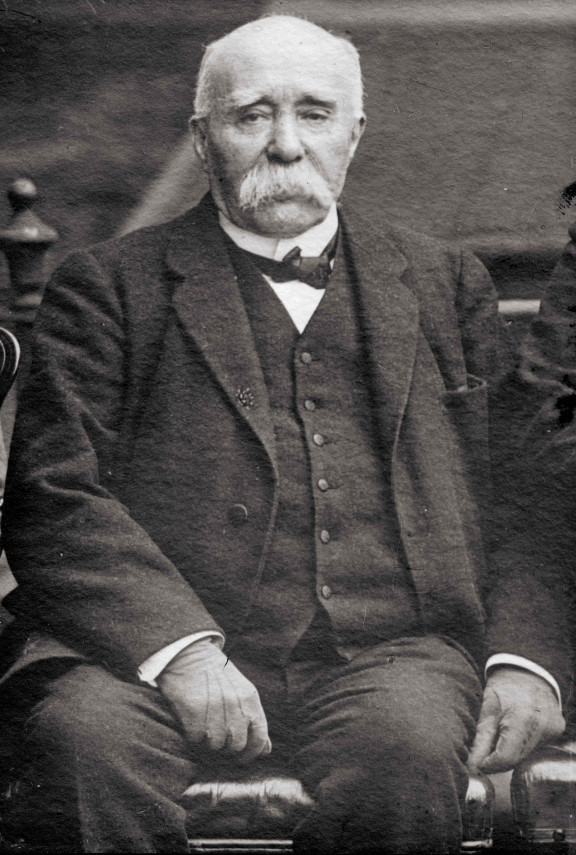
On March 21, 1918, the Germans launched a general offensive, which soon put the Entente powers in a critical situation. The Central Powers anticipated final victory, and the home front was inundated with bellicose and patriotic speeches. On April 2, 1918, Foreign Minister Czernin gave a speech at the Vienna City Hall in which he disclosed that the issue of Alsace-Lorraine had always been the obstacle to peace. French Prime Minister Georges Clemenceau responded by stating that even Charles recognized France’s claims as legitimate. When Charles and Czernin both denied this, the French government made public Charles’s two “Sixtus letters,” thus exposing the deceit of both the Austro-Hungarian monarch and his foreign minister. Charles, placed in an embarrassing situation as a result of the scandal, was forced to dismiss Czernin.
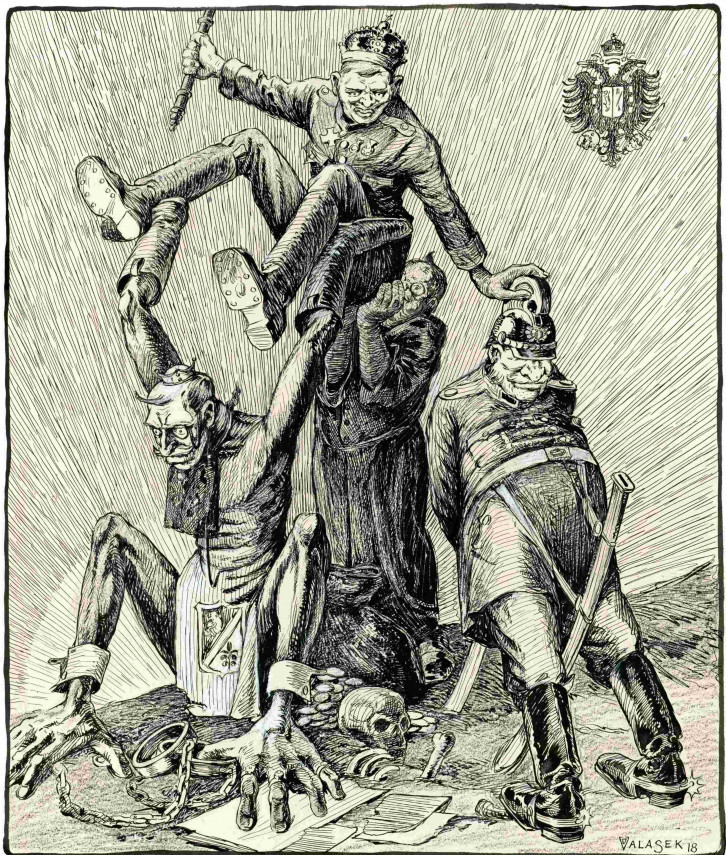
The affair occasioned a number of serious consequences. The monarchy’s own military regulations strictly forbade any negotiations and agreements with the enemy, the pursuit of which could result in court-martial proceedings and even execution. But now it had come to light that the sovereign himself had been engaged in such!
Charles’s credibility suffered significant harm. Clemenceau’s disclosure had a particularly destructive effect on German-Austro-Hungarian relations, as Berlin was shocked by Charles’s plan to conclude a separate peace at the cost of Germany ceding part of its territory. In light of all this, it is no wonder that when Charles travelled to the Belgian town of Spa in May 1918 to discuss the situation with the German military and political leadership, he was essentially performing an act of contrition before the German high command. The dualist state now found itself more dependent on German arms than before, thus severely limiting Charles’s room to maneuver.
Final efforts
By the early autumn of 1918, the military and economic situation of the Central Powers had deteriorated dramatically. On August 8, the Entente forces on the Western Front inflicted a devastating defeat on the Germans, and even Hindenburg and Ludendorff, Germany’s military leaders, were forced to recognize that the war was lost. In light of this, Berlin now supported Charles’s earlier peace efforts and even encouraged him to contact the Entente again. The basis of such negotiations would have been President Wilson’s 14 points since their provision of peace without annexations held out the prospect of a compromise peace.
On September 14, the new Austro-Hungarian foreign minister, Count Stephan Burián, sent a note to the Entente powers stating that the warring parties should discuss the basic principles of a peace settlement on neutral territory, without any binding force for the time being. The initial premise of the negotiations, however – the notion of ending an “undecided” contest – was no longer realistic by this time. Cognizant of their military superiority created by America’s entry into the war, the Entente powers rejected the proposal in the matter of a few days.
On October 2, the imperial cabinet decided to send another note to the Entente powers through Burián. Nevertheless, Charles had already exhausted his hand when he proposed peace by accepting Wilson’s 14 points, which included the fulfillment of Italy’s territorial demands against the dual monarchy as well as autonomy if not independence for its constituent nationalities. This decision was made public on October 4, and now Vienna awaited the American response. Such was not forthcoming, however, as the Entente powers were content to draw things out, as their troops were now advancing rapidly in the Balkans and preparations were underway for a decisive offensive on the Italian front.
Austro-Hungarian diplomacy did everything it could to elicit a response, but to no avail. Anticipating failure, Charles decided to implement Wilson’s tenth point himself, offering the various nationalities residing in the Austrian part of the monarchy autonomy and inviting them to form national councils. The manifesto, issued on October 16, merely hastened the collapse of the dual monarchy while failing to achieve its original goal. Two days later, US Secretary of State Lansing’s response finally arrived: The Entente no longer considered Wilson’s points to be a basis for negotiation, as the military situation had changed dramatically in the interim. He also indicated that the Austro-Hungarian government was no longer considered legally competent; they would only negotiate with the constituent nationalities and their councils. It had now become clear that the conflict was destined to end with a Carthaginian peace.
***
Austria-Hungary, despite making the greatest number of attempts among the belligerents to end the war as soon as possible, ultimately paid a terrible price for its defeat – it ceased to exist. Over the year and a half between the spring of 1917 and the fall of 1918, both sides to the contest suffered heavy losses, leaving the United States the real winner of the war. Europe paid a heavy price for the intransigence displayed by both warring blocs during the peace negotiations. The continent’s global power was shaken, and its financial and economic positions were taken over by the United States. The failure of diplomatic efforts aimed at ending the Great War as soon as possible also laid the foundation for the imbalances and injustices of the Versailles peace treaties.
